Cultural, Political, & Environmental Art with Greenleaf TK-8 & West Oakland Middle School: 28th Annual ArtEsteem Exhibition Series
In this 28th Annual ArtEsteem Exhibition exploration, we are sharing units from two of our 6th-8th grade classes: Cultural and Political Art: Faux Stained Glass at Greenleaf TK-8 and Creative Ecosystems: An Ecology of Art at West Oakland Middle School.
If you missed the previous exploration, check out “Global Textiles” Unit with Hoover Elementary!
At Greenleaf TK-8…
Teaching Artist Cristina is guided her 6th and 7th grade students in creating ‘faux stained glass’ pieces on acrylic glass, exploring how visual art functions as a powerful form of communication, identity, and resistance across cultural and historical moments.
She integrated an environmental justice lens into the project by connecting materials, imagery, and themes to issues of sustainability, access, and environmental injustices faced by various communities. Over the course of the project, students discussed how art is political and brings visibility, storytelling, and public awareness to issues such as climate change, environmental racism, social justice, and indigenous land rights.
This builds upon learnings from previous projects. When the students created piñatas, they explored topics such as consumption, waste, and who is affected by environmental harm. This exploration fed into the artmaking process, where they used recycled cardboard and scrap paper, reusing and repurposing materials in a reflection of traditional and resourceful practices across cultures.
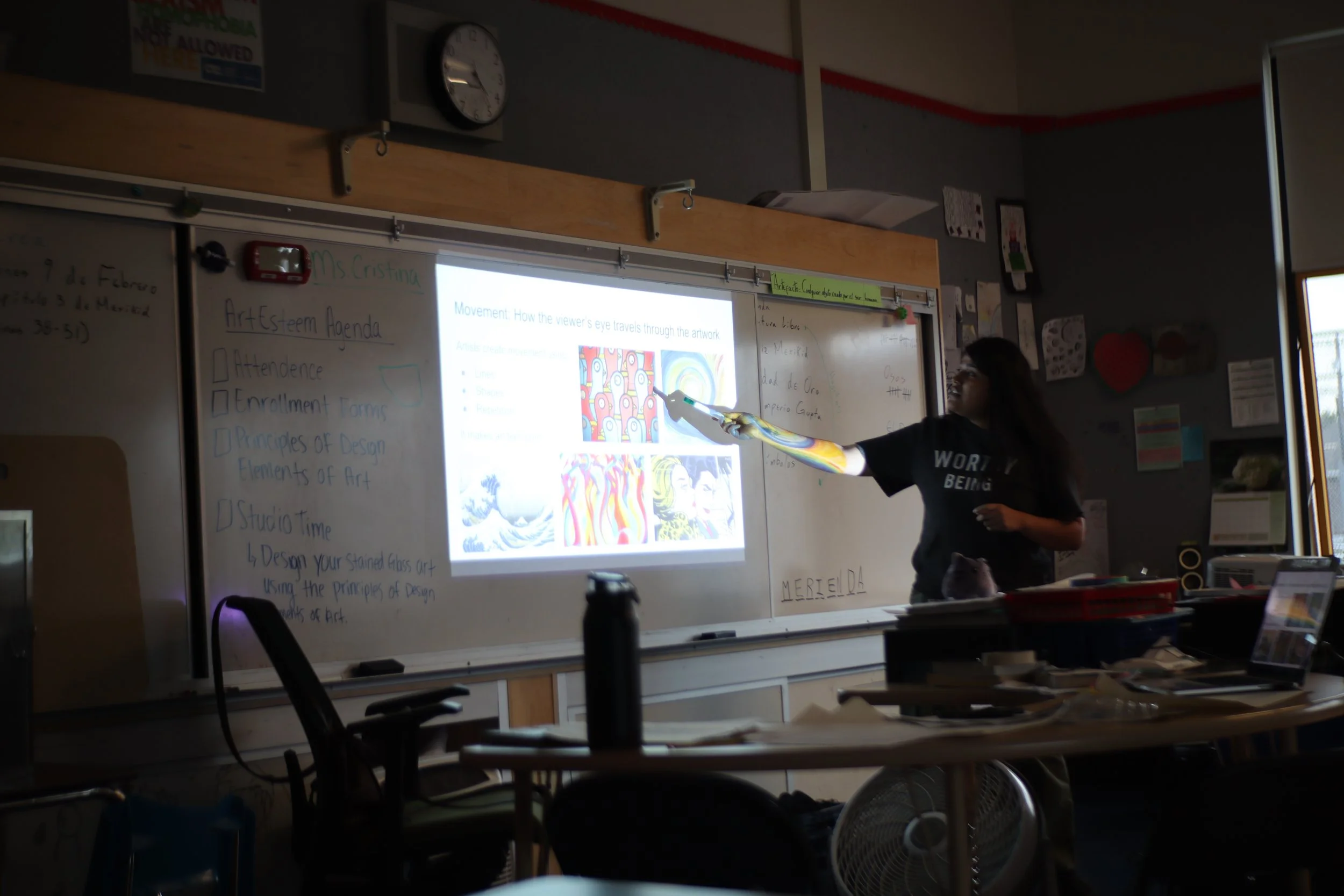
Cristina’s inspiration for this project was the historical use of stained glass as a storytelling medium. She worked with her students to design their imagery as a “window to the world,” and to think about whose stories are visible and whose are ignored.
Her intention is for their designs to serve as an outlet: “a form of storytelling through visuals, and because of everything that's happening in our world.” She aptly recognizes that the students experience and interpret everyday realities of life. “So I felt like it's, in a way, letting them process, but also express some of their feelings and thoughts and beliefs through art.”
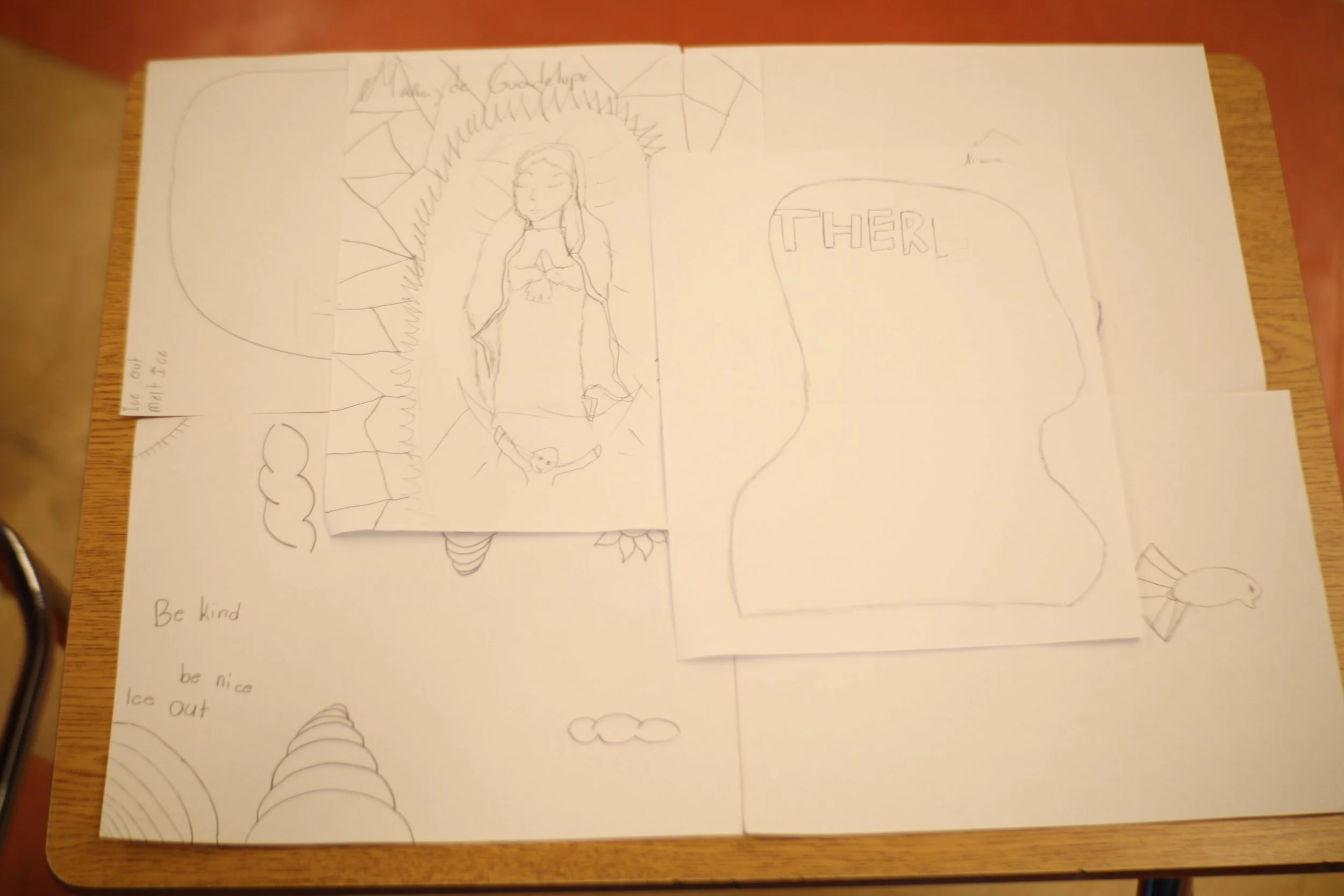
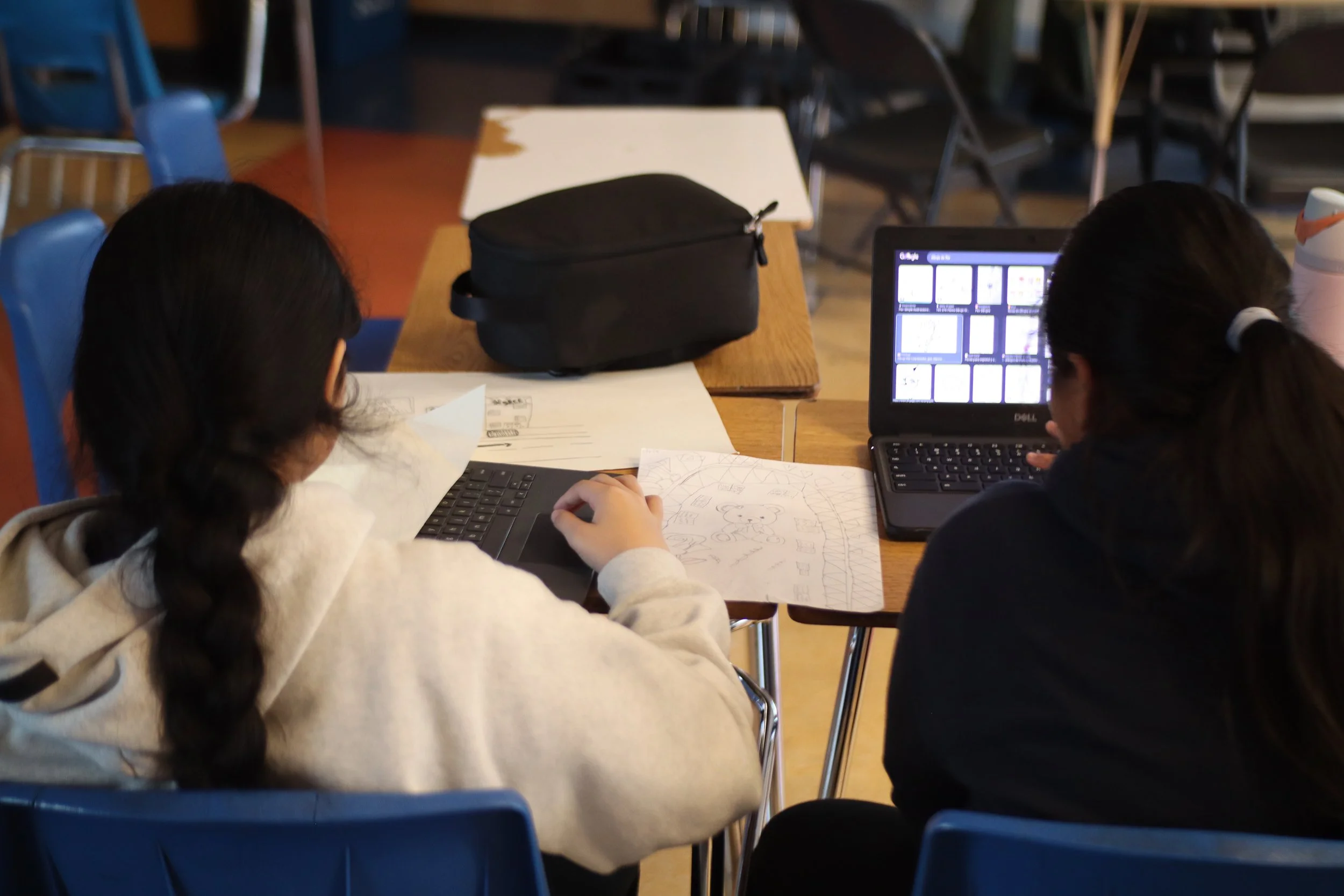
The day we visited the classroom, there was a quiet atmosphere of focus as the students used pencil and paper to create cohesive and refined mockups from their design ideas.
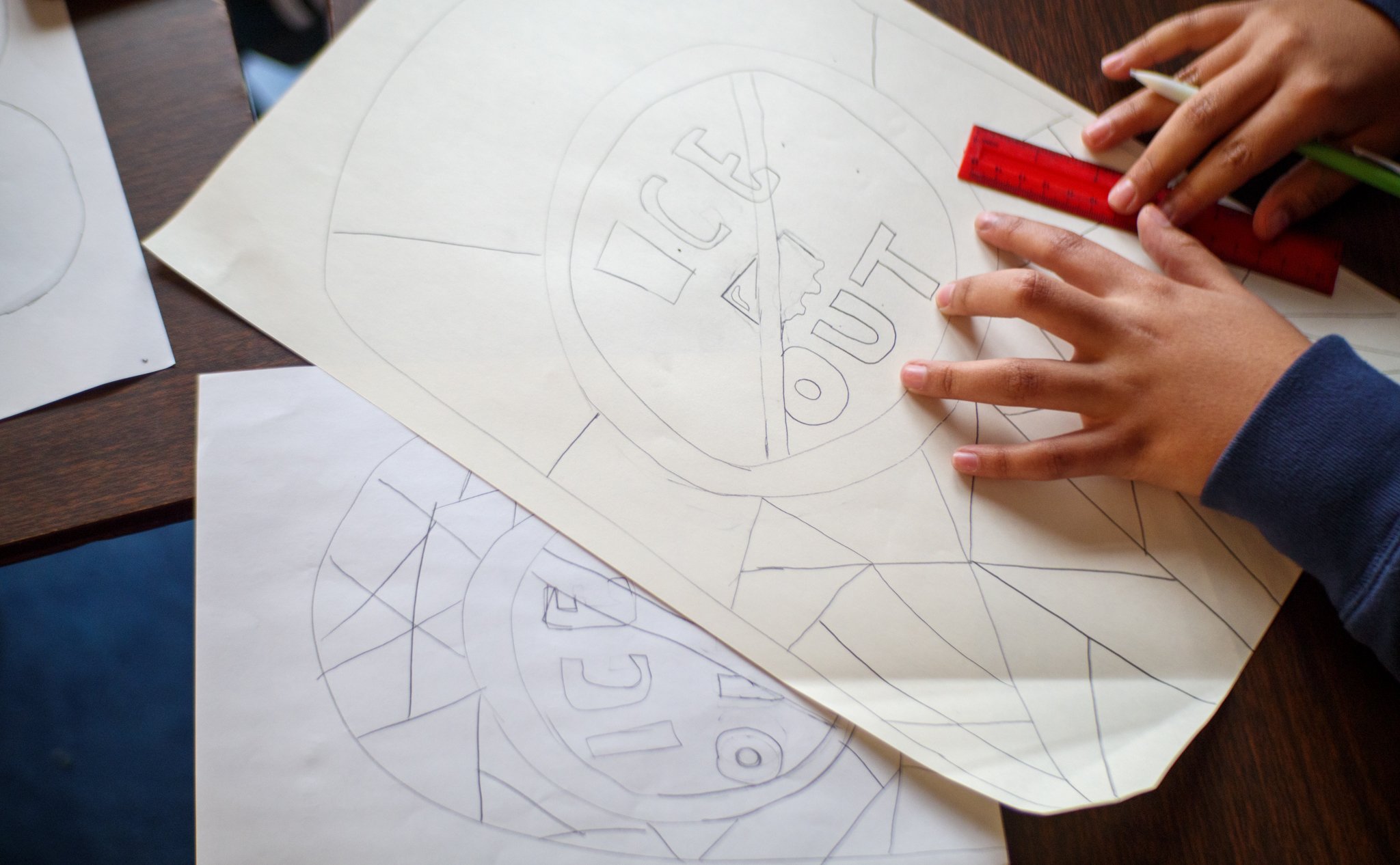
A 6th grader named Delilah used light strokes of a pencil to outline Peanuts character Snoopy holding an “Abolish ICE” sign. When we asked about her message for the piece, she said, “a lot of people are fighting ICE around the country and trying to reunite their families.”
Vitalia, another 6th grade student, drew a teddy bear in front of a geometric pattern and shared that “the bear is meant to be a safe space,” an expression of comfort and empathy in response to the fear and anger communities are feeling from the current administration’s violently racist and anti-human actions.
At West Oakland Middle School…
Teaching Artist Gabby’s project oriented their students’ creative expression toward an environmental direction. When developing their unit plan, Gabby intended for students to explore the fundamentals of visual art through the lens of ecology and human experience. In Gabby’s curriculum notes they wrote, “just as ecosystems are made of interconnected parts that sustain life, and communities are shaped by diverse cultural and social interactions, art is built from elements that interact to create meaning and balance.”
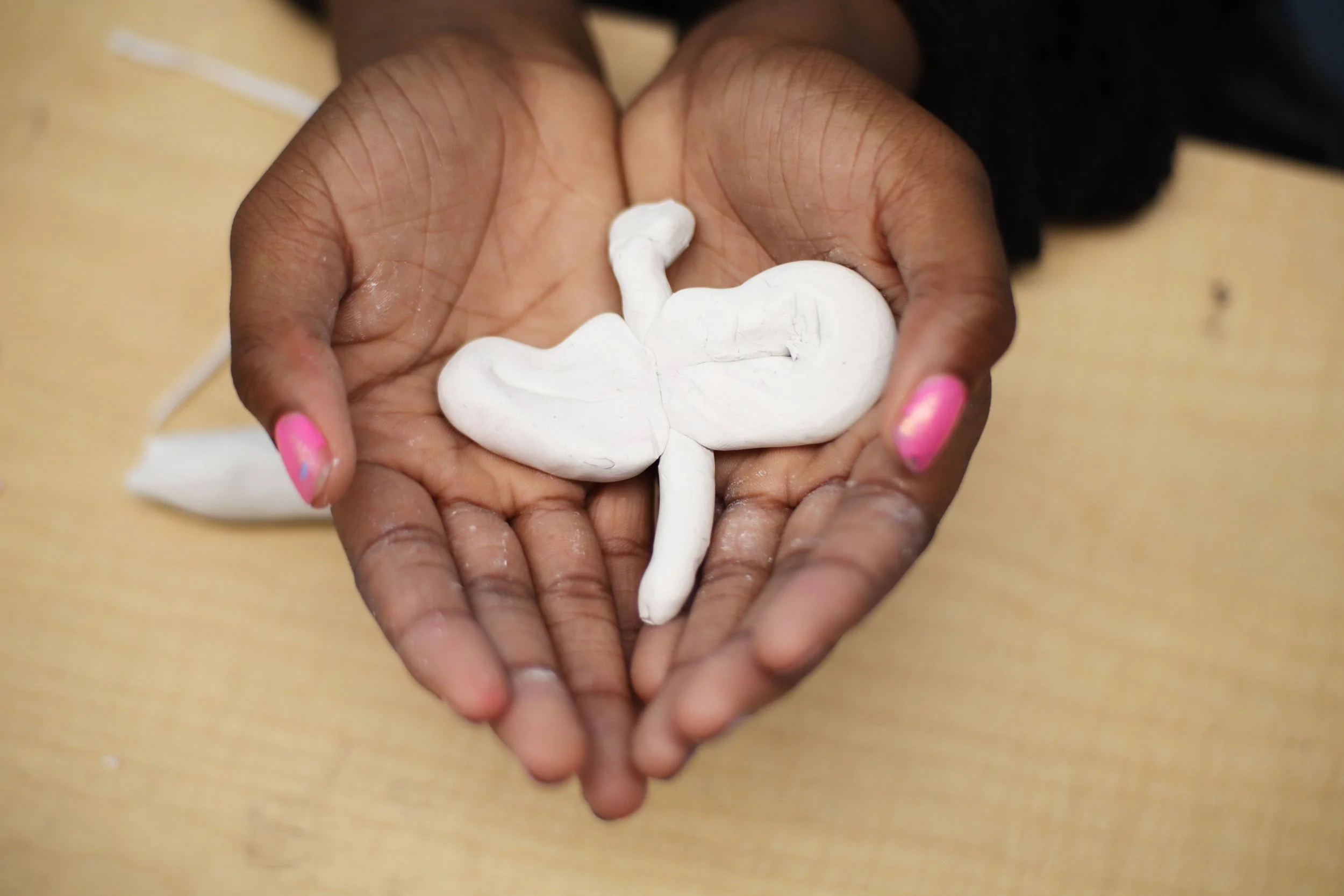
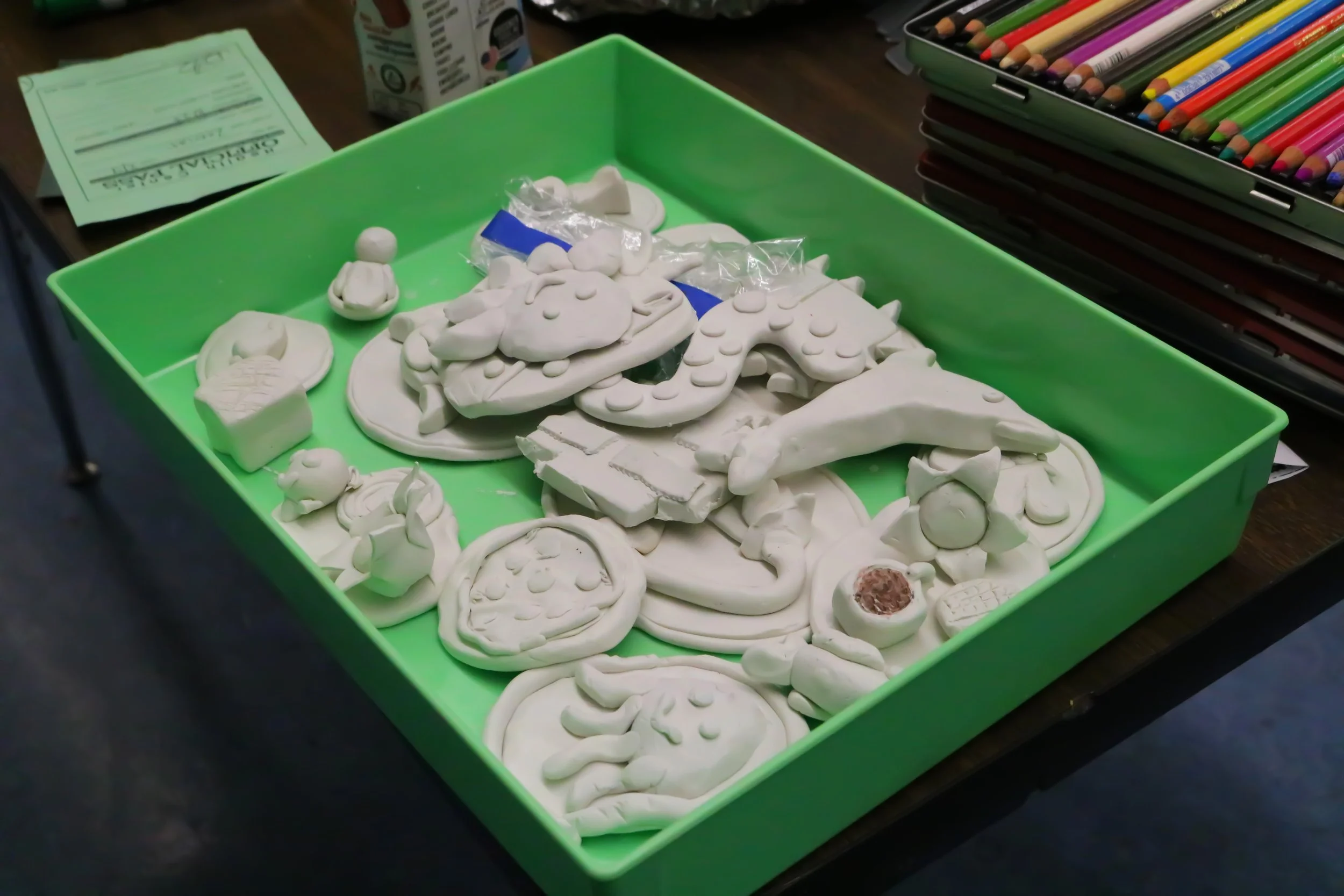
The students explored ecosystems as interconnected systems where living and non-living elements depend on one another. Inspired by ecology, world-building, and sandbox games, students designed and sculpted a cohesive set of clay magnets that exist within the same ecosystem.
Gabby wanted to bring environmental awareness into their classroom through artistic interpretations of ecosystems, allowing the kids to explore the relationships between flora, fauna, and even food, with the rest of their environment. They delve into how giving environmental lessons an artistic twist makes the students much more open to learning and exploring the topic.
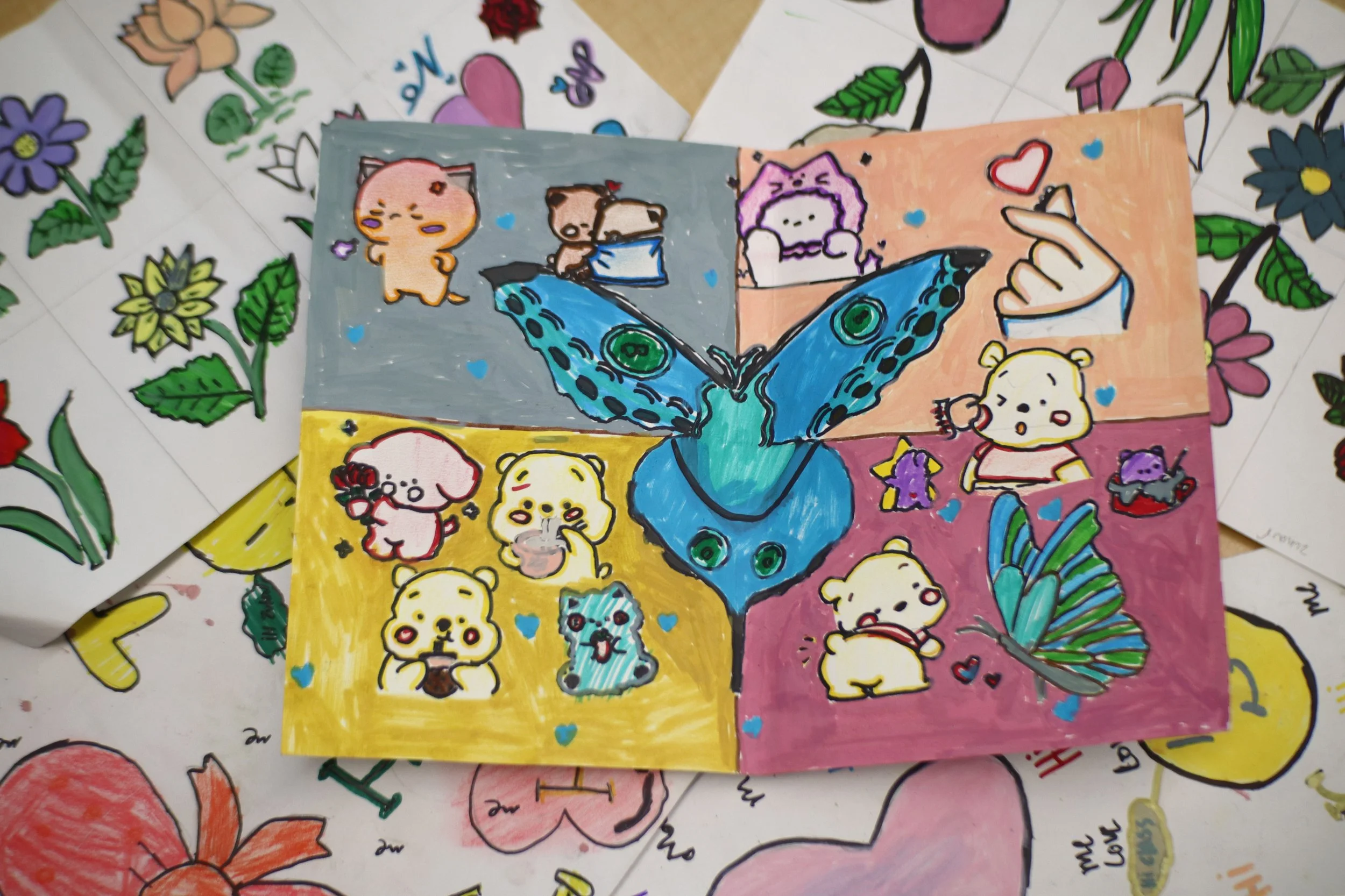
Students began by creating an 8-box planning grid to thoughtfully design each magnet as part of a whole environment. For additional scaffolding, students selected a specific biome (ocean, forest, desert, tundra, etc.) and assigned each box a required ecosystem role (ground element, plants, animals, food source, and natural resource). Students then used clay tools to sculpt their designs, emphasizing form, texture, and relationship between elements. The final magnet sets will function as modular ecosystem stories that can be rearranged and displayed.
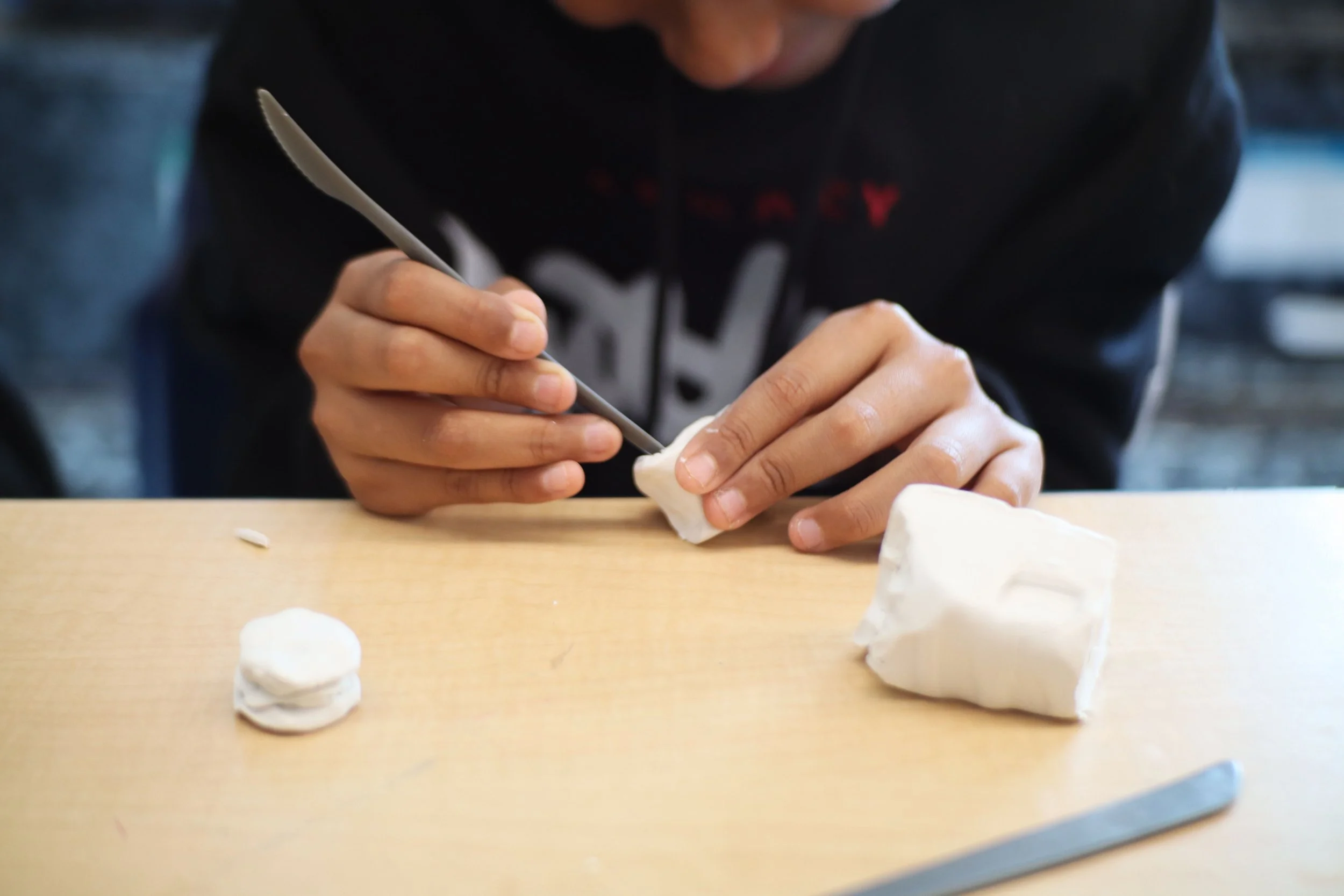
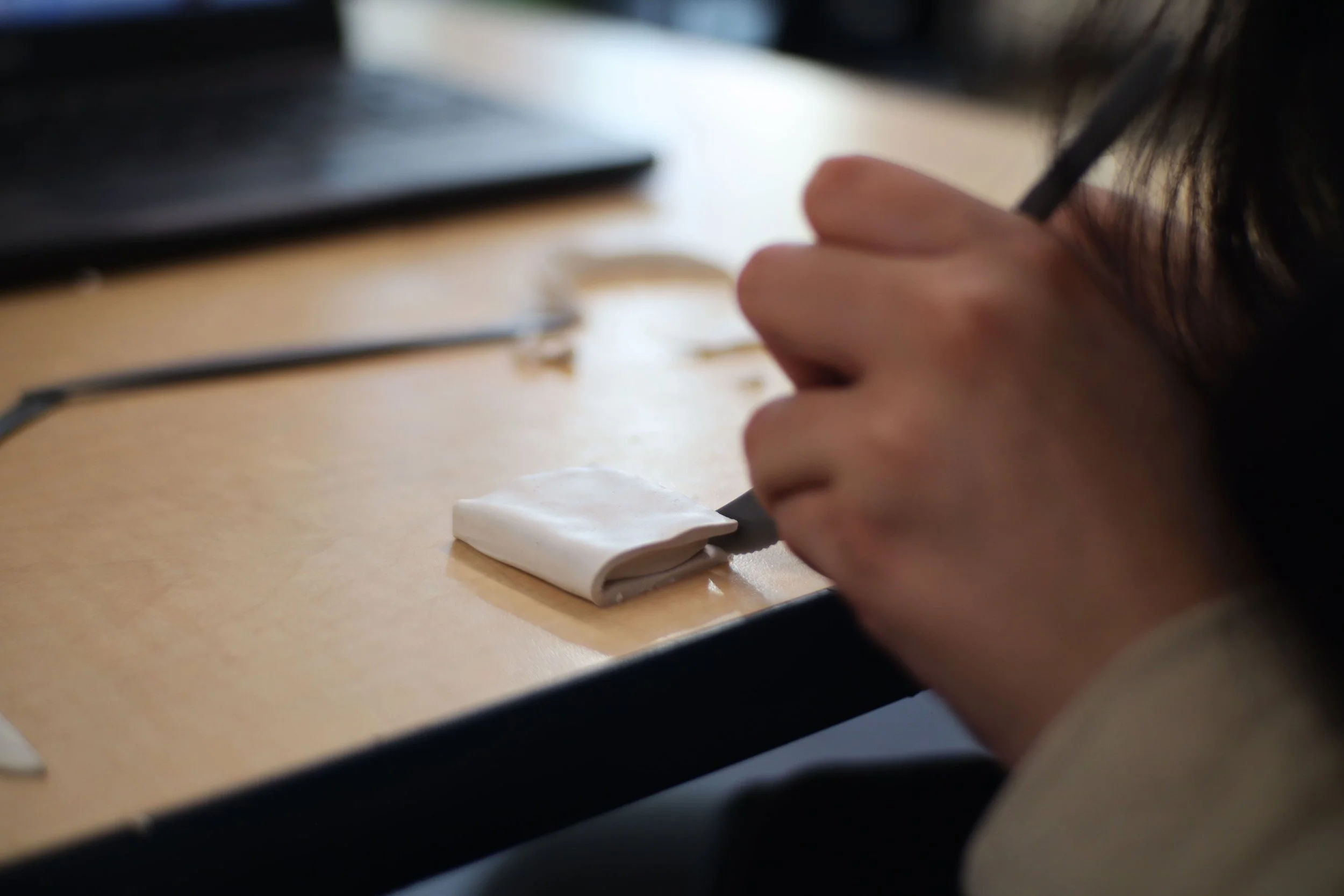
This is an arts integration project—Gabby teaches during the school day in science teacher Mr. Chalo’s classroom. The day we visited the classroom, Gabby’s students were shaping and forming their portions of clay with intent and purpose.
7th grade student Nakiyah shaped ants and centipedes alongside fried eggs and pancakes for their imagined “Bugs and Breakfast” ecosystem. “This is a random concept,” they elaborated, “since these are all things I like.”
Fellow 7th grade student Emely was directly inspired by Japanese animated shows, crafting the clay to represent characters and key objects like masks and symbolic plants.
Each student’s unique individual interests shone through their ecosystem themes.