“Global Textiles” Unit with Hoover Elementary: 28th Annual ArtEsteem Exhibition Series
In this 28th Annual ArtEsteem Exhibition exploration following “Rooted In Oakland, Rooted In Self” with the Legacy Project, we're sharing progress from our after school class at Hoover Elementary for their Global Textiles unit!
Teaching Artist Alexa created a curriculum in which students learn about textile techniques from around the world, the difference between synthetic and natural materials, and how to create their own pattern work by integrating those techniques and materials.
When conceptualizing this unit, Alexa was inspired by her previous cyanotype printing projects, igniting a deeper love for the color blue and a heightened interest in indigo. Through research and project testing, she decided to focus on textile practices from Nigeria, Peru, and Japan. The primary textile practice of the unit is Adire Eleko, an indigo resist-dyeing technique originated by women of the Yoruba people of southwestern Nigeria (Adire = tied and dyed, Eleko = with starch).
After teaching them about the Adire Eleko process and Adire symbols, Alexa encouraged them to integrate the symbols they learned and symbols of their own choice into a design blueprint on paper before starting on the cloth. One student, Ma’Liyah, was focused on applying her concept design centering a tree of life (Ige Iye Adire symbol) to her cloth when we visited Alexa’s classroom. Aaliya, a student who was using symbols ranging from spirals to hearts said, “I like how I get to be creative,” reflecting similar sentiments about personal expression we heard in the classroom: “I used my imagination” and “I really love to draw!”
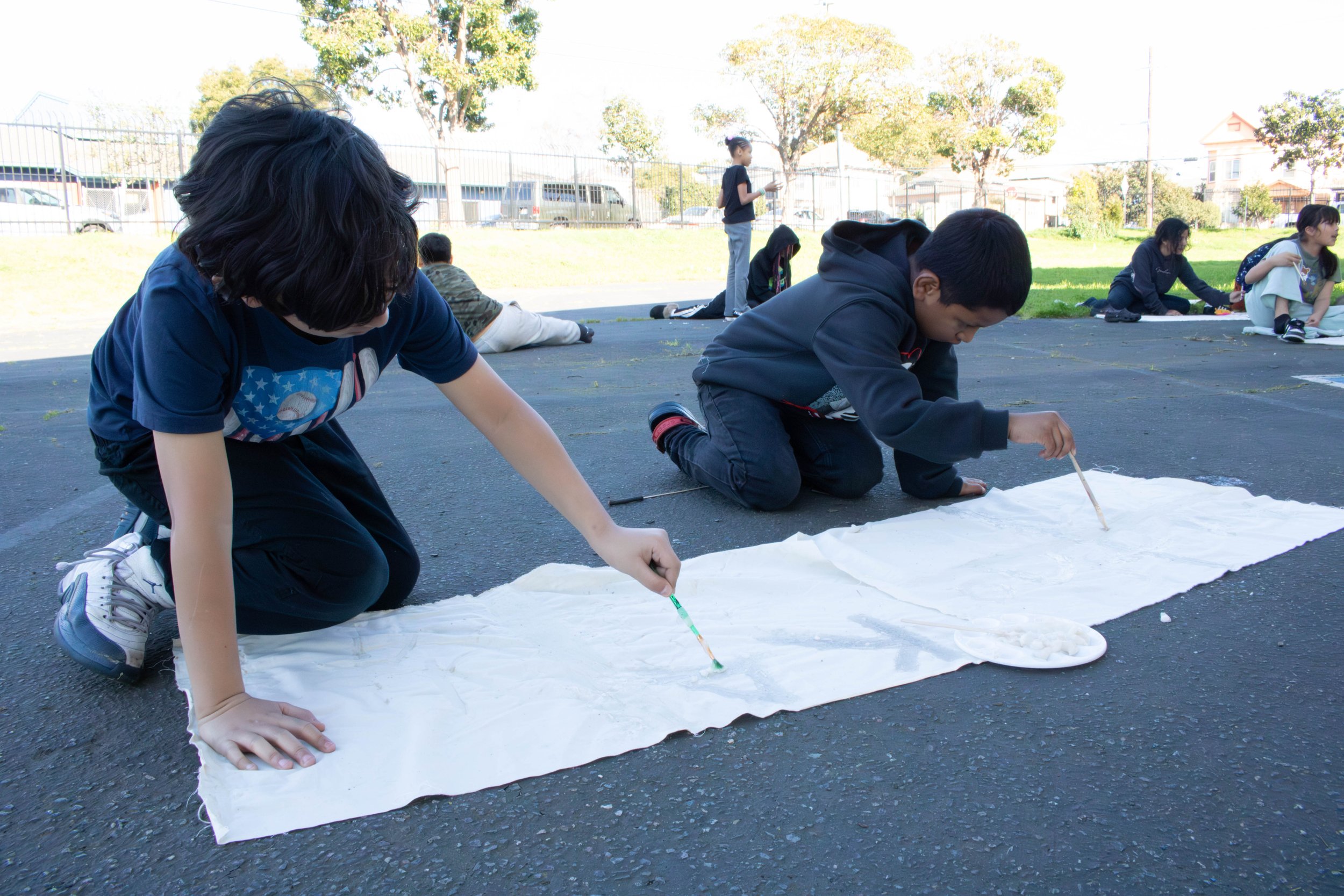
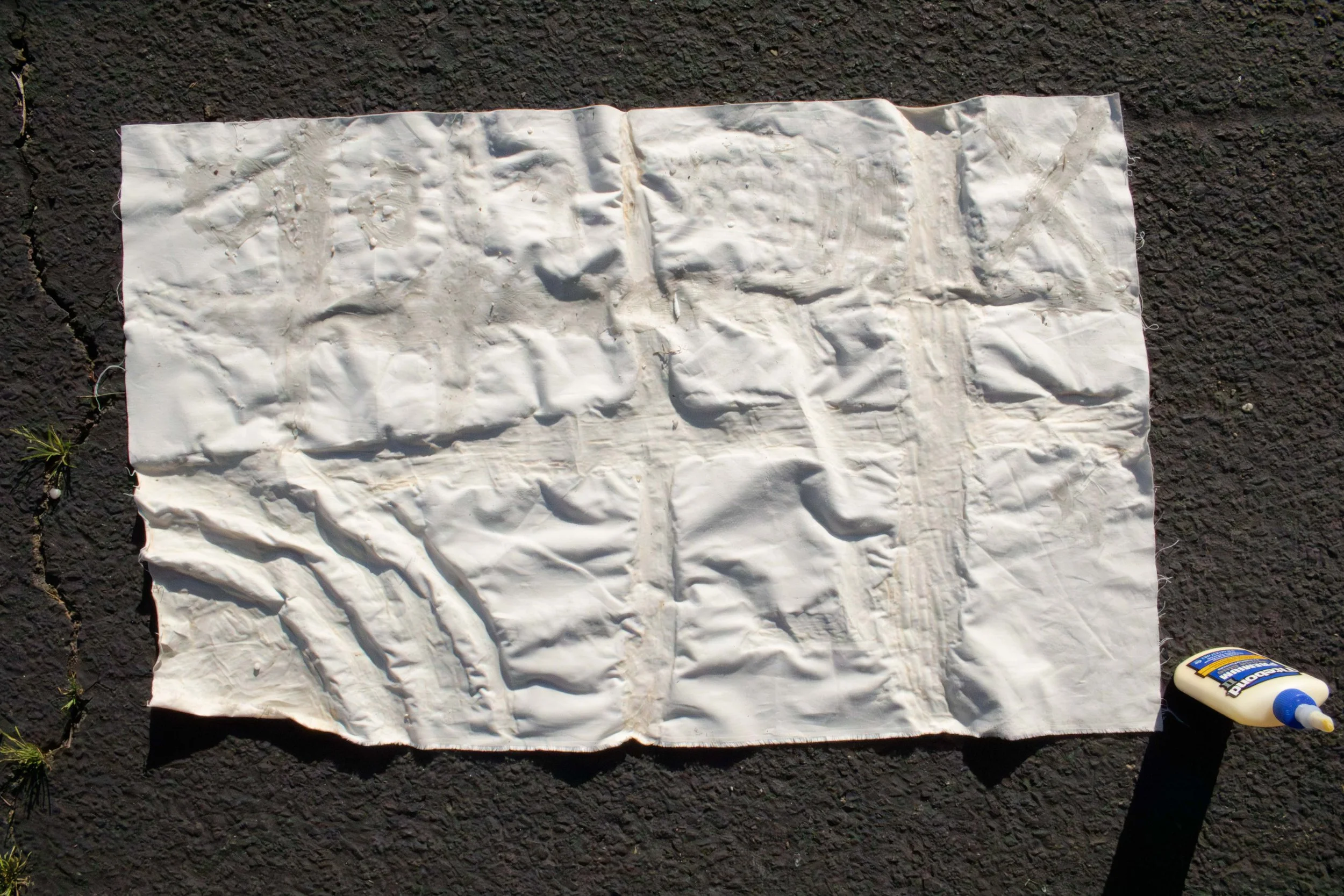
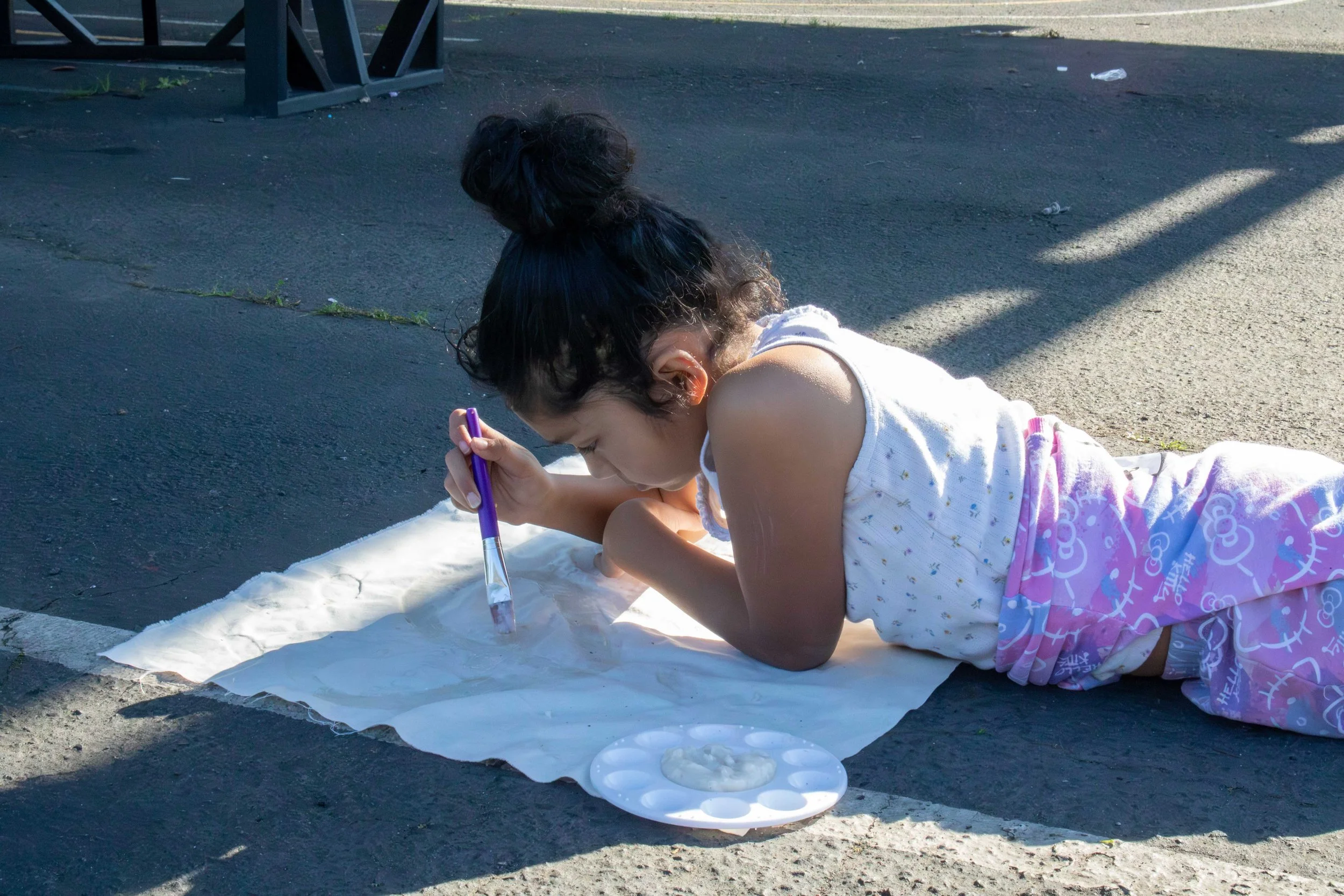
Alexa modified the project to accommodate her 4th grade artists, streamlining the resist-dyeing method of laying a paste made from cassava flour onto the cloth, letting it dry, then dipping the cloth in a tie-dye color of the students’ choice. The paste then can be washed off, leaving a pattern in its absence. “What I envision, thinking about textile from different places, immediately my mind goes to markets. I would love for [these pieces] to hang on the wall [at the Exhibition], drape over chairs…” Alexa explains.
It’s easy to see Alexa’s vision in progress. During our classroom visit in early February, the students scattered across the pavement, warmed by the California sun, spreading the cassava flour paste onto muslin in various shapes and letters. There’s a levity and peace to the space.
When asked about her favorite aspect of working with her class, Alexa answers candidly. “We’re learning together. I like to get outside of my box to show them that it’s okay to get out of their box, and that’s when really cool things happen.” She explains how the unbridled creativity of young children is her favorite thing about working with this age group.
The after school class is a crucial space for the students as well. Alexa explained to us how it’s impacted everyone positively: “Starting off there was a student who refused to speak to me. The first day of class, he wrote ‘I hate art’ on a piece of paper. Then, one day, we had a chitchat, and found out what he was feeling, why he was feeling, and we explained to him that he could use [the class] as an outlet.” It’s clear to see how helpful a designated space for self expression can be: “Now he speaks to me. He’s coming out of his shell a lot. He’s a good artist—he focused. He’s very into it.” Alexa continues to explain how exploring different forms of art has excited her students. They enjoy exploring and experimenting with new materials more than they do when they’re given materials that most standard classrooms tend to have access to, like colored pencils and crayons.
Alexa’s class is getting closer day by day to producing the final projects you will see at the 28th Annual ArtEsteem Exhibition! Stay tuned, and we hope to see you there on Saturday, April 18th!