

Environmental Exploration in the Summertime with Oakland Legacy Project

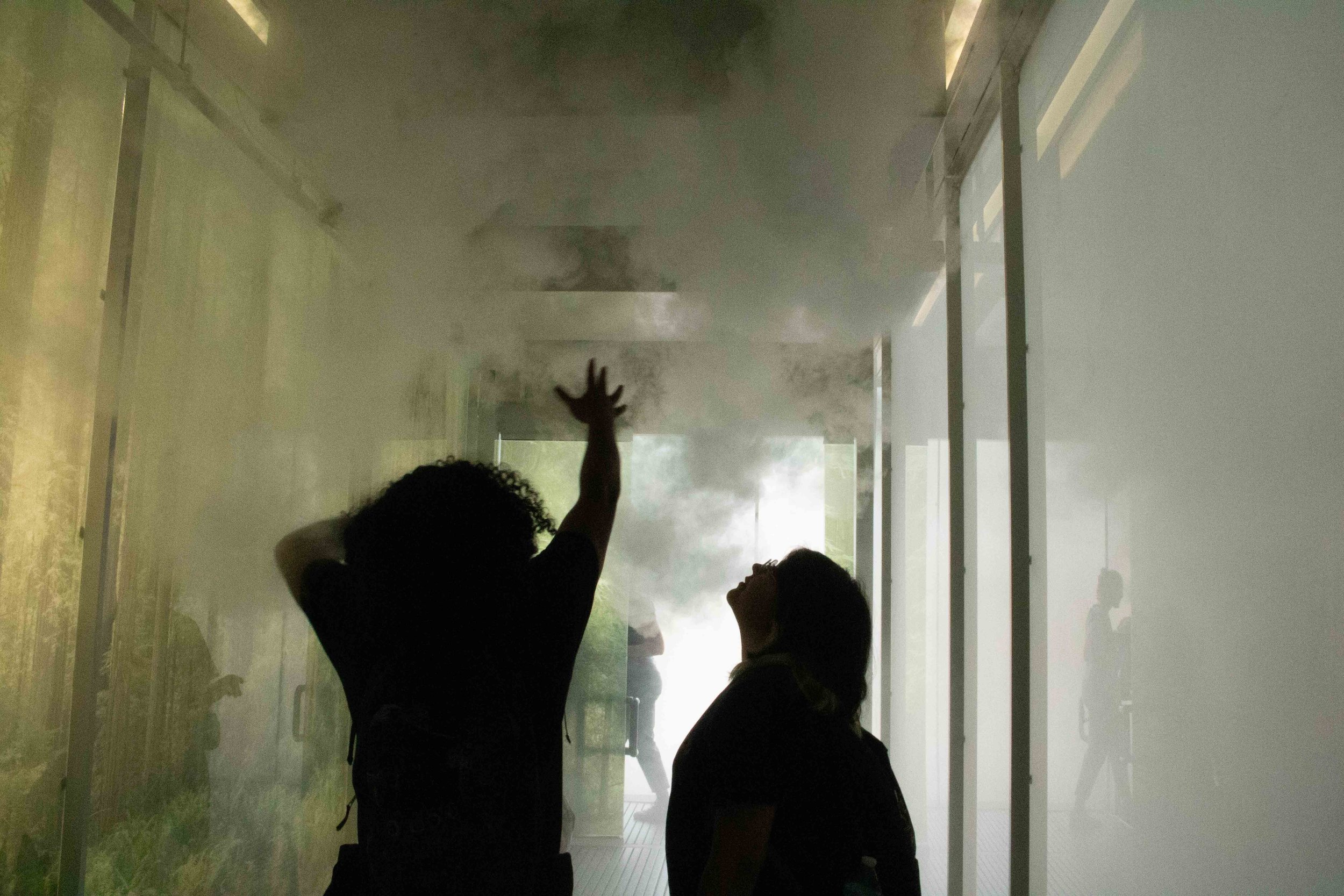
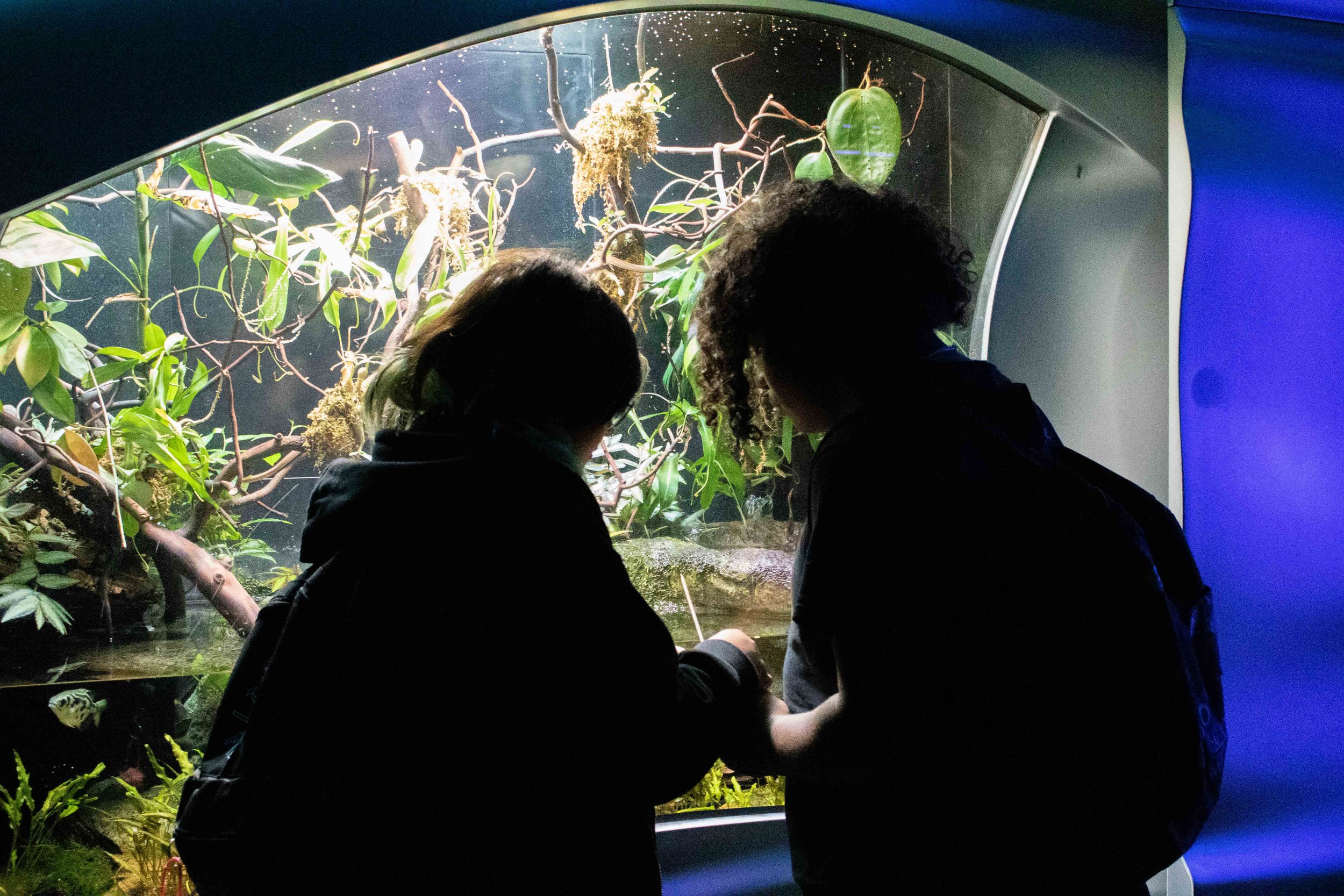

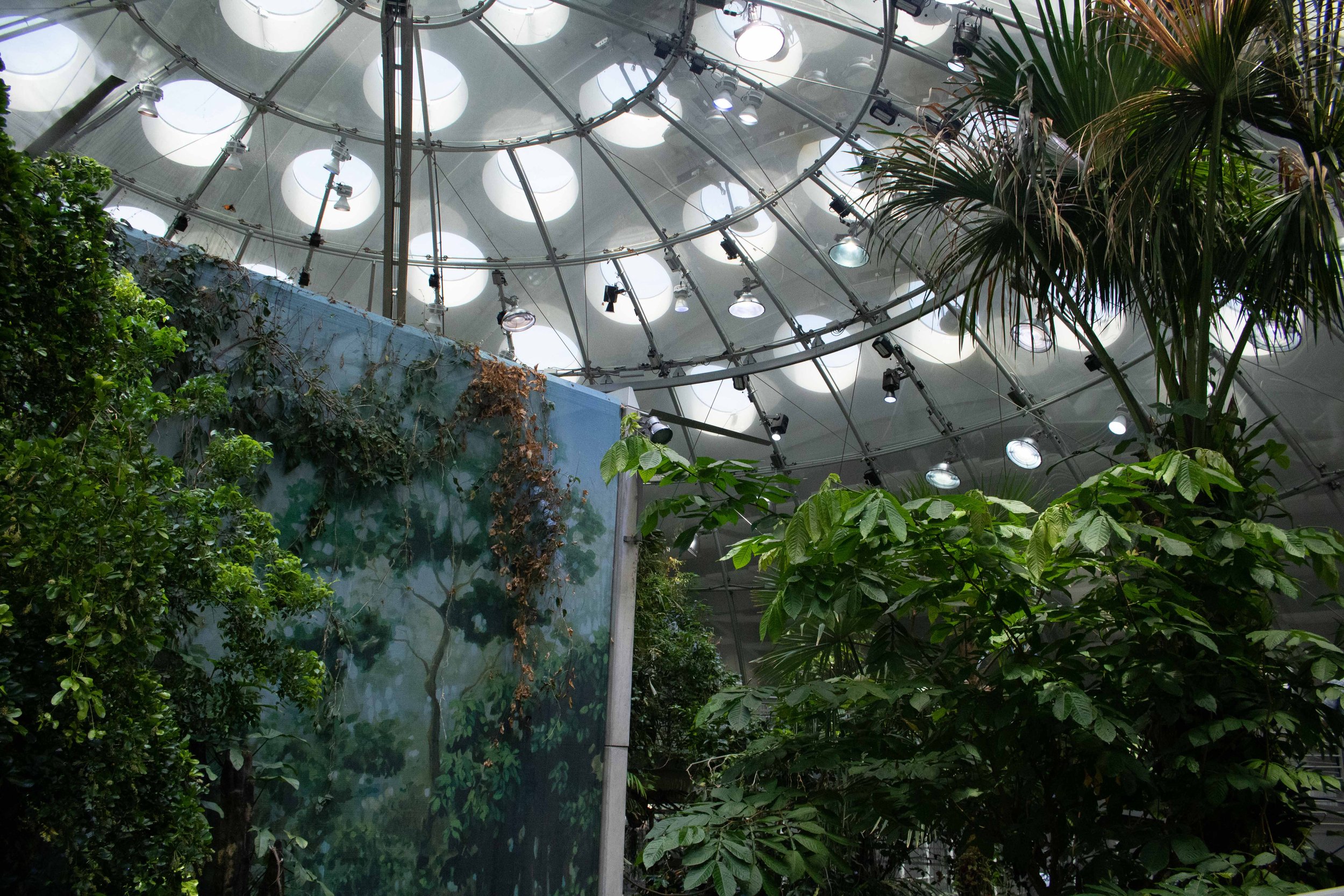
The students of ArtEsteem’s after-school leadership program, the Oakland Legacy Project, were invited to participate in an immersive three day summer camp. With City Slicker Farms (CSF) as a home base for classroom learning, Program Manager Charlena Wynn and Oakland Legacy Project Coordinator Athena Sabaria led participants in tackling environmental issues through creative self-empowerment.
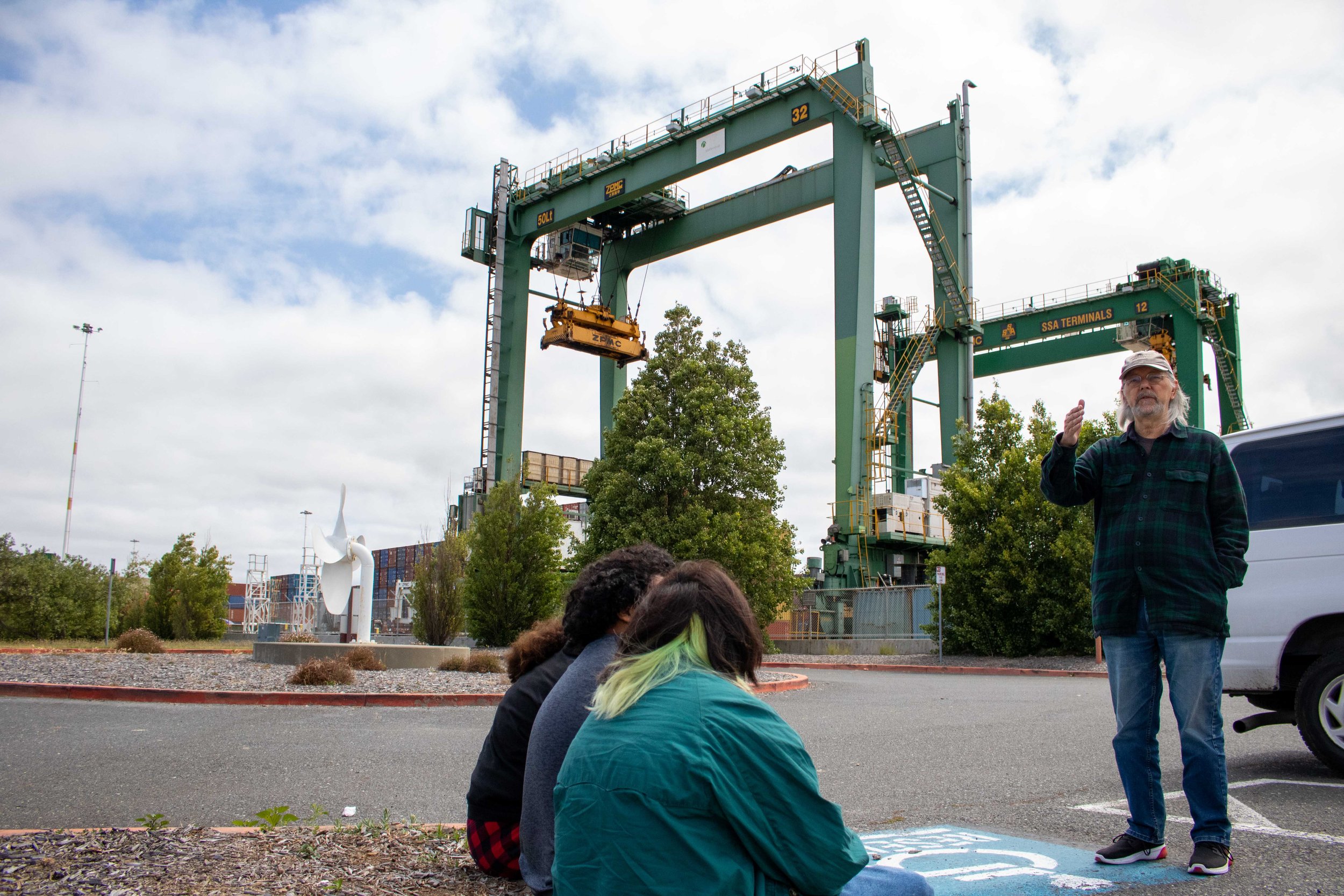
On day 1, participants met with Brian Beveridge and Meet Panchal of West Oakland Environmental Indicators (WOEIP) for a Toxicity Tour to better understand the history of environmental racism impacting West Oakland communities. Participants visited the concrete mill and metal recycling facilities near CSF and discussed how the weak industry regulation has allowed these businesses to pollute the neighborhood air, water, and streets. Through acute and prolonged exposures to these toxins, low-income communities of color are at a higher risk of developing respiratory illnesses and cancers. Brian encouraged students with the hopeful message that community advocacy and education incites change for the better.
Passing by idle trucks lining the port of Oakland, the next stop on the Toxicity Tour was Shoreline Park. They reviewed how the trucking industry and cargo ships is an unfortunate necessity of globalization. In order to get grapes from Chile during California’s winter months, trucks have to wait for shipments to arrive, leaching carcinogens and greenhouse gases into West Oakland neighborhoods. Participants reflected on how this knowledge will inform their consumer habits.
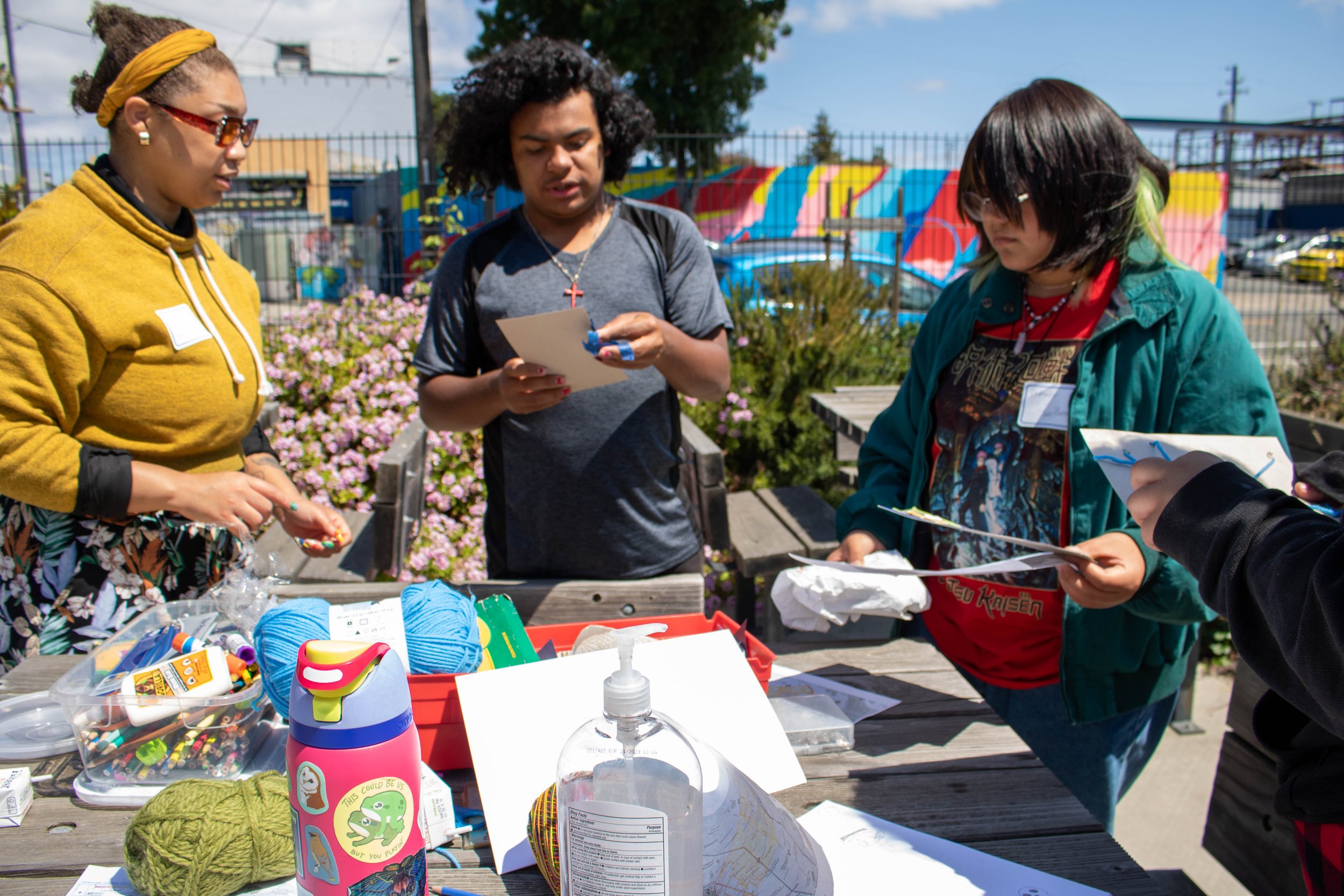
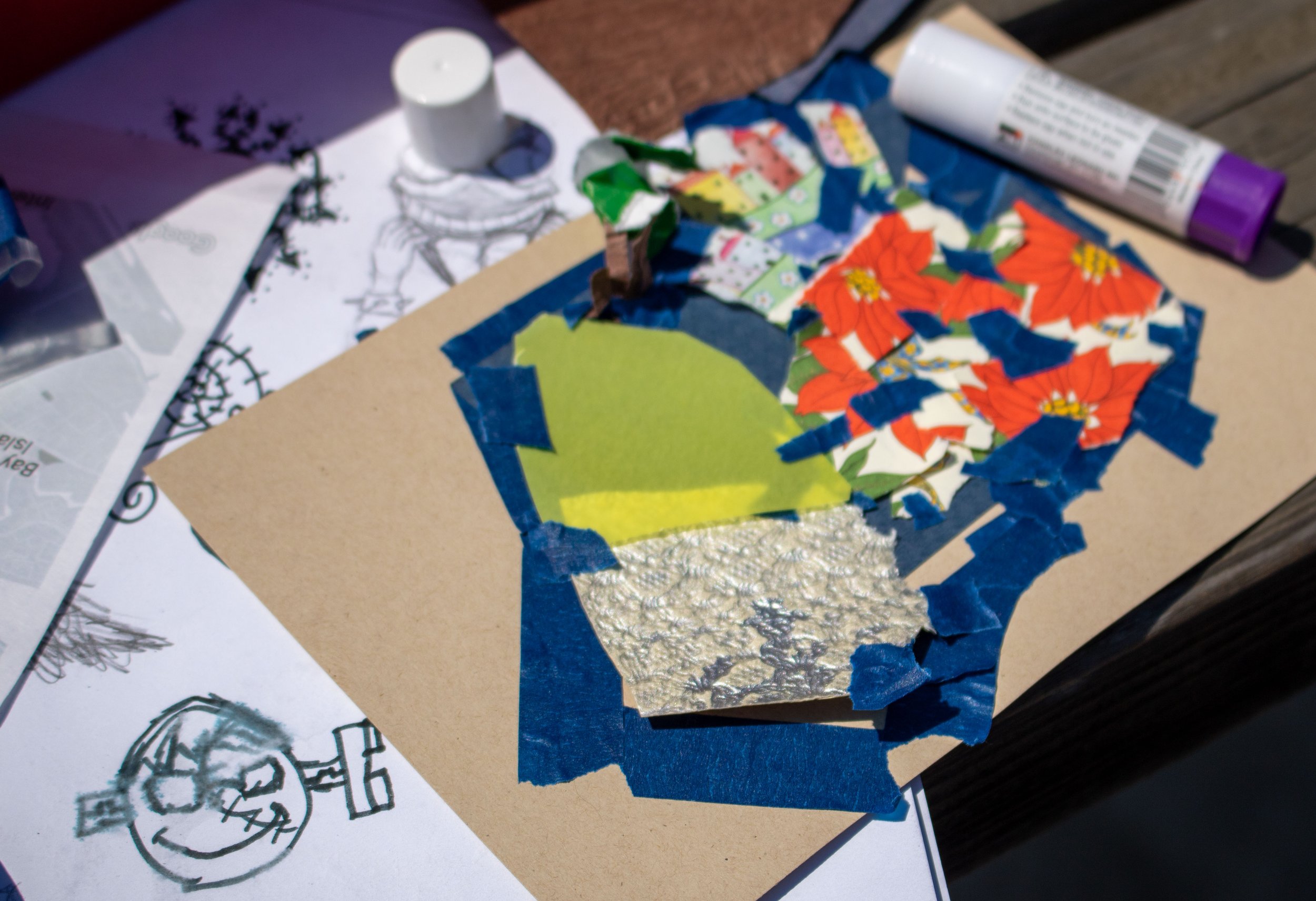
When they returned to CSF, participants were asked to reflect on the environmental injustices they learned about and what they would want to change. “I would get rid of the trash,” says participant Bryan Saavedra. Using materials such as yarn, specialty paper, and buttons, they created mixed media maps showing how they would reimagine Oakland to look.
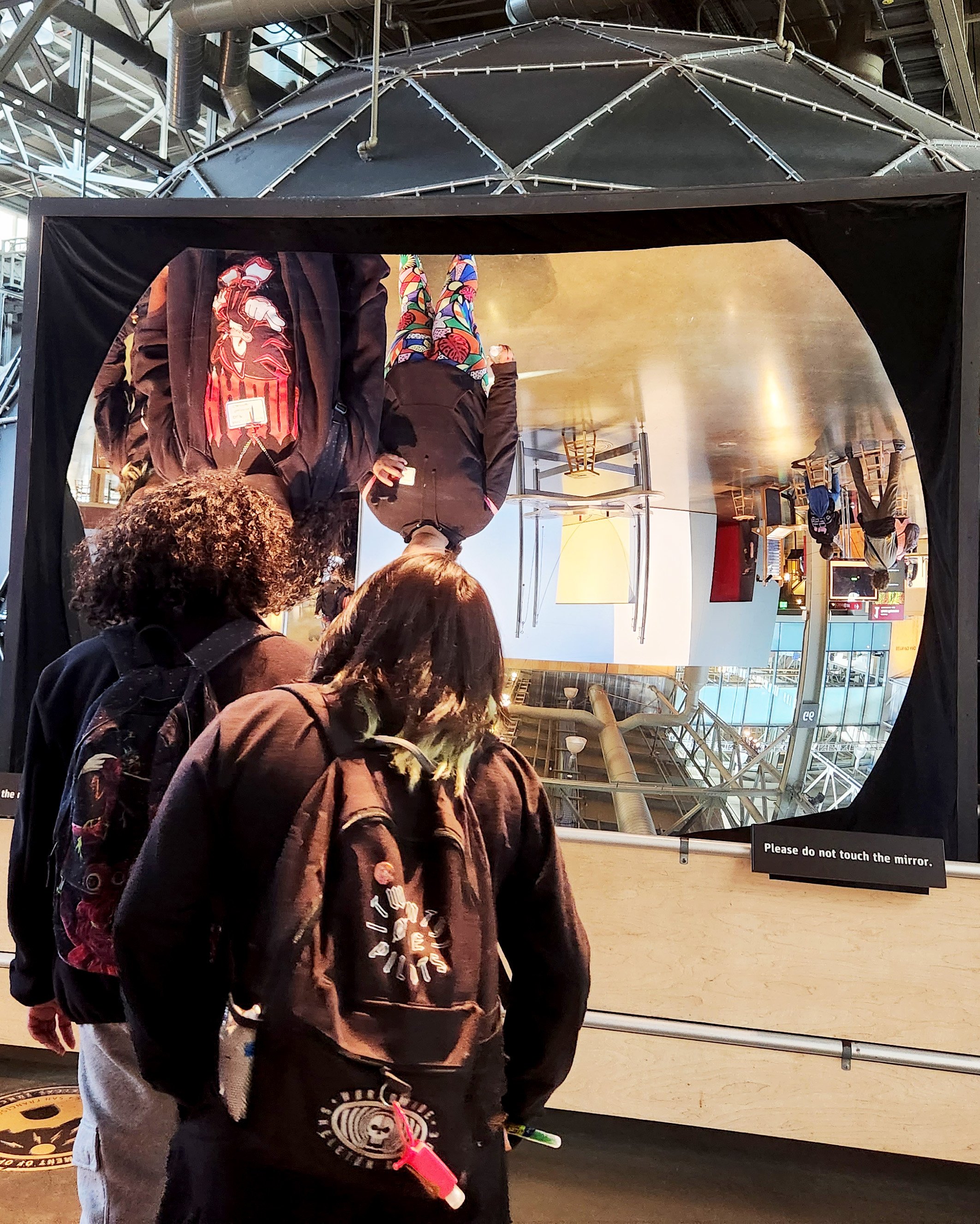
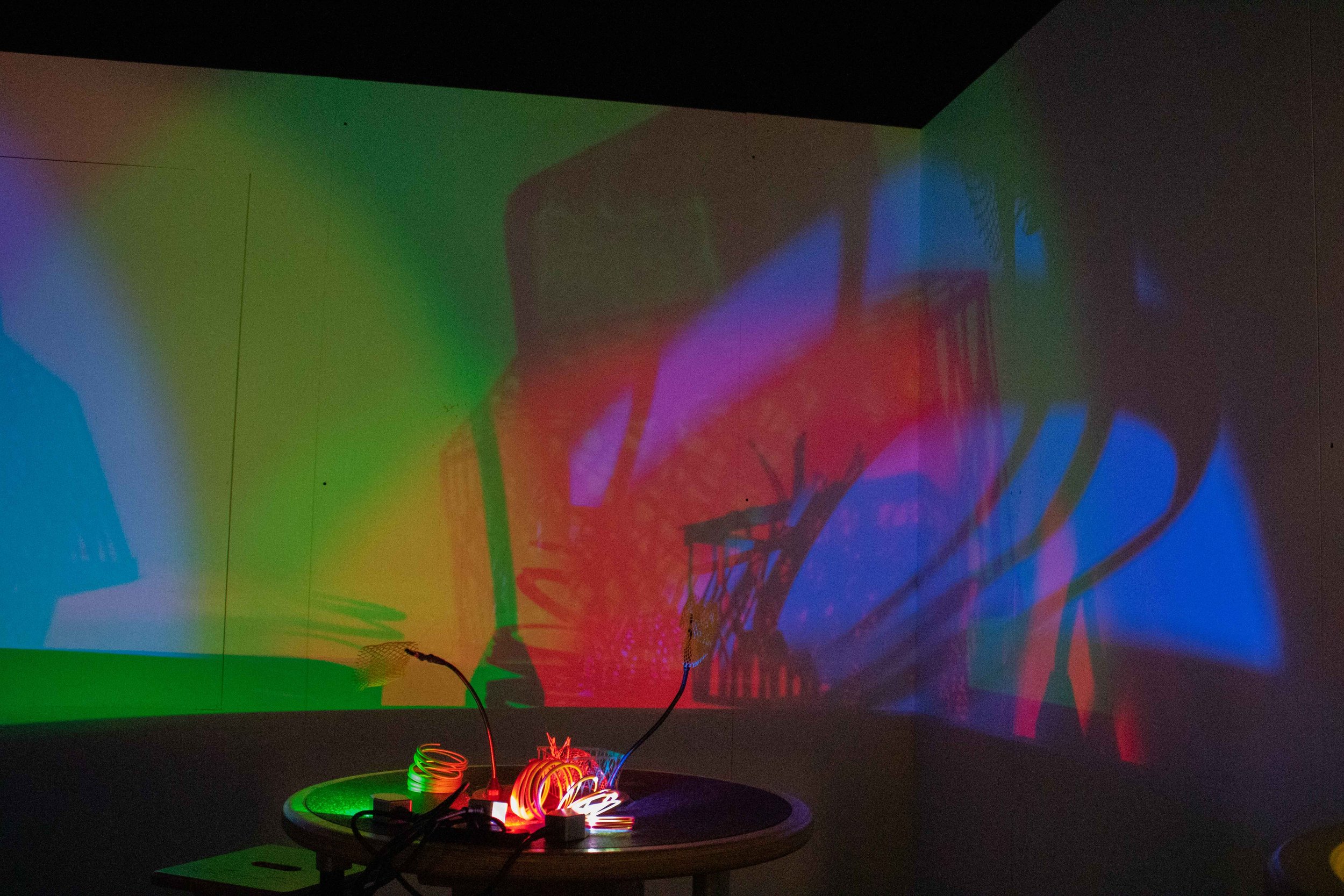
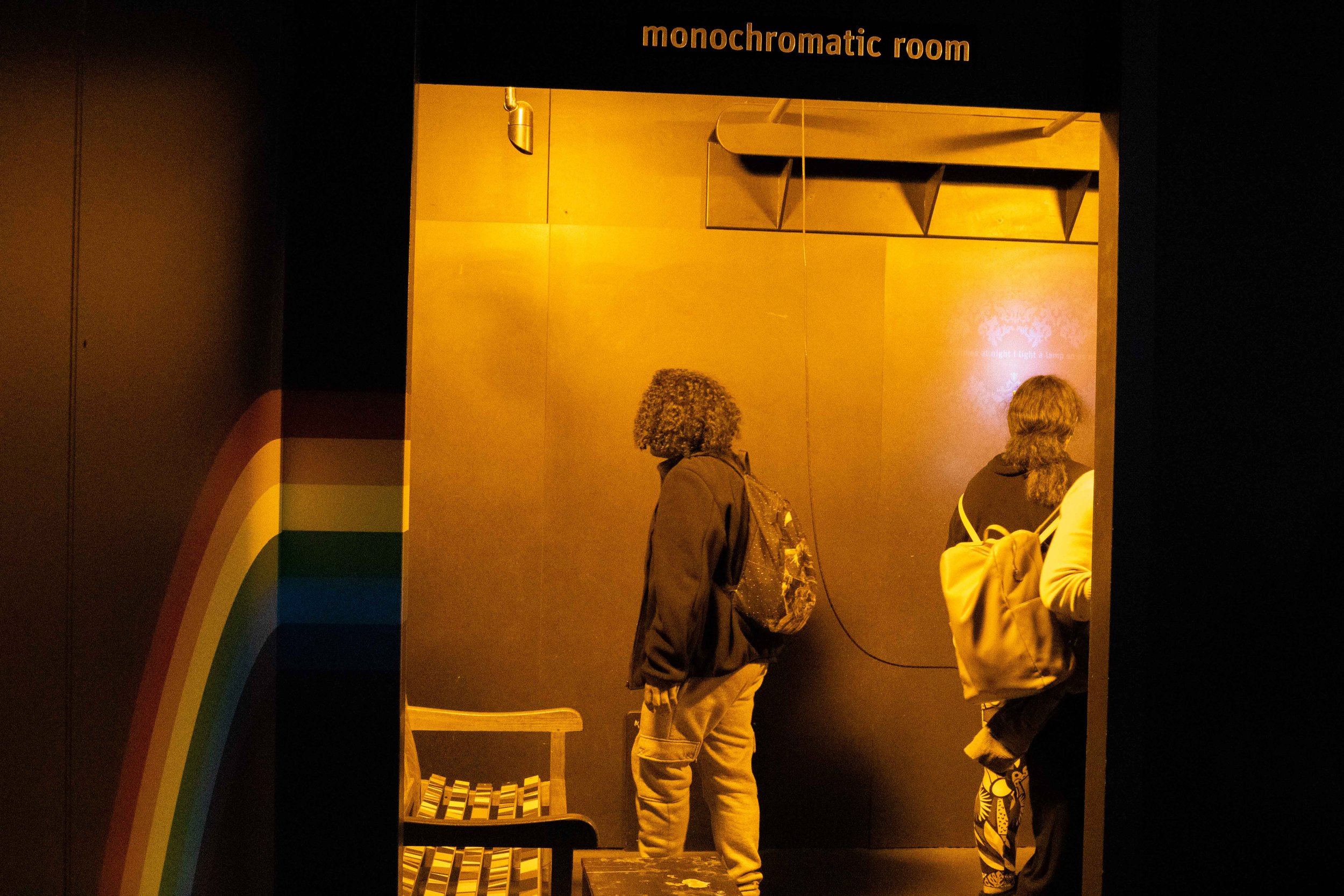
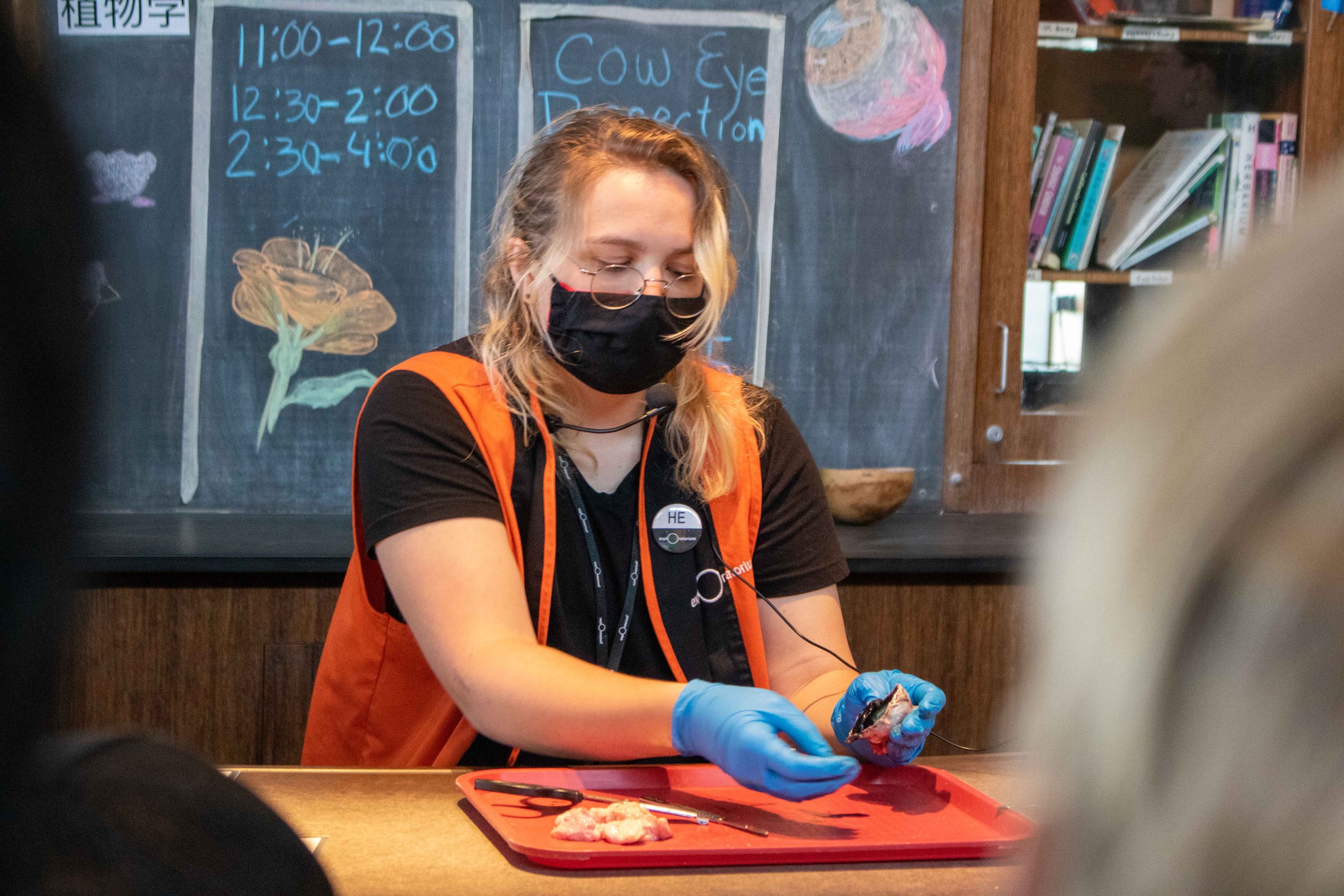
The second destination of Oakland Legacy Summer Camp was the SF Exploratorium. Interactive exhibits offered insight into the sciences of color, temperature, sound, and the human body. Participants were left to ponder: How can art be a tool in conveying educational concepts?
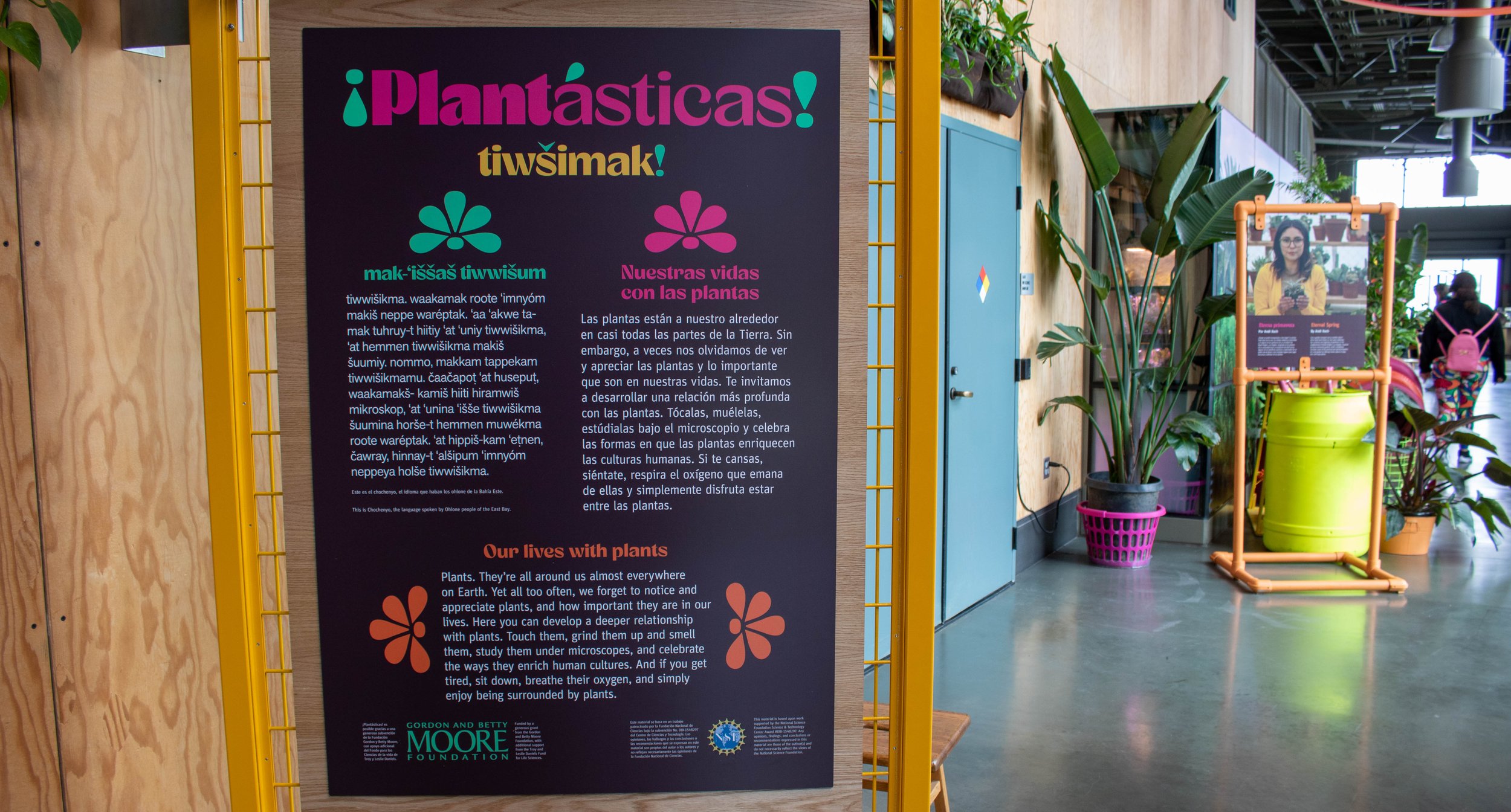
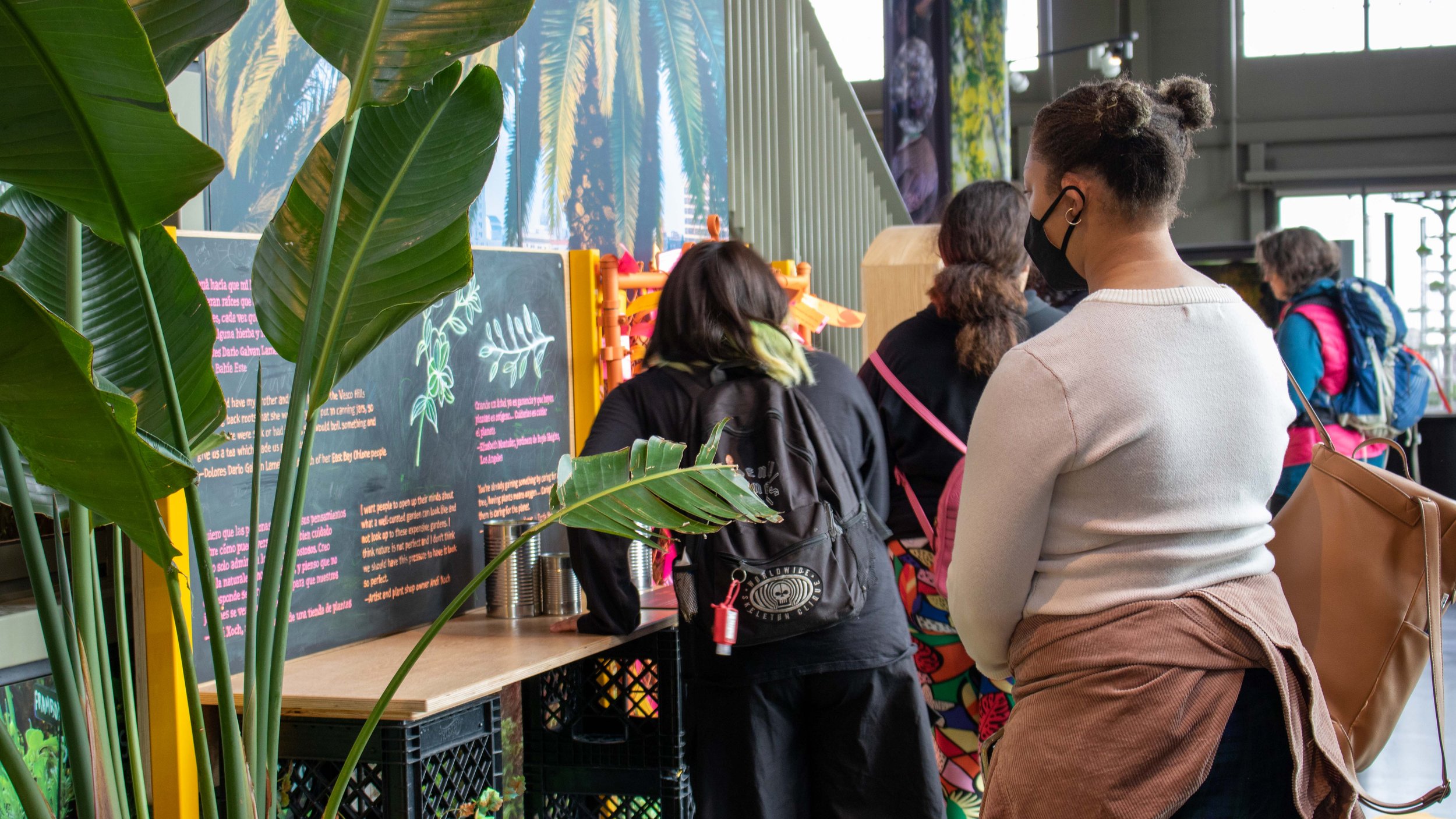
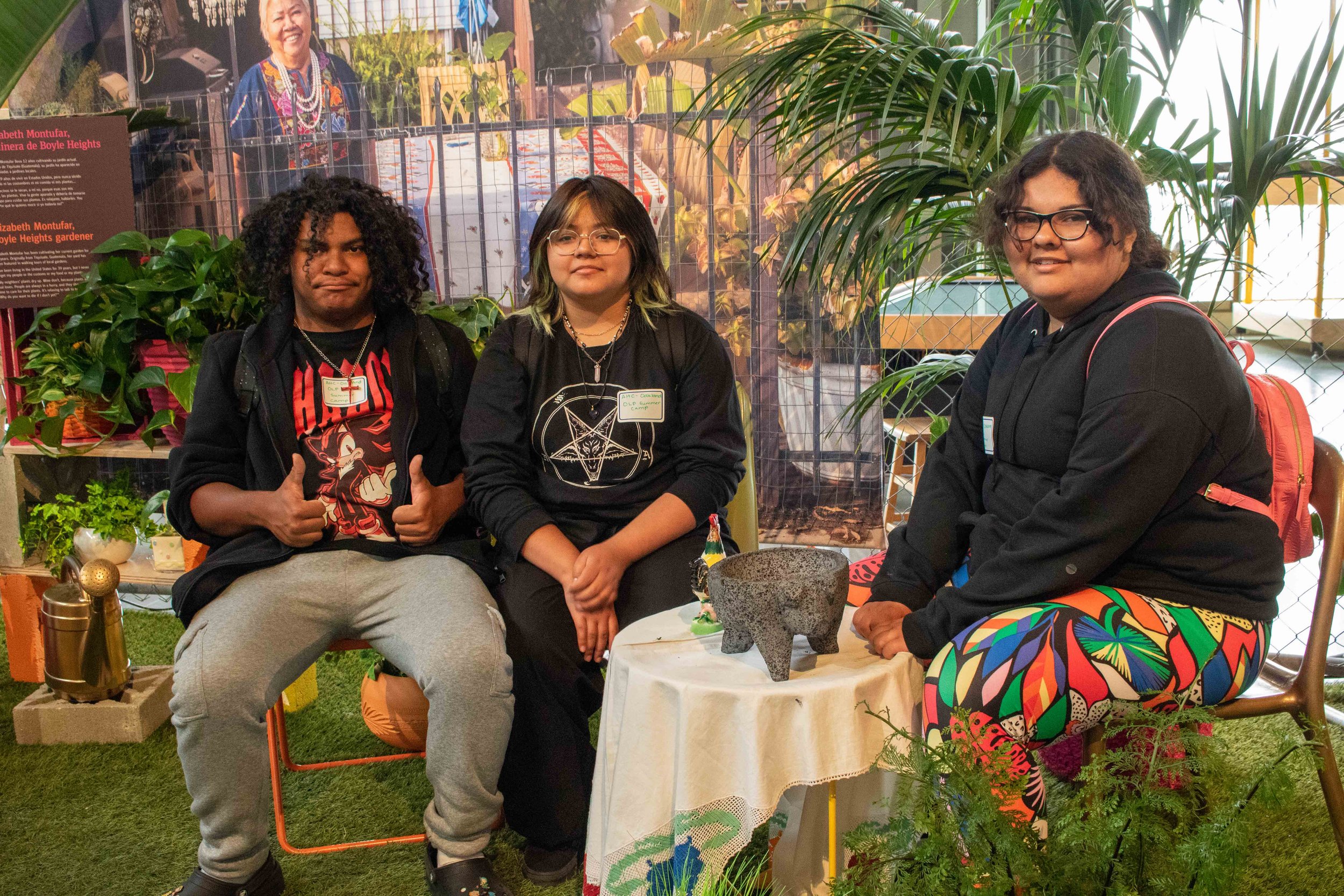
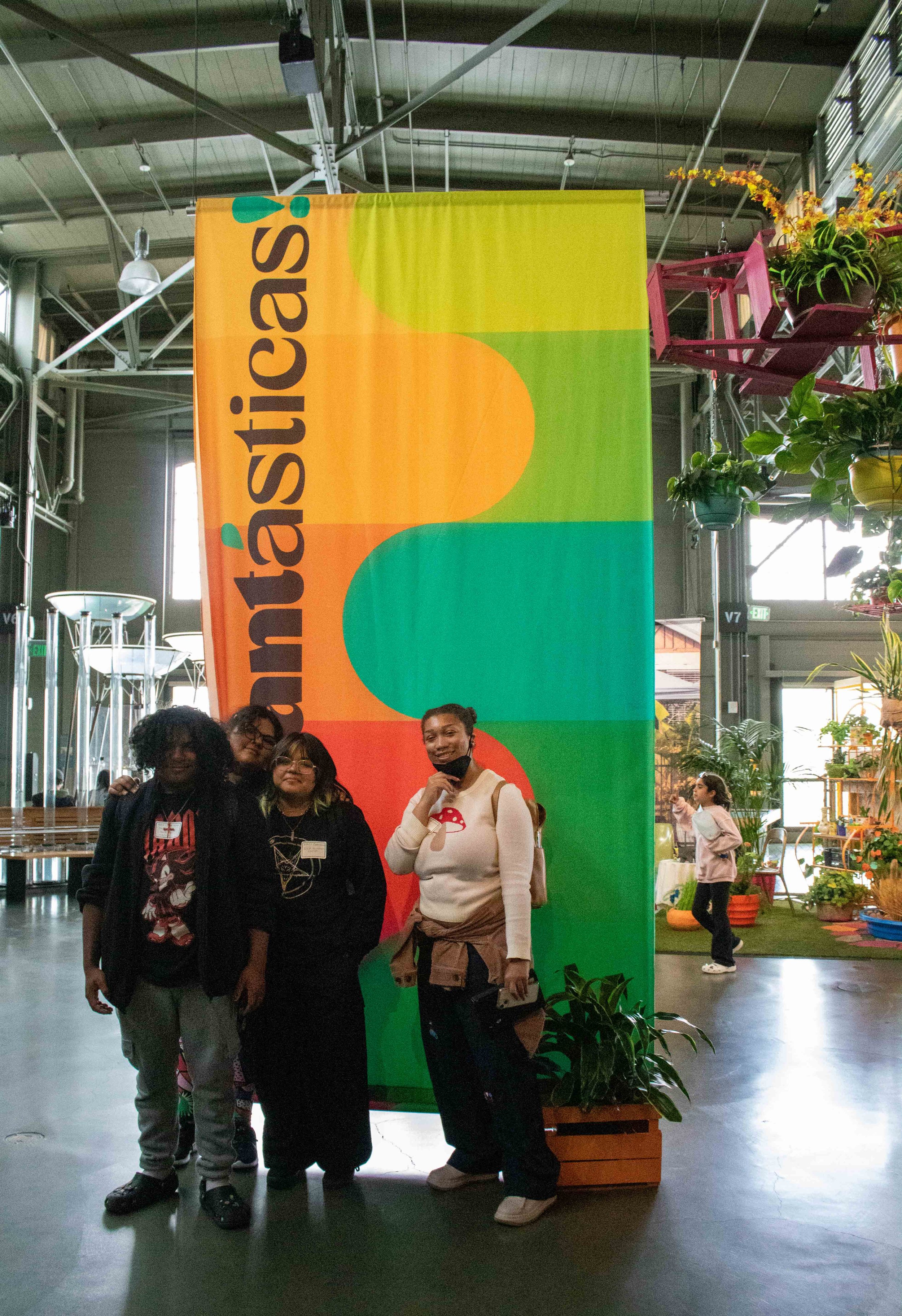
The ¡Plantásticas! exhibit offered the most relevant learning experience to Legacy in environmental advocacy. Participants got to learn about the cultural relevance of native plants through tactile and olfactory engagement, culinary and medicinal uses, and ecological significance. Displays included descriptions in Spanish and Chochenyo, the language of the Ohlone people of the East Bay. These narratives shared the indigenous practices of reciprocity through our relationships with plants and the environment.
OLP Coordinator Athena reflects on their experience. “Growing up in the Bay Area, I often went to education museums like the Exploratorium. It makes me smile that in the ¡Plantásticas! exhibit, they are prioritizing sharing knowledge with people of indigenous and Latine descent. By putting English as the third language in the displays, you acknowledge who has been historically excluded in these spaces, and who has been dominating the narratives.”
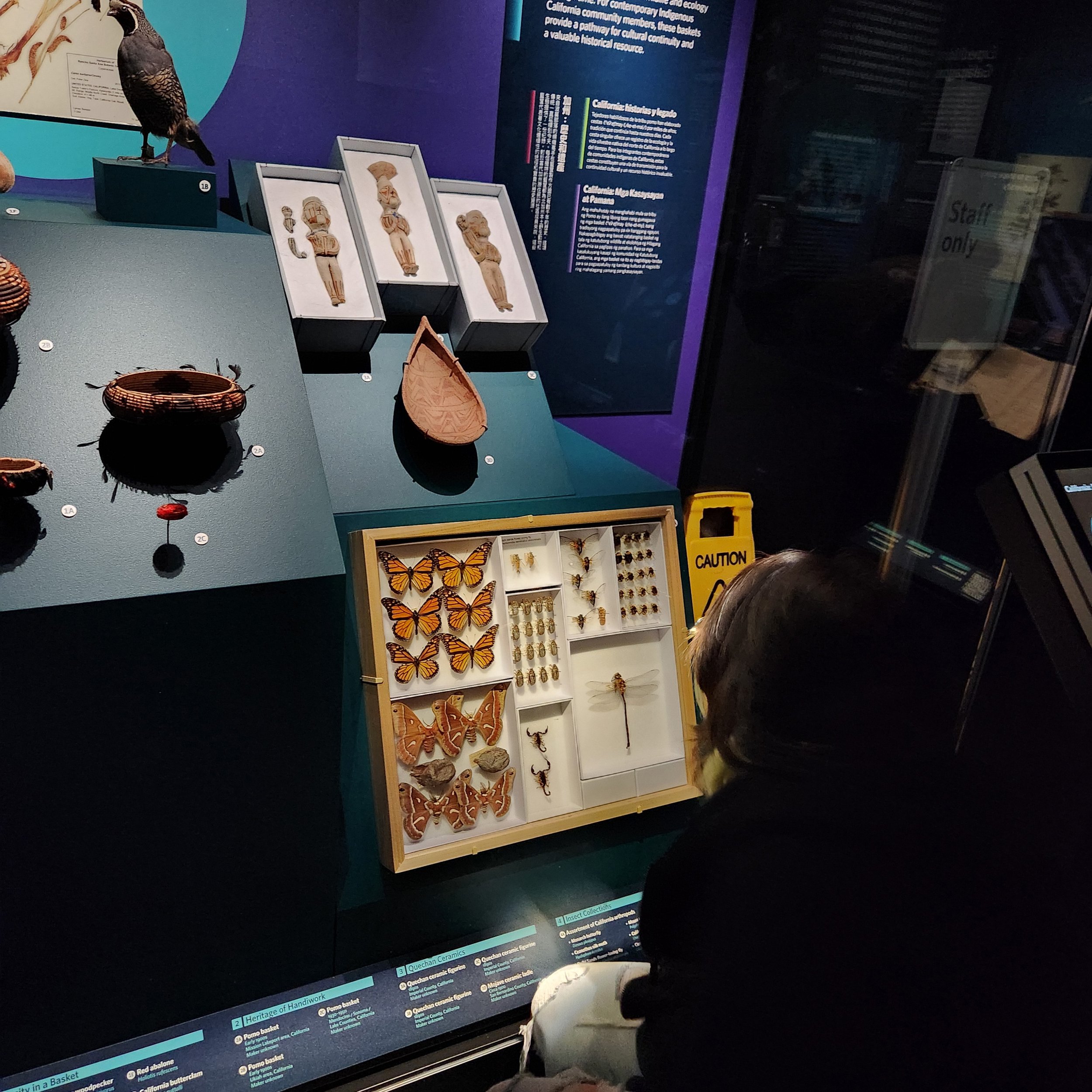
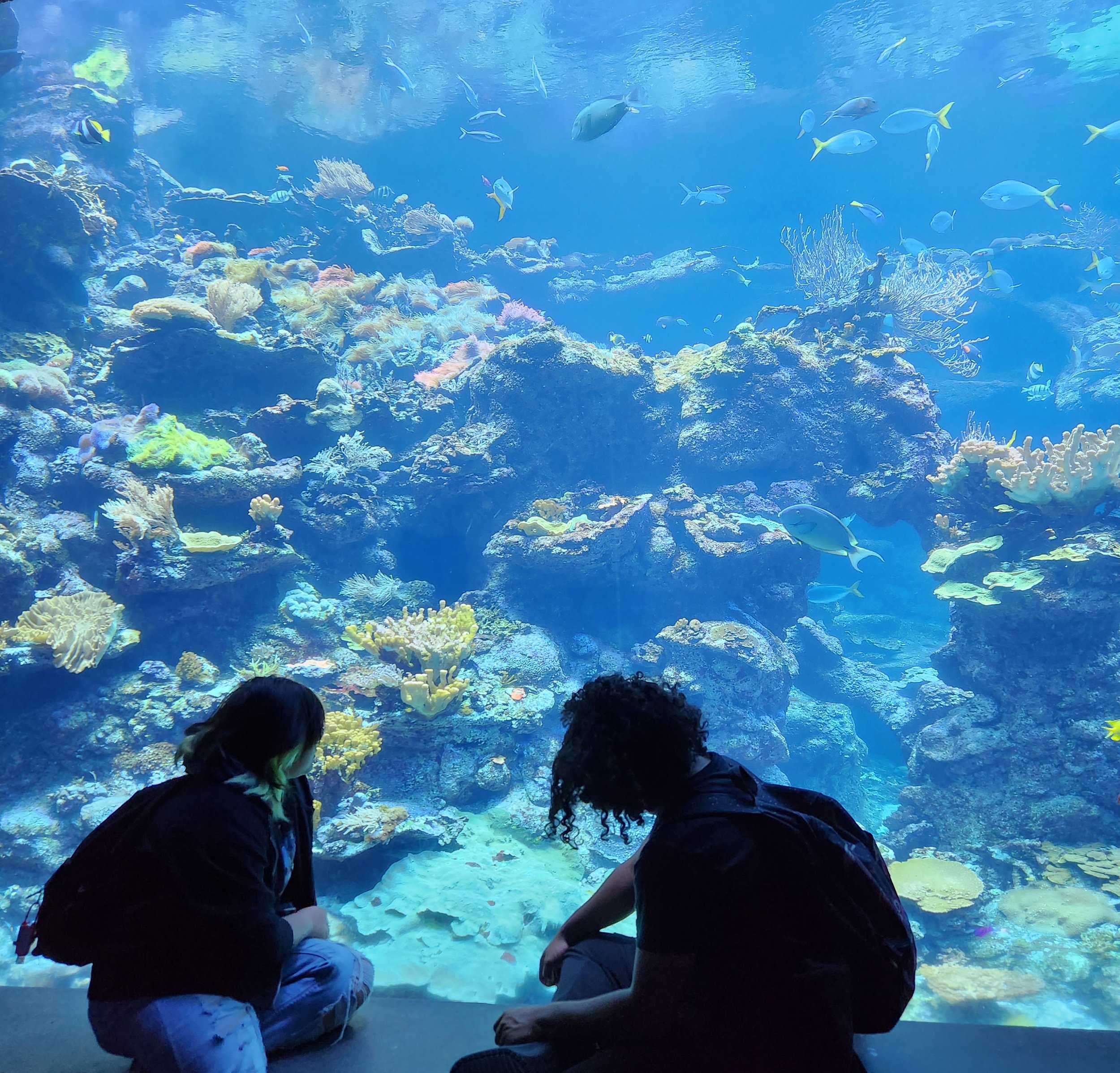
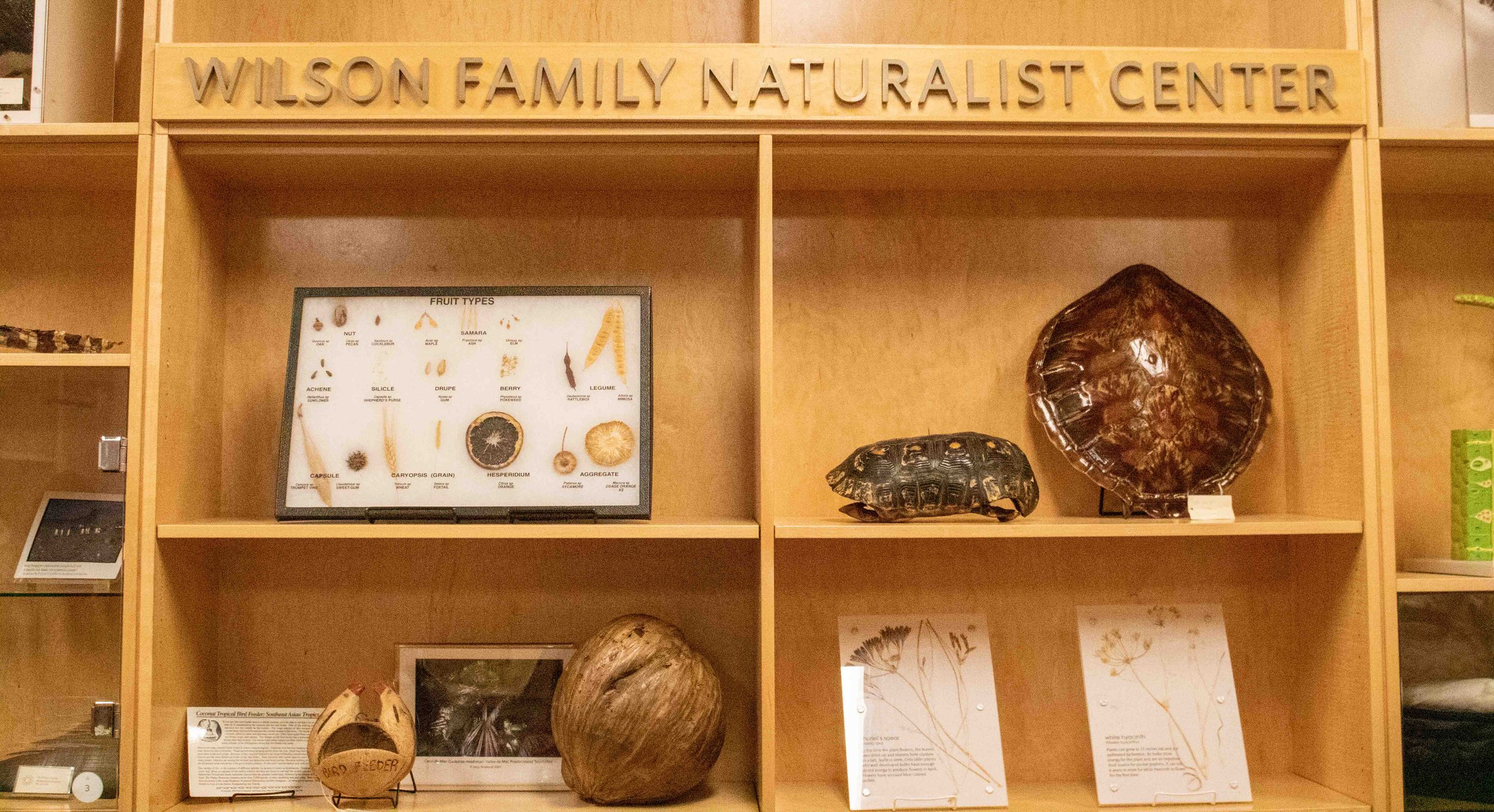
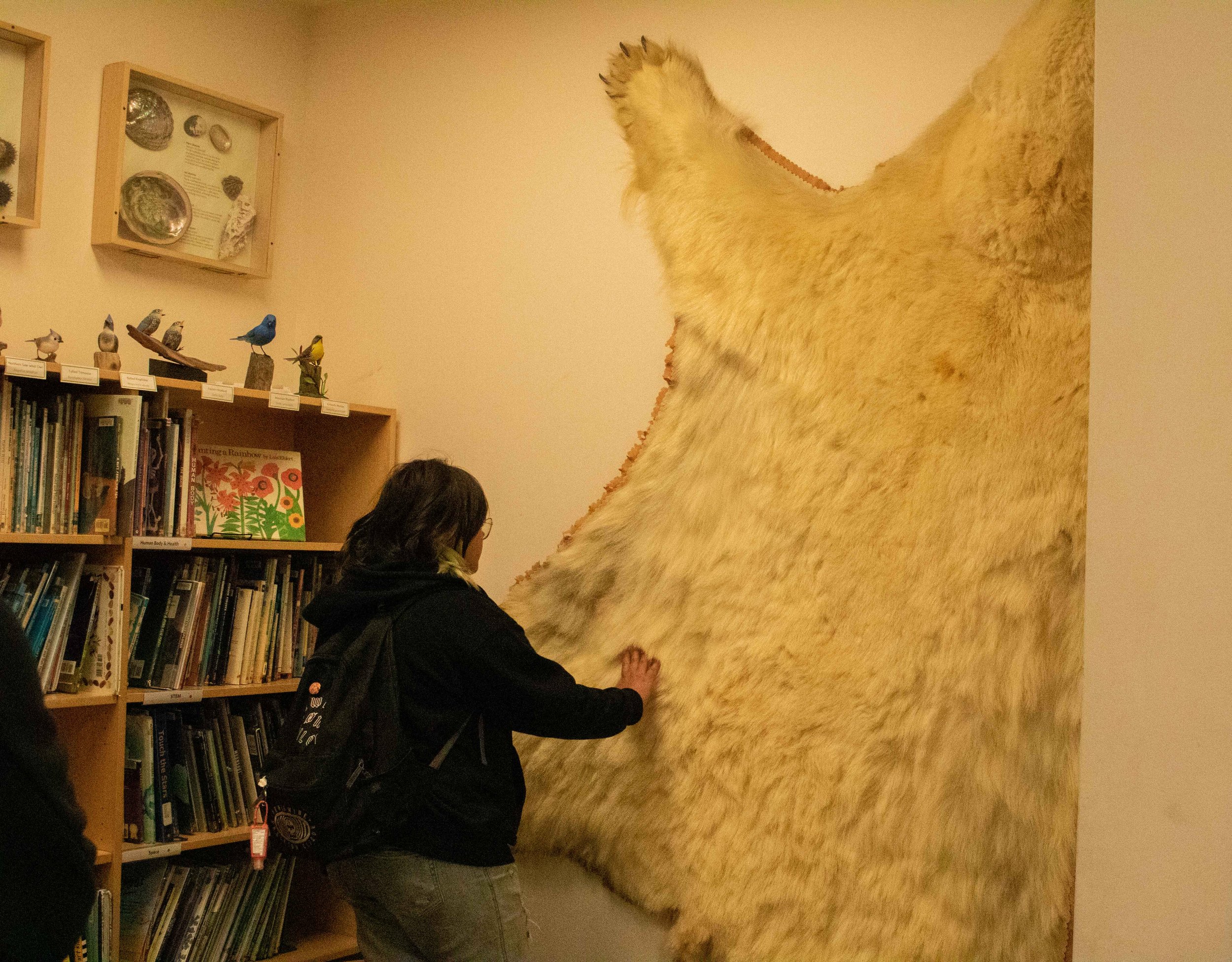
On the last day, participants visited the California Academy of Sciences. Having explored local and regional environmental advocacy during the past two field trips, the participants were able to dive further into these efforts on a global scale. The rainforest dome, aquarium, and natural history museum highlight the importance of community engagement in ecological restoration. “It’s cool to see the animals up close,” says participant Destiney Nava. The fauna and flora of these exhibits act as ambassadors for change in public opinion and policy to protect the delicate biosphere that we share. Education and advocacy in grassroots mobilization results in observable impacts on the macro level. By envisioning a more sustainable future, the collective public is able to shift from an extractive to regenerative relationship with the environment.
ArtEsteem Students Imagine Their Artistic Future with California College of the Arts
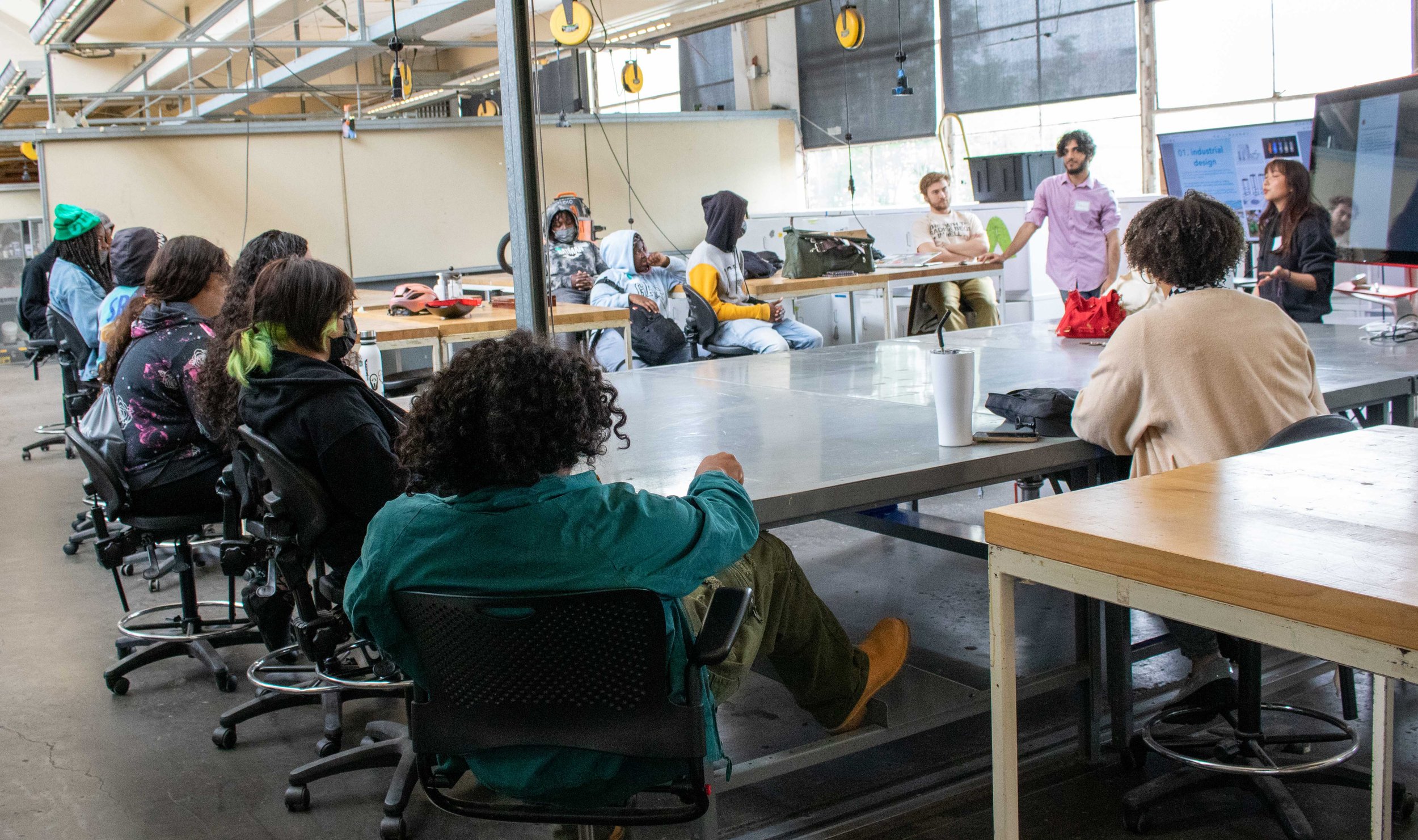
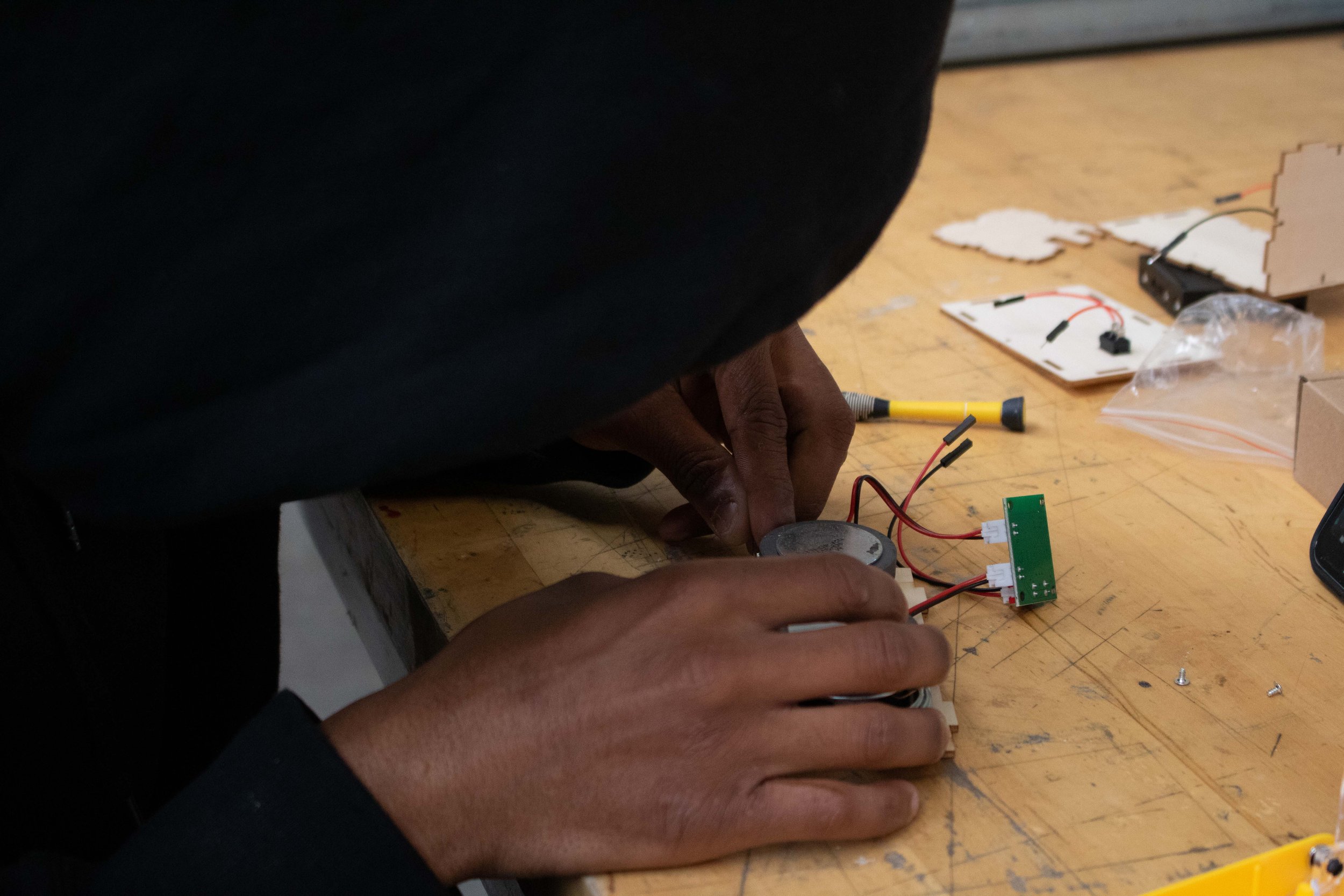
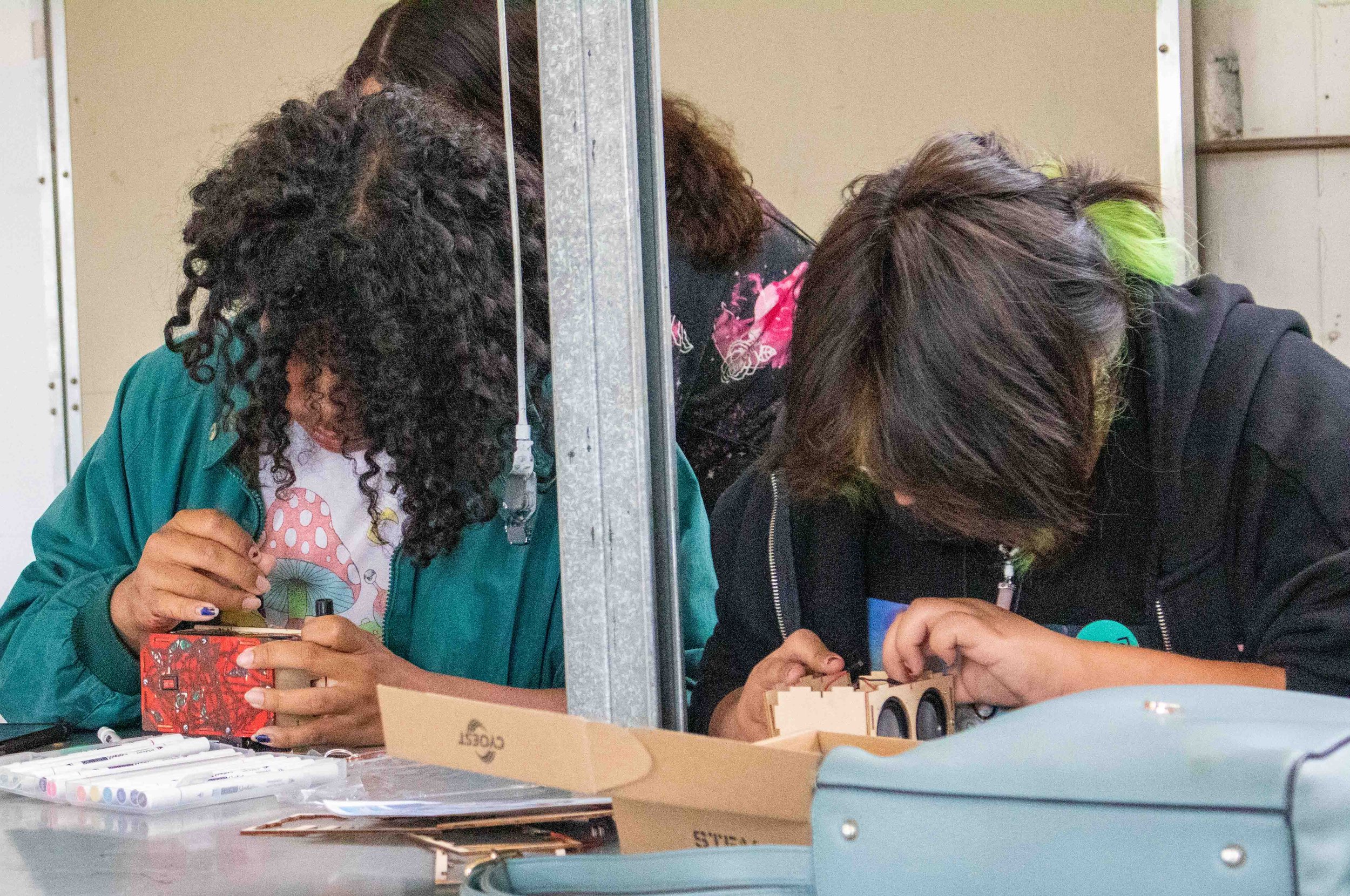
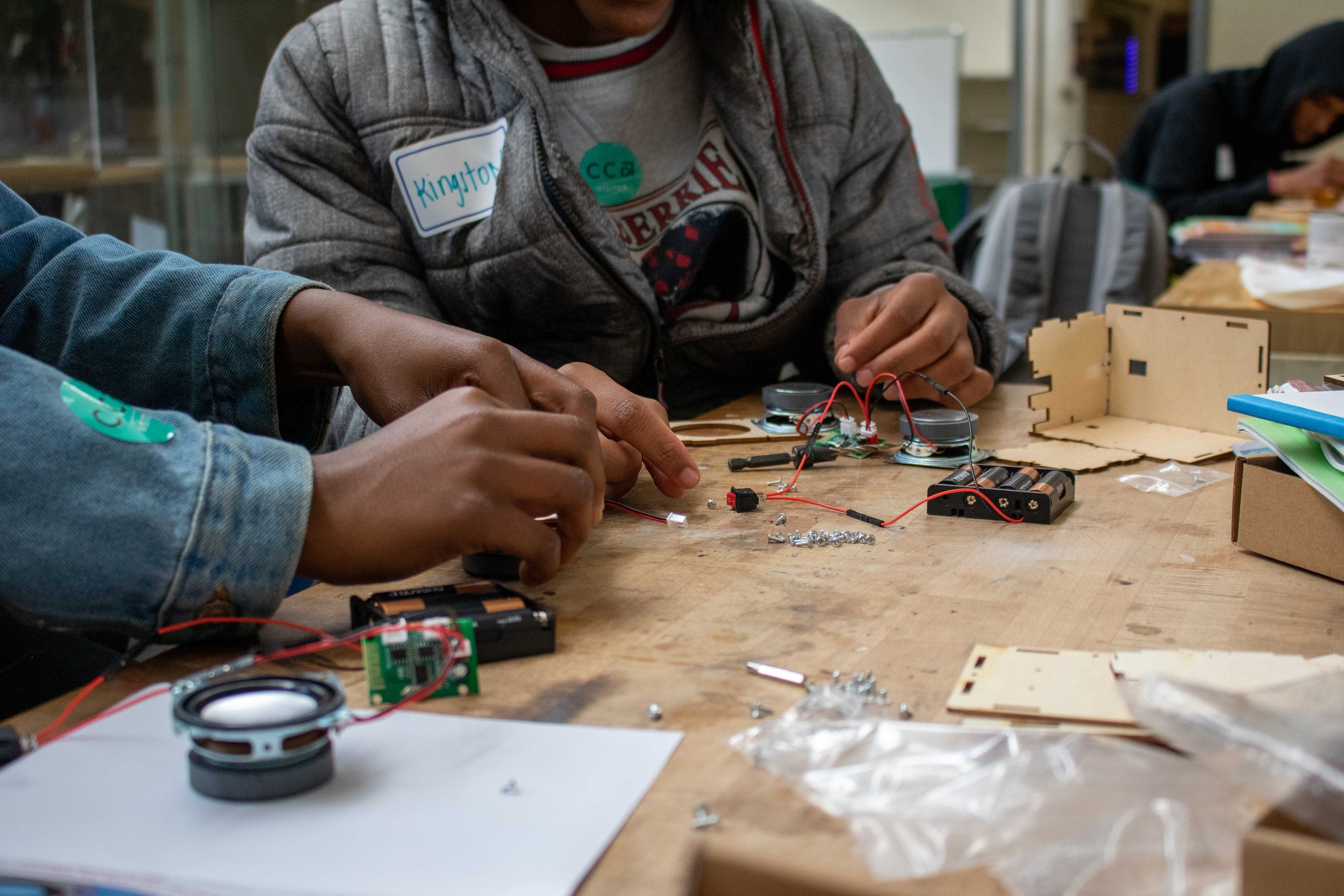
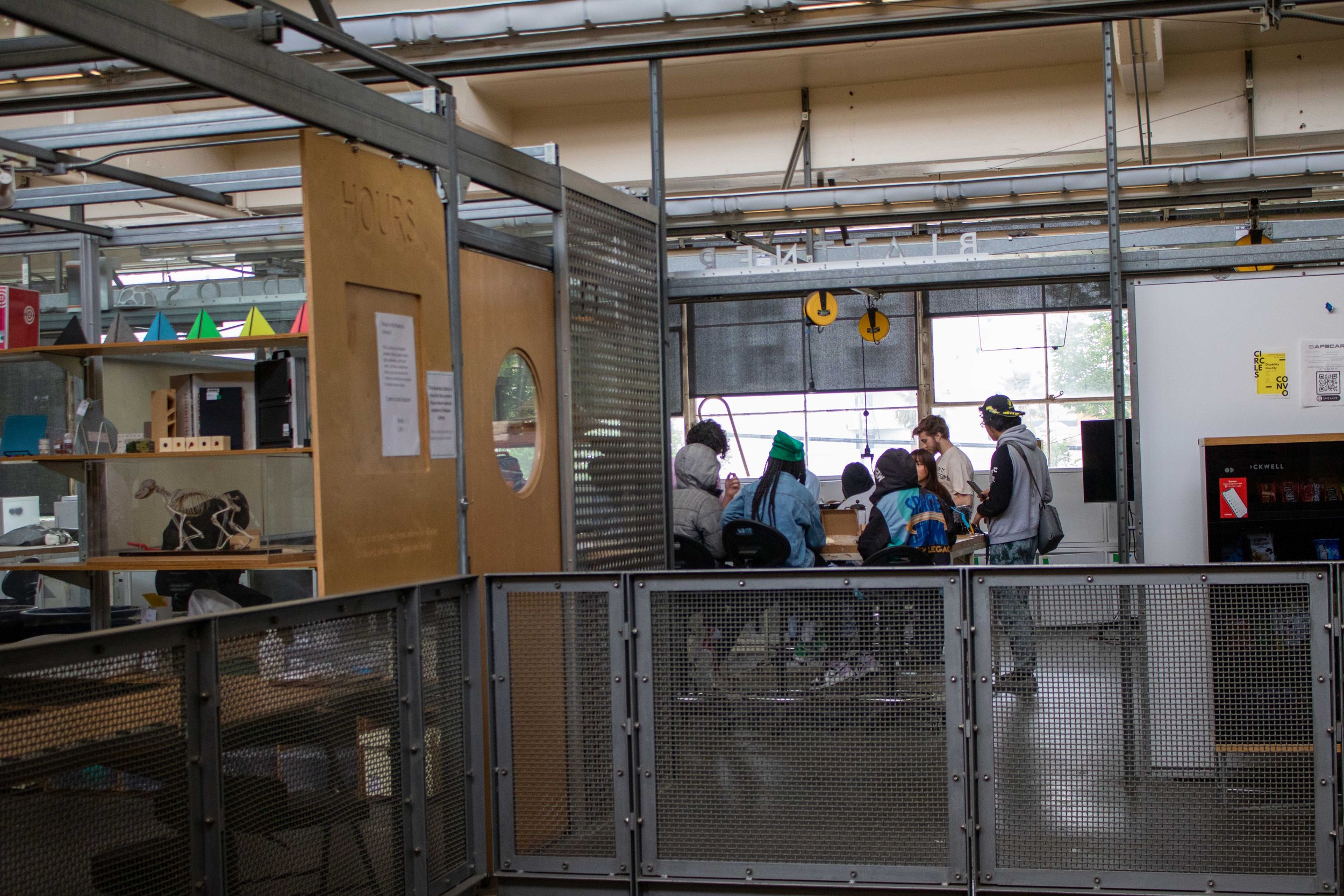

Executive Director Amana Harris has been a professor at California College of the Arts (CCA) since 2008. By joining the Critical Ethnic Studies department, Amana sought to share her expertise in socially responsive art practice to CCA’s budding artists. Through her course “Your Art, Your Impact: Education and Community Development,” students learn how art can spark civic engagement in social justice movements, and work in classrooms alongside ArtEsteem staff and youth to experience first-hand how arts education is a robust tool for community empowerment and racial equity.
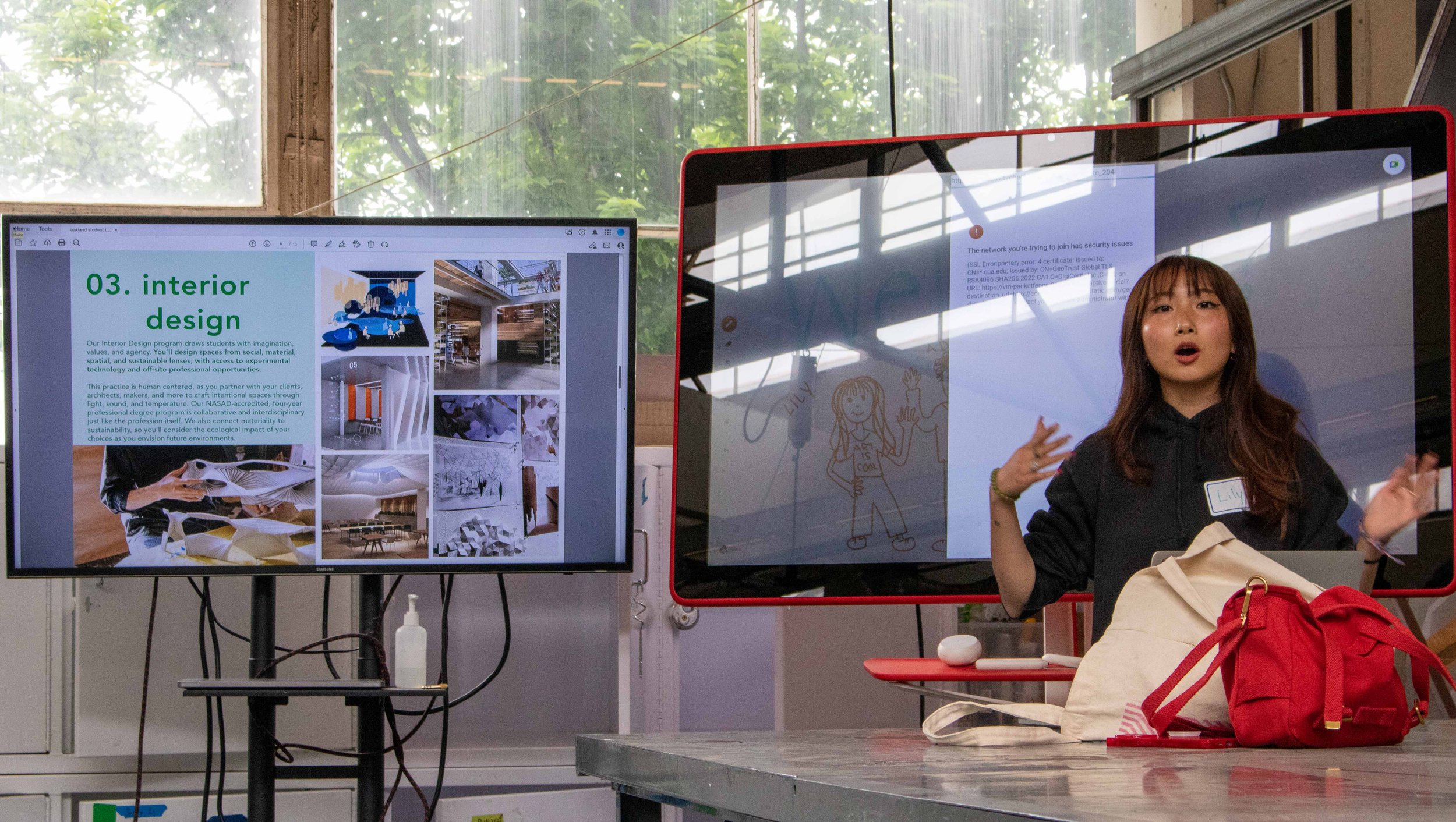
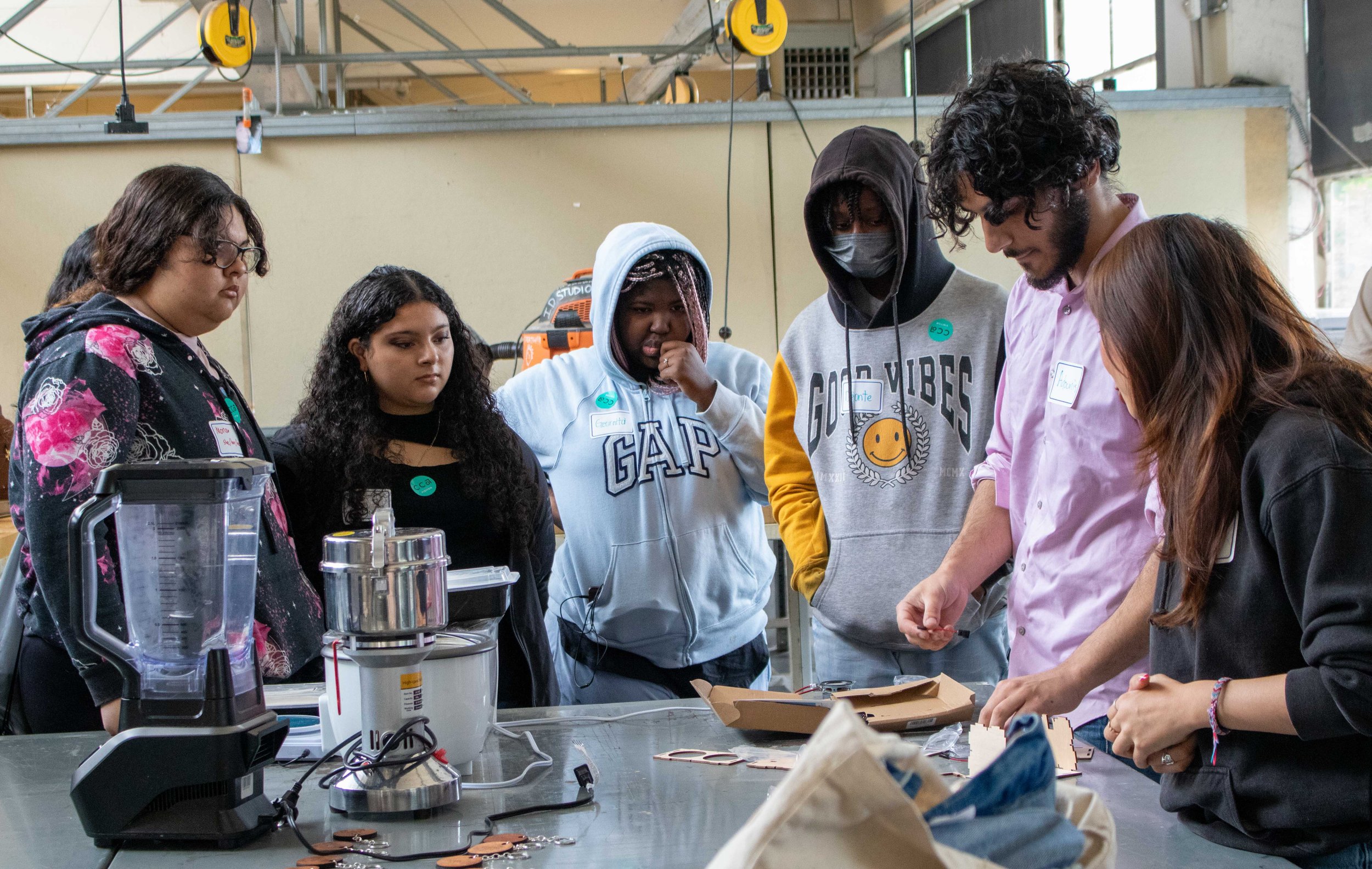
This spring, her students Adounis Mustafa and Lily Chinn led a field trip to introduce ArtEsteem youth to the various disciplines of art and design offered at CCA. Students of West Oakland Middle School (WOMS), Street Academy, and ArtEsteem’s after-school leadership program the Oakland Legacy Project were invited to visit the CCA campus and learn about pursuing art in higher education.
Lily began with an overview of the diverse undergraduate programs and studio amenities offered at CCA. She further explained how each discipline, such as design, can be applied to a plethora of careers outside of the field of study.
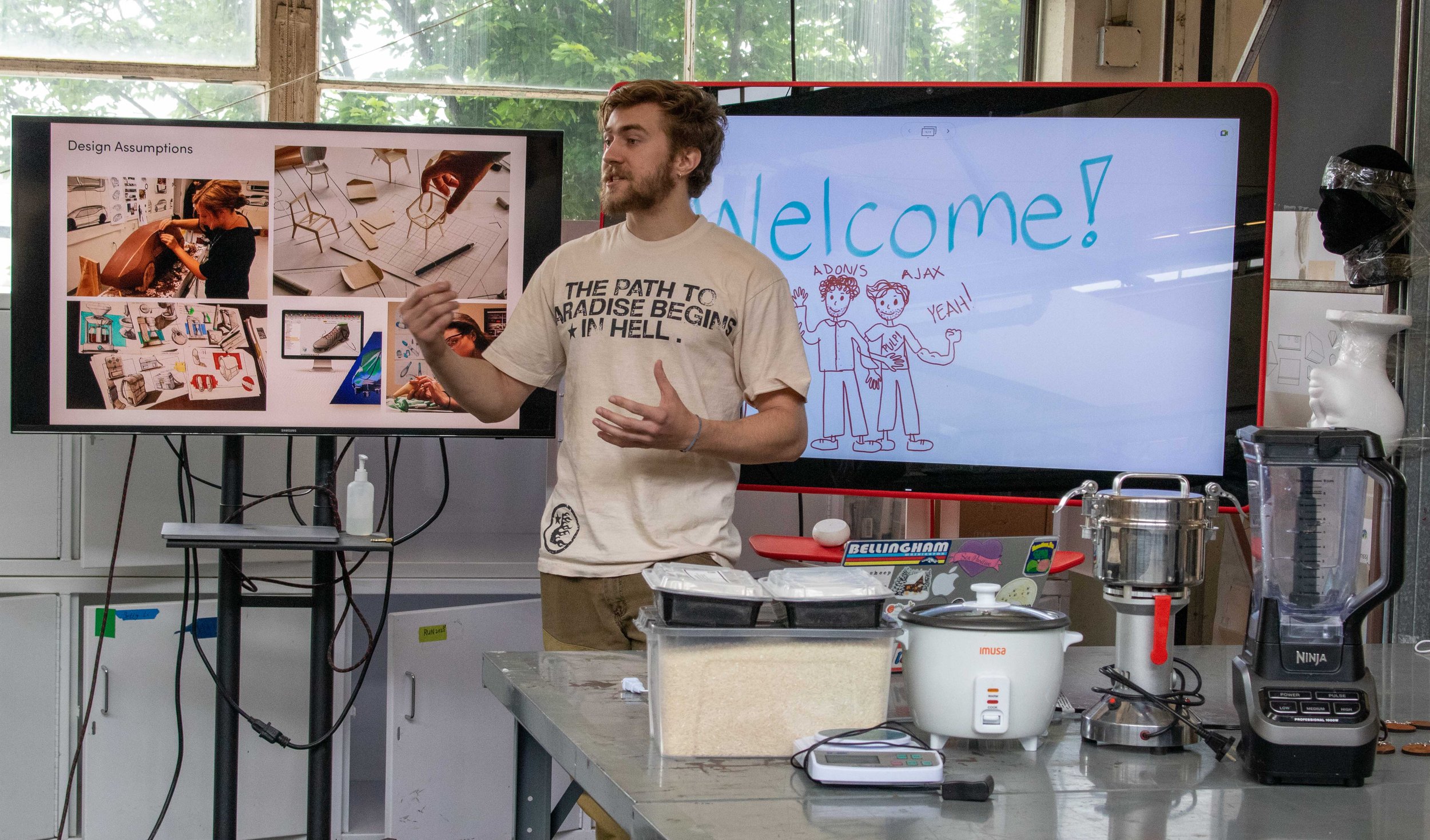
Next, guest speaker Ajax gave a presentation about his start-up Pulpi, a sustainable alternative to dishware. Using everyday appliances and recyclable materials, he designed a line of functional household containers that aims to redirect waste away from landfills. Ajax emphasized how he used his design expertise as a tool to pursue his passion in building a more sustainable future. The WOMS students noted ideas for incorporating eco-friendly practices into their own entrepreneurial adventures, as they experienced product design processes while creating their own merchandise collection (WOMS Living) this school year.
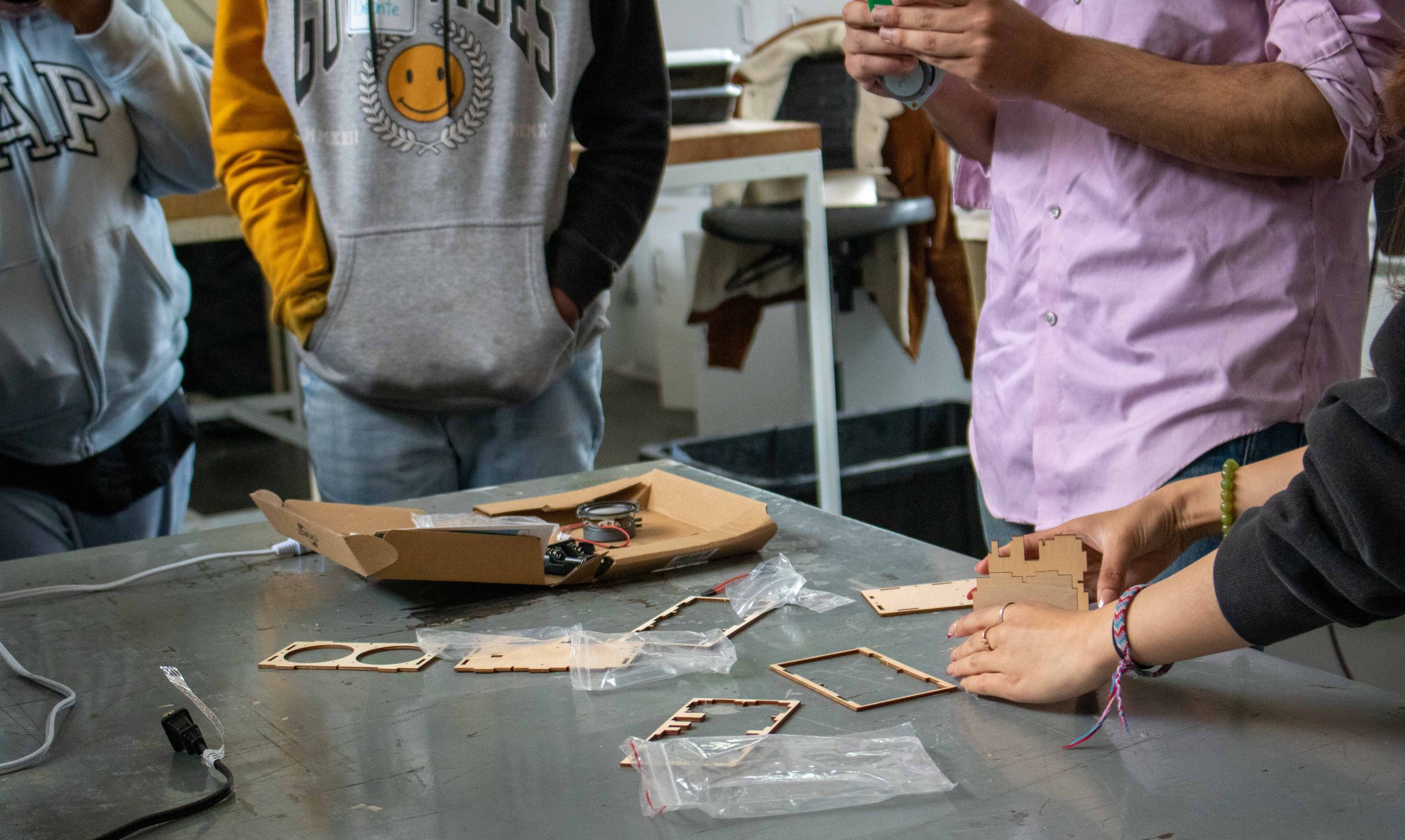
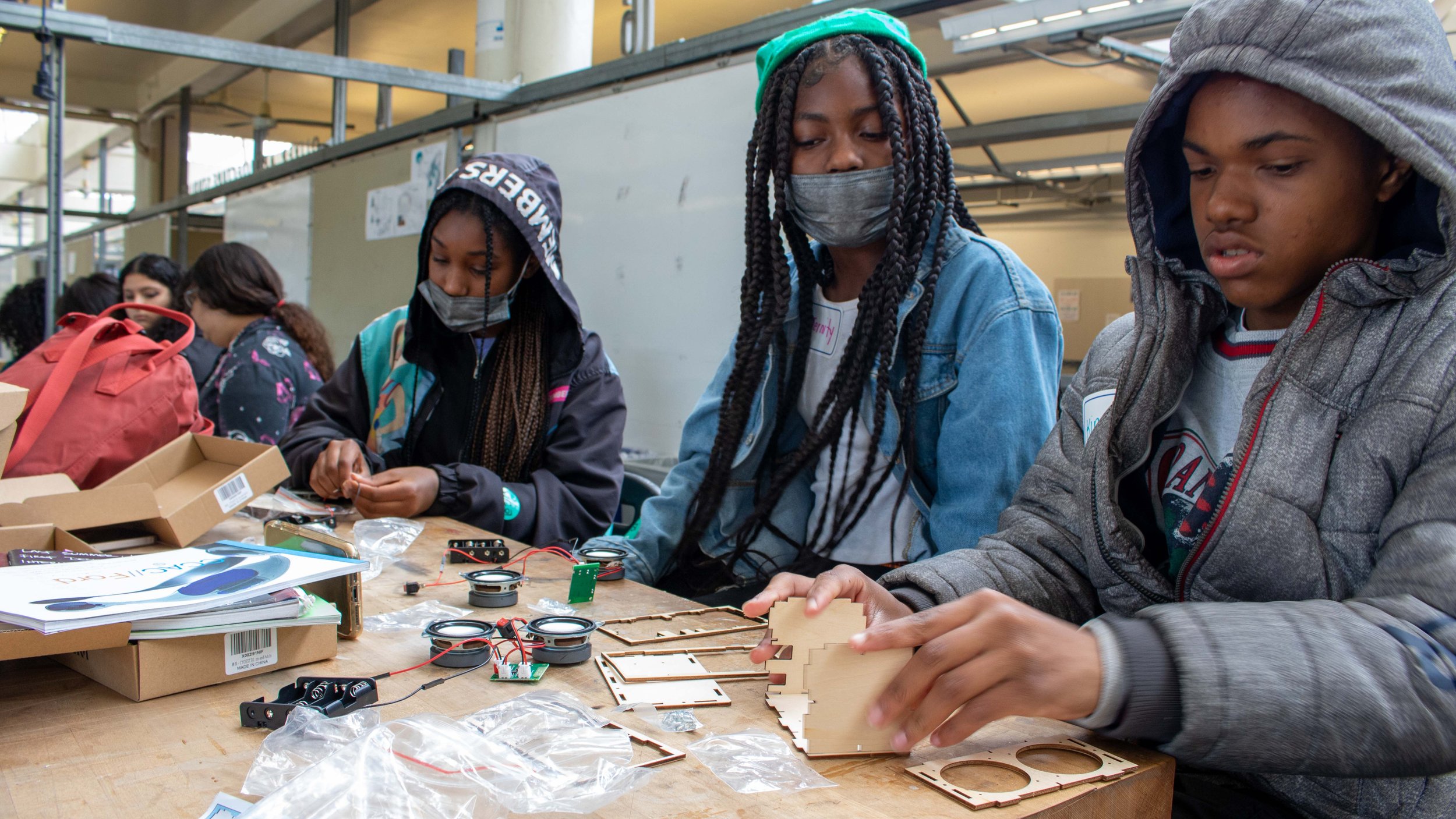
Finally, Adounis led the ArtEsteem students in a hands-on activity building their own speakers. He explained how technology is its own form of art, and invited the students to expand their interpretations of where they see art in their world. Upon completion, students used their visual arts skills to create their own designs on their speakers.
Connecting California and Alabama: Exploring Gee’s Bend Quilting at West Oakland Middle School
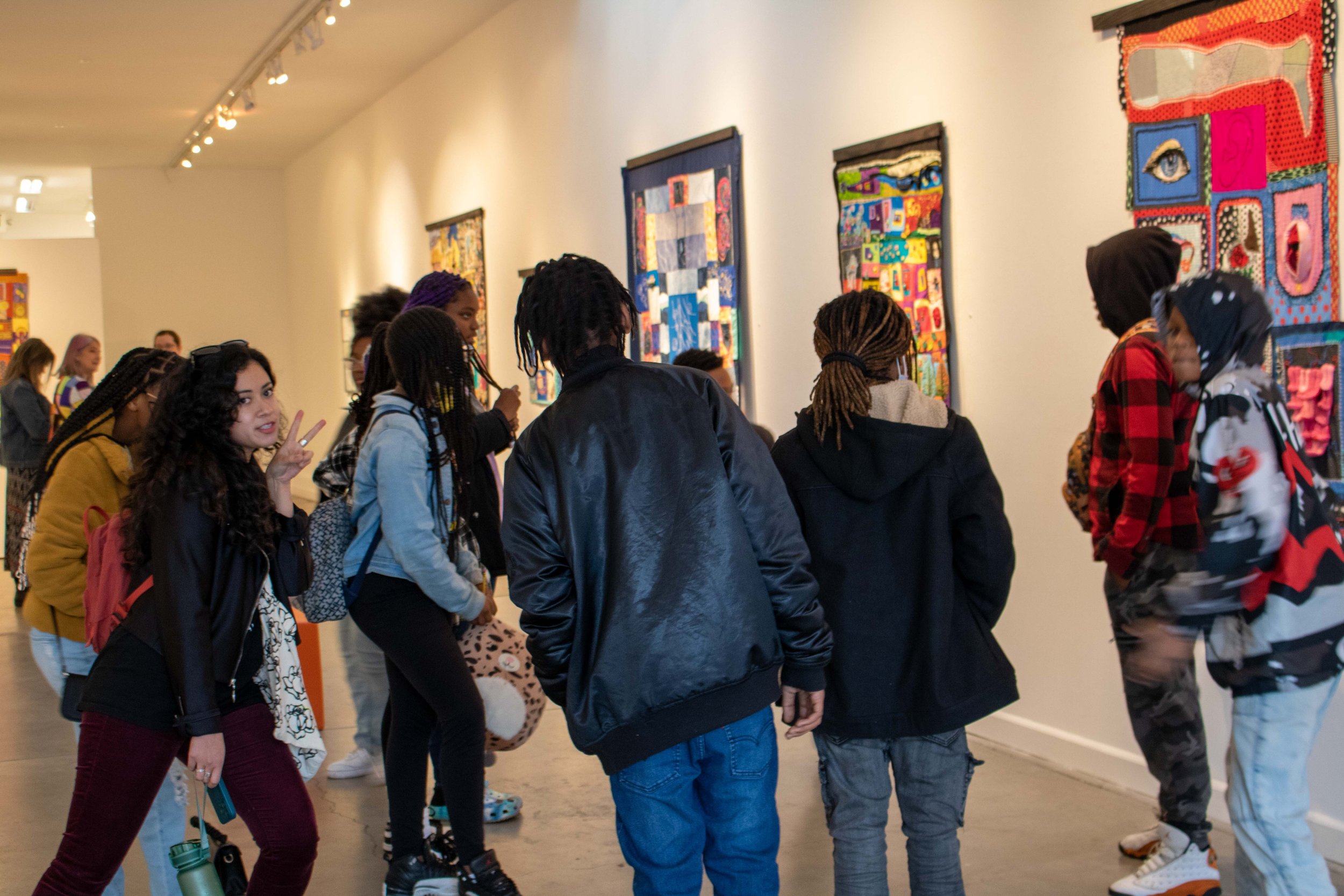
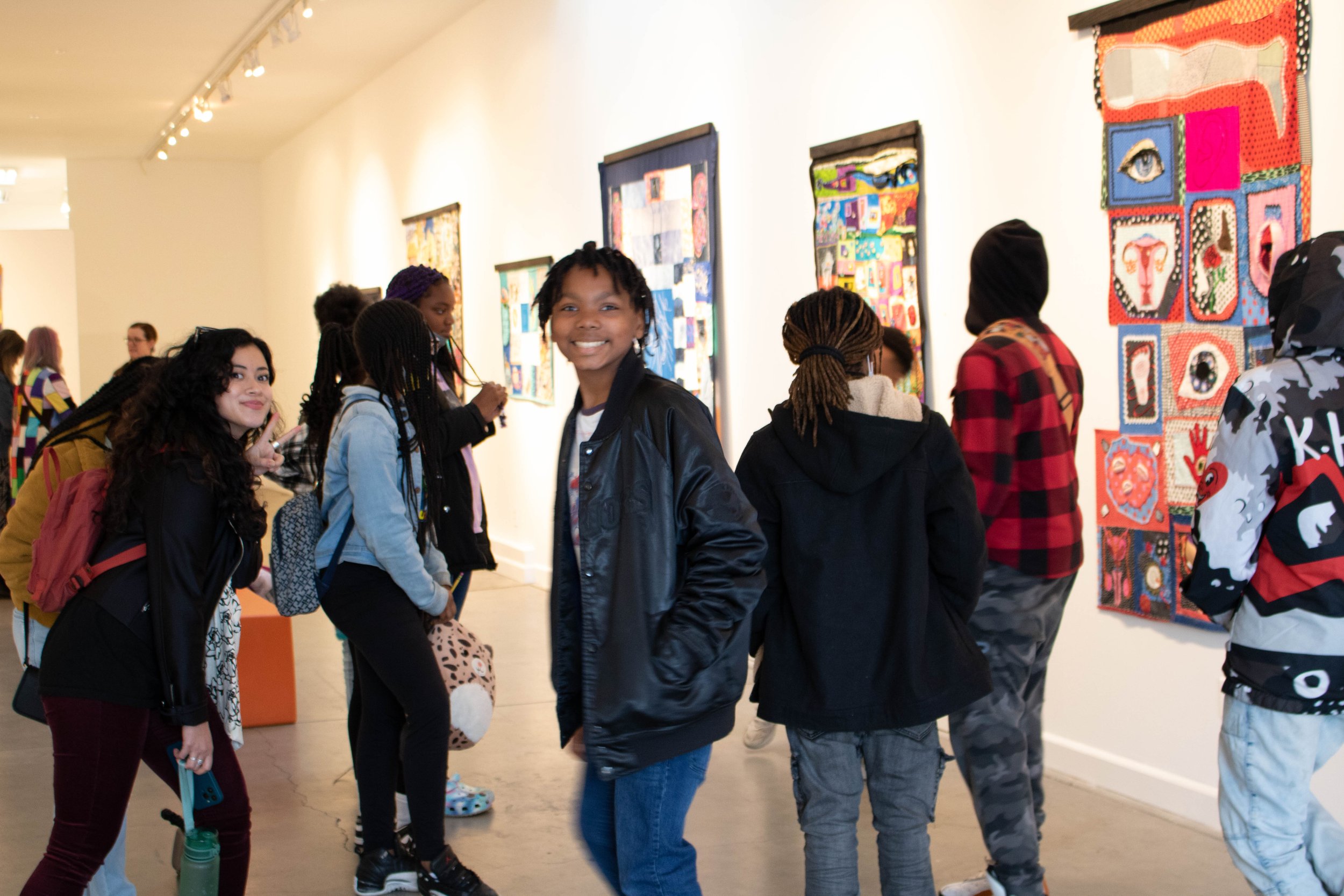
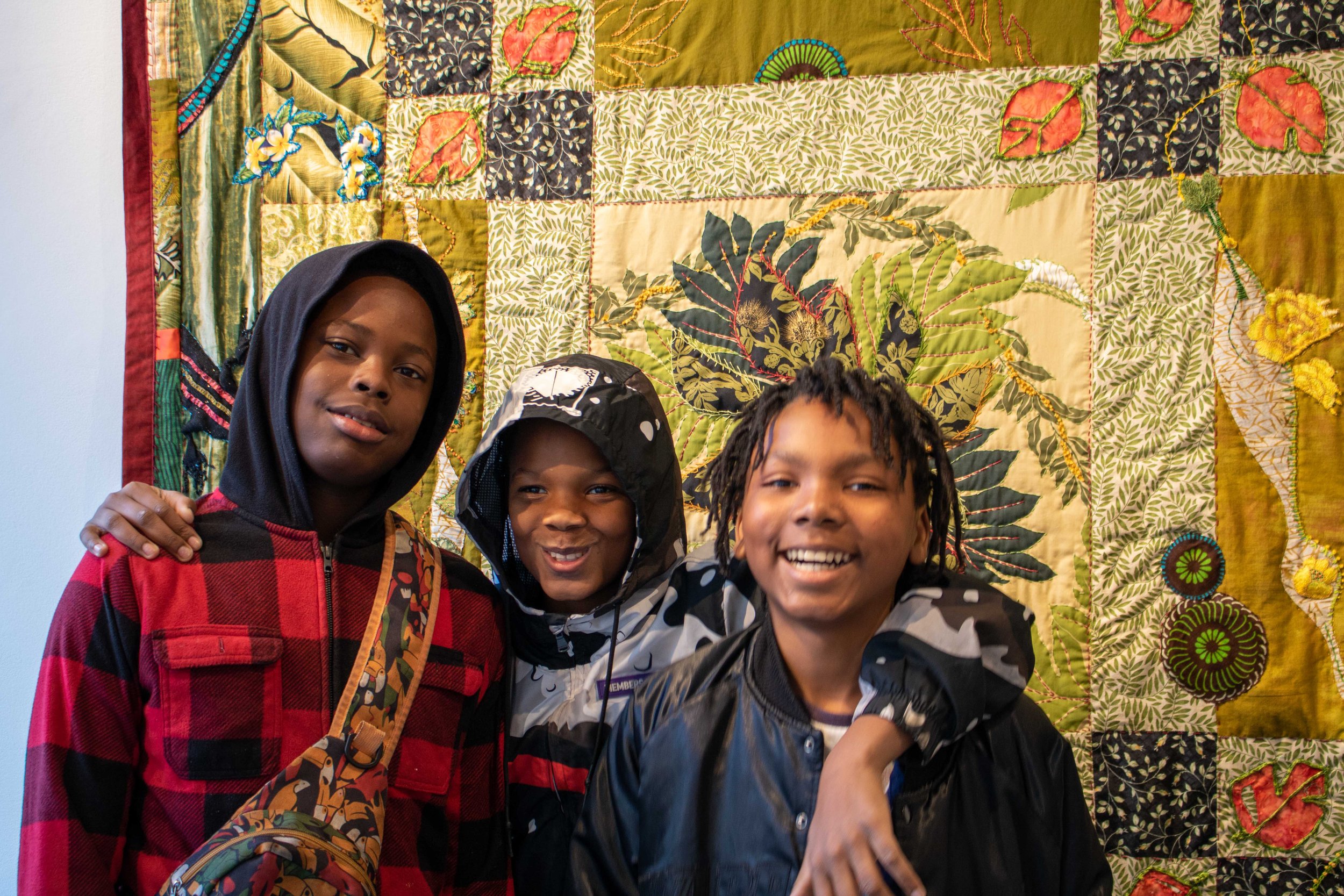
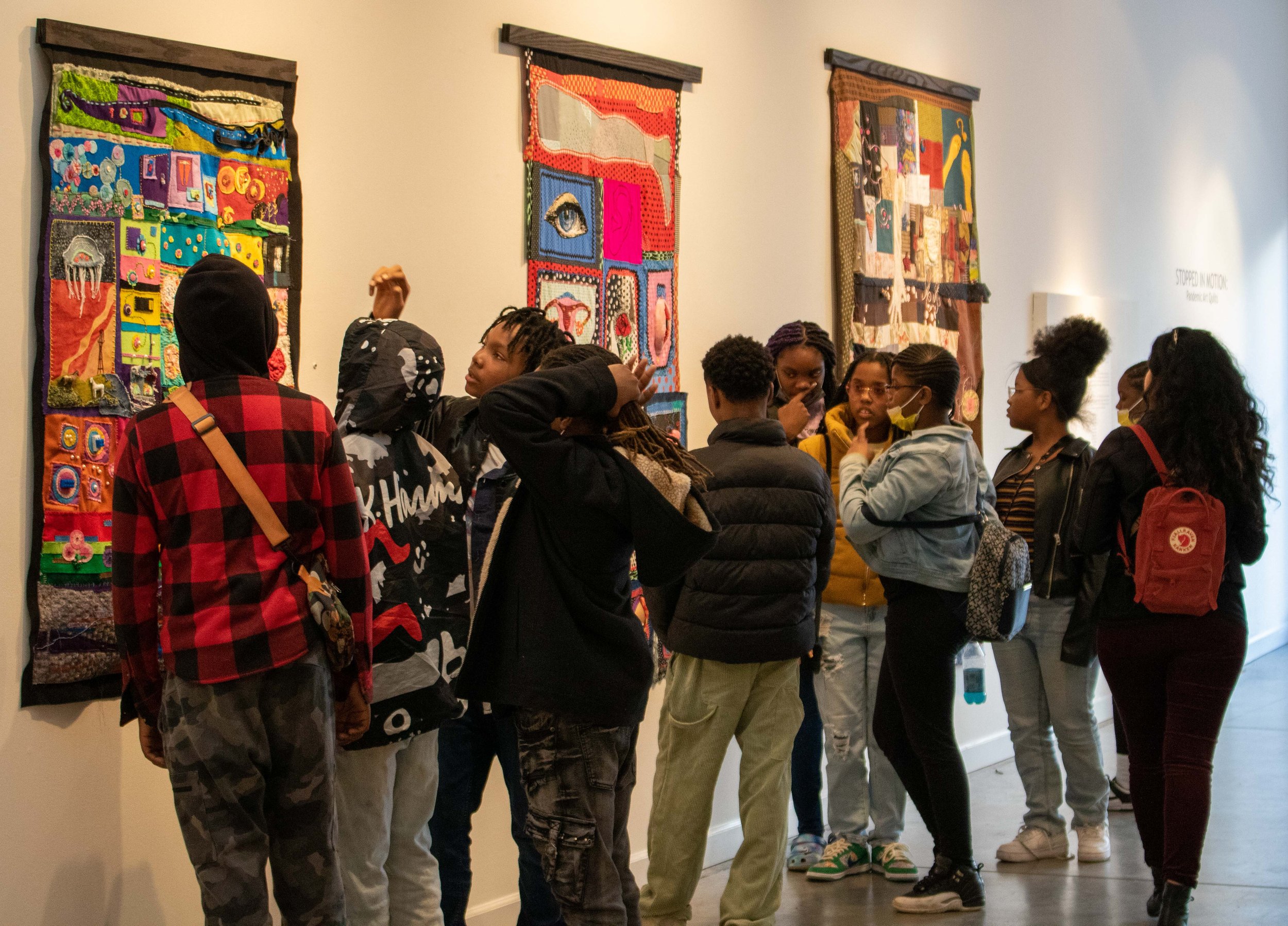
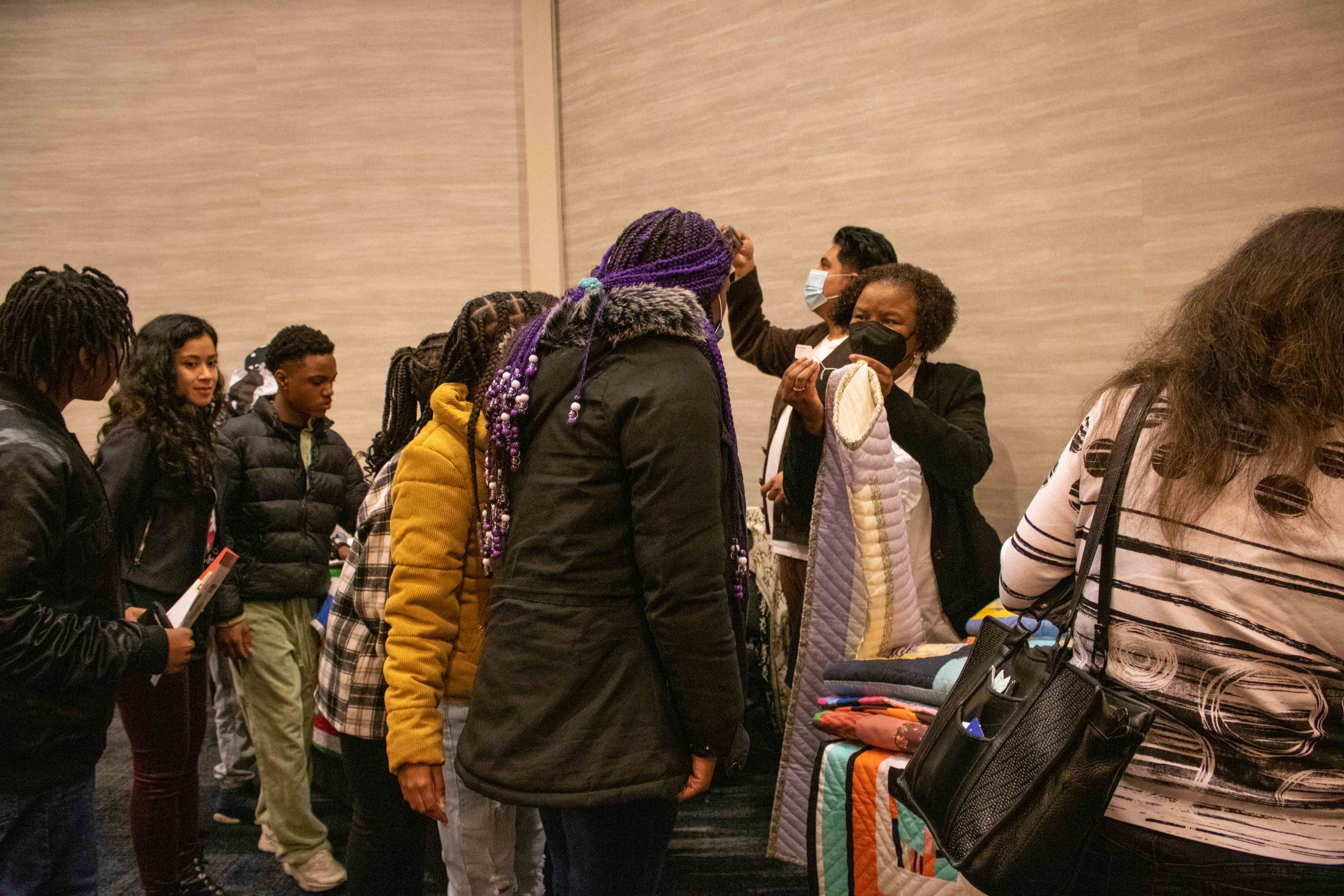
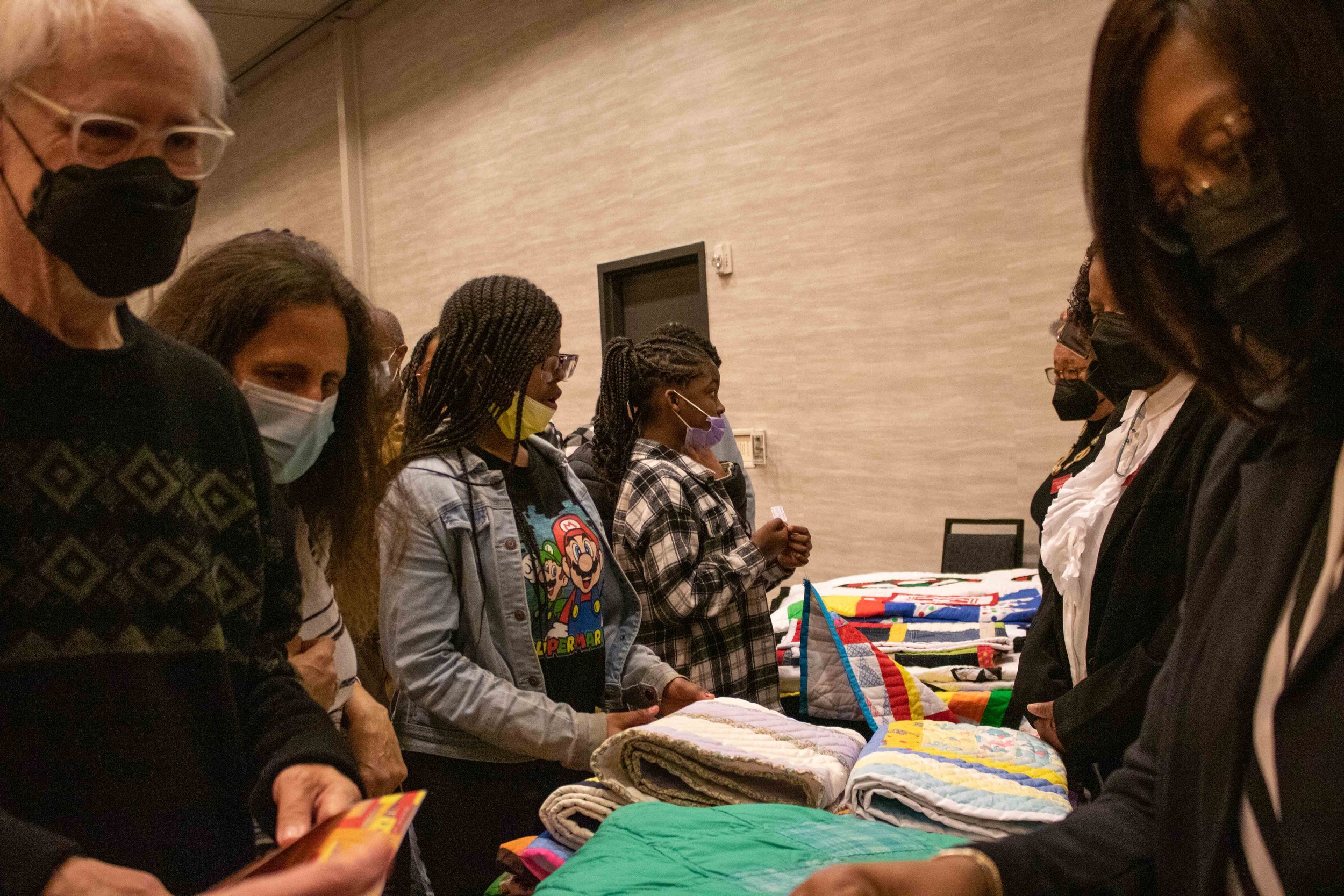
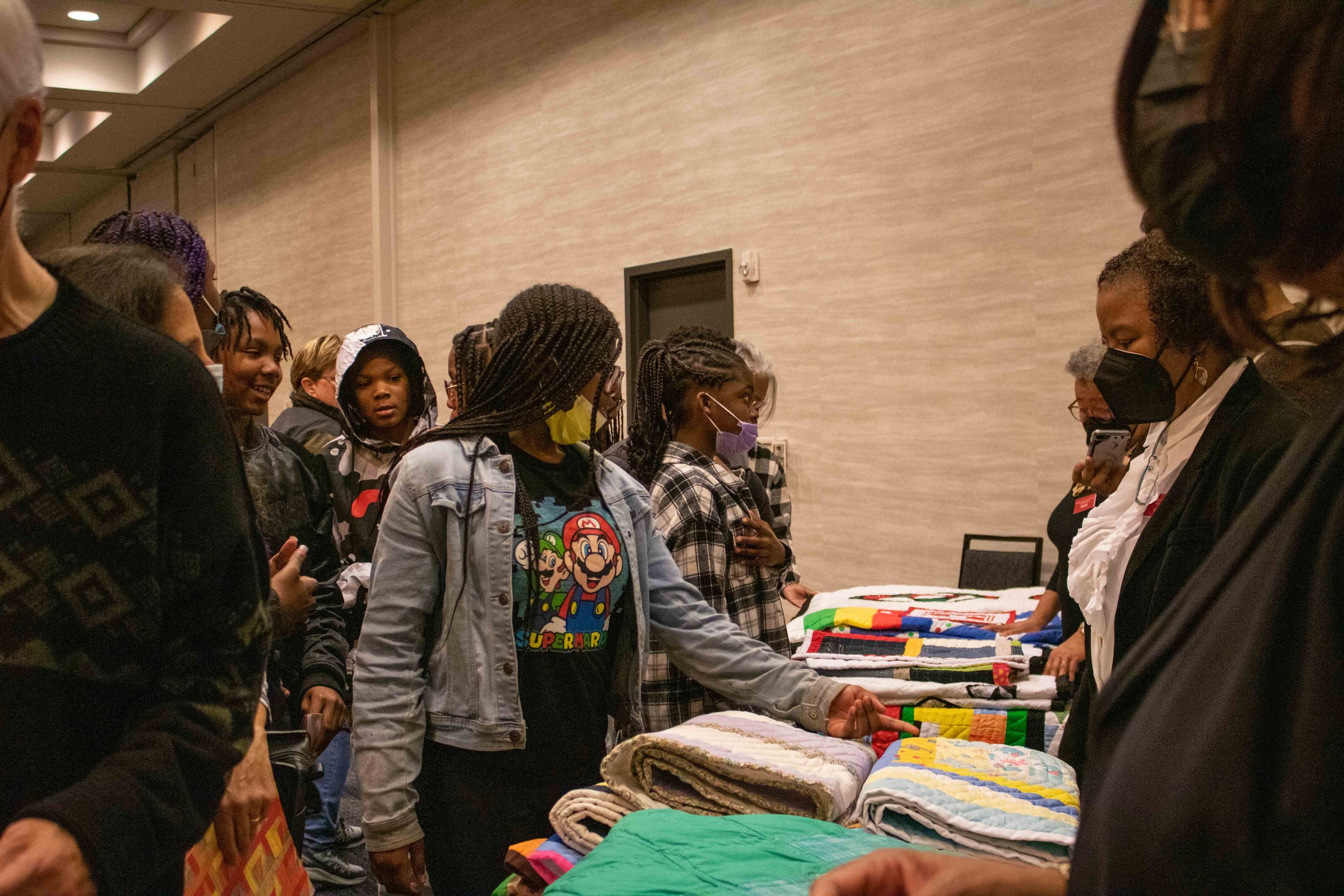
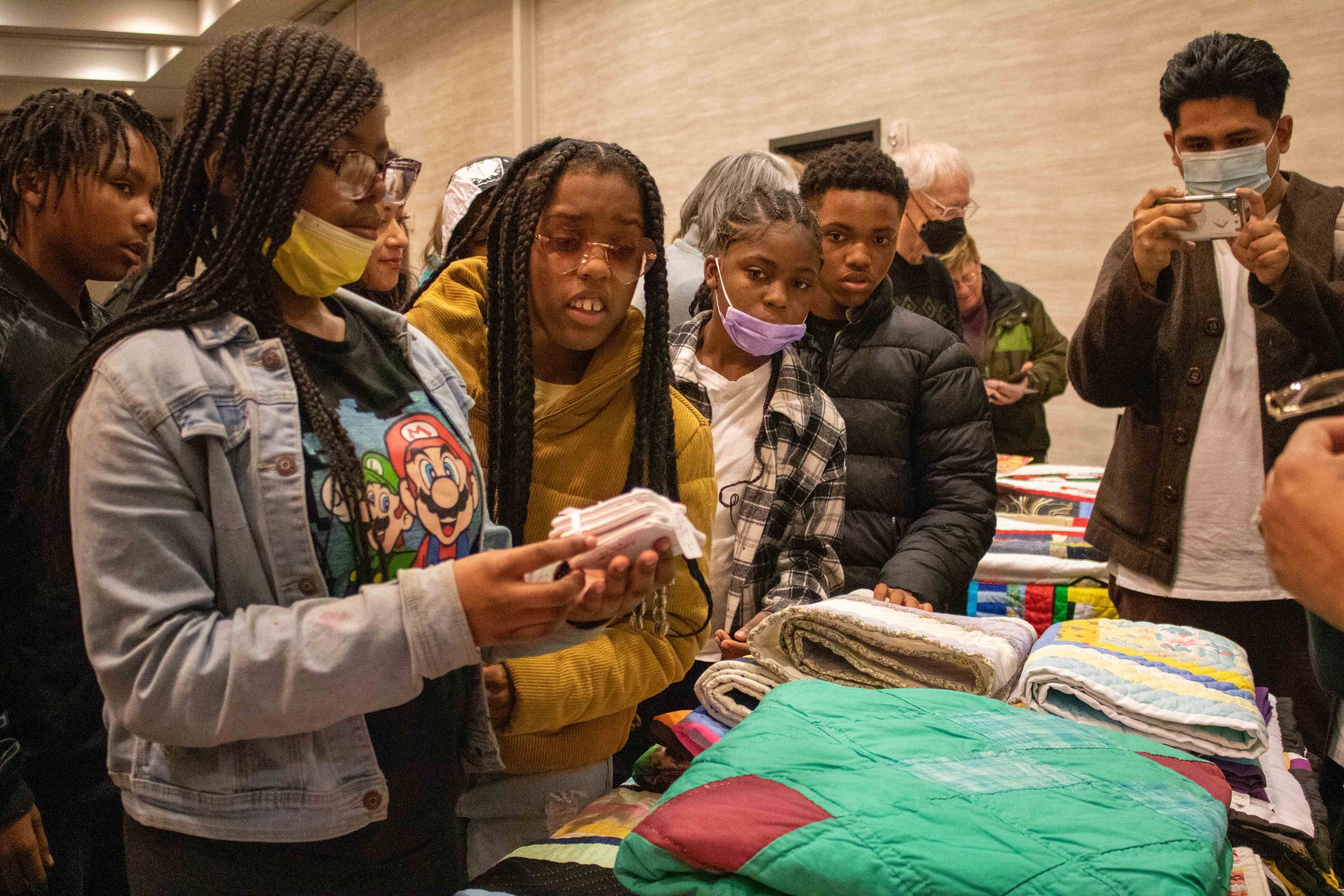
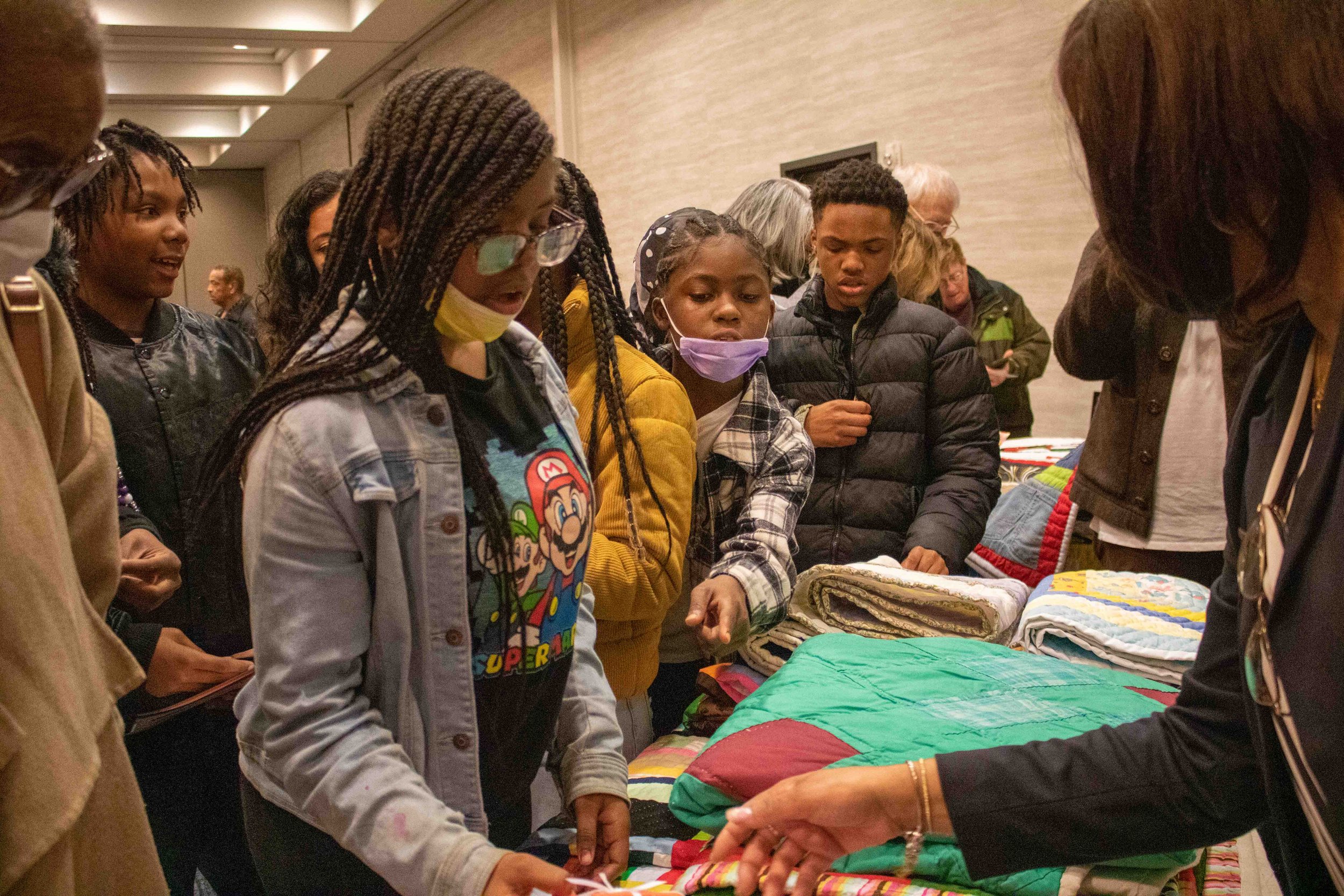
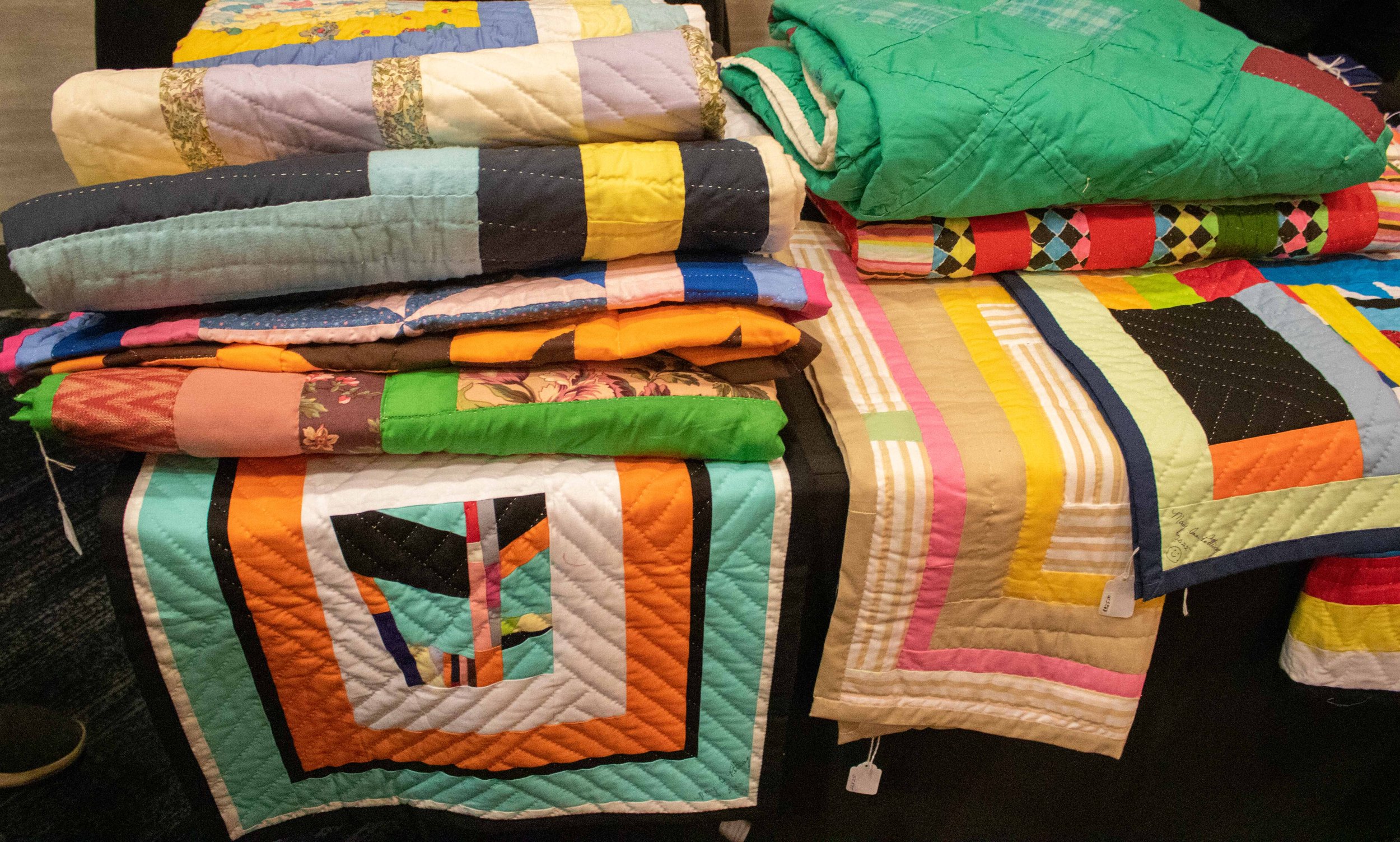
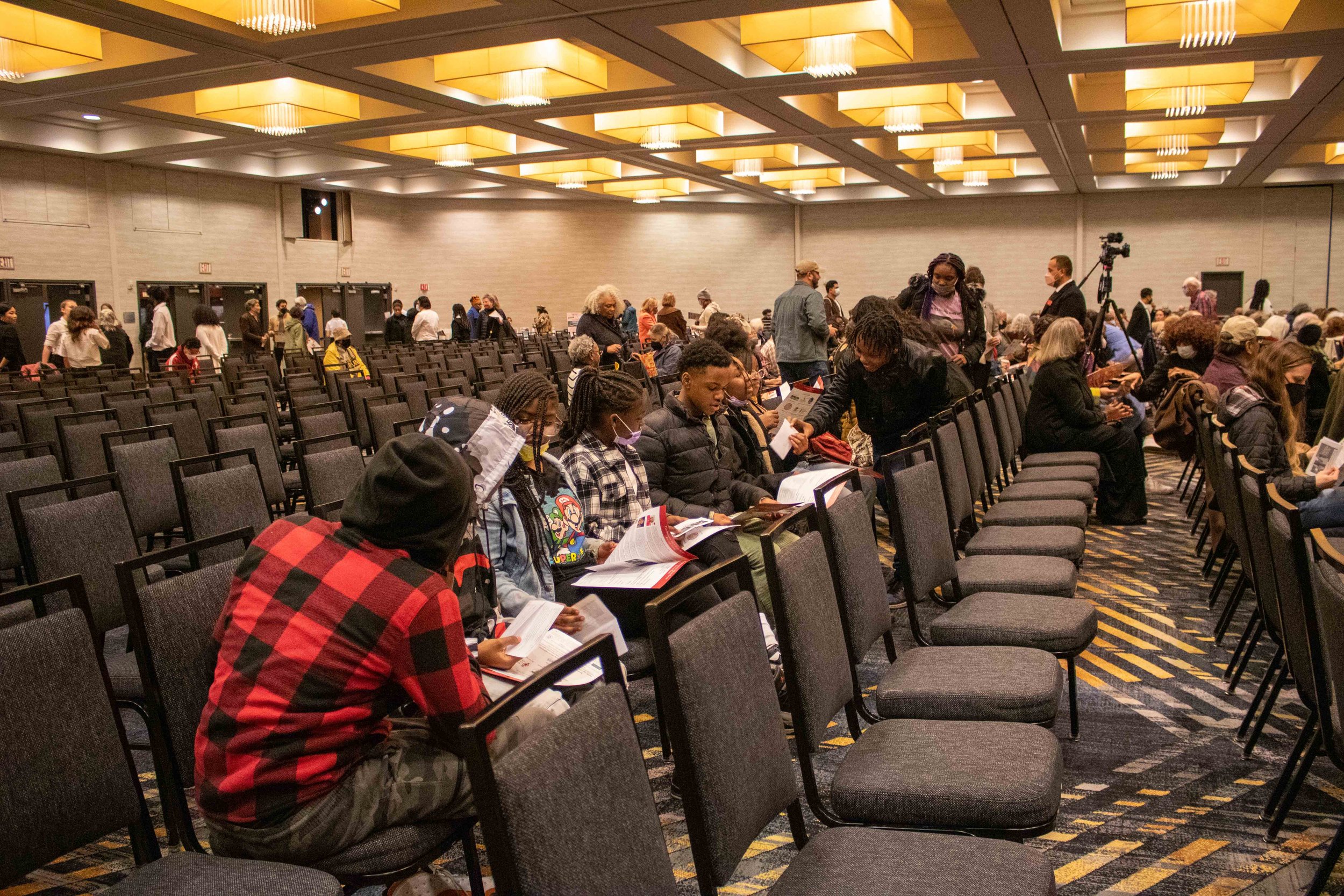
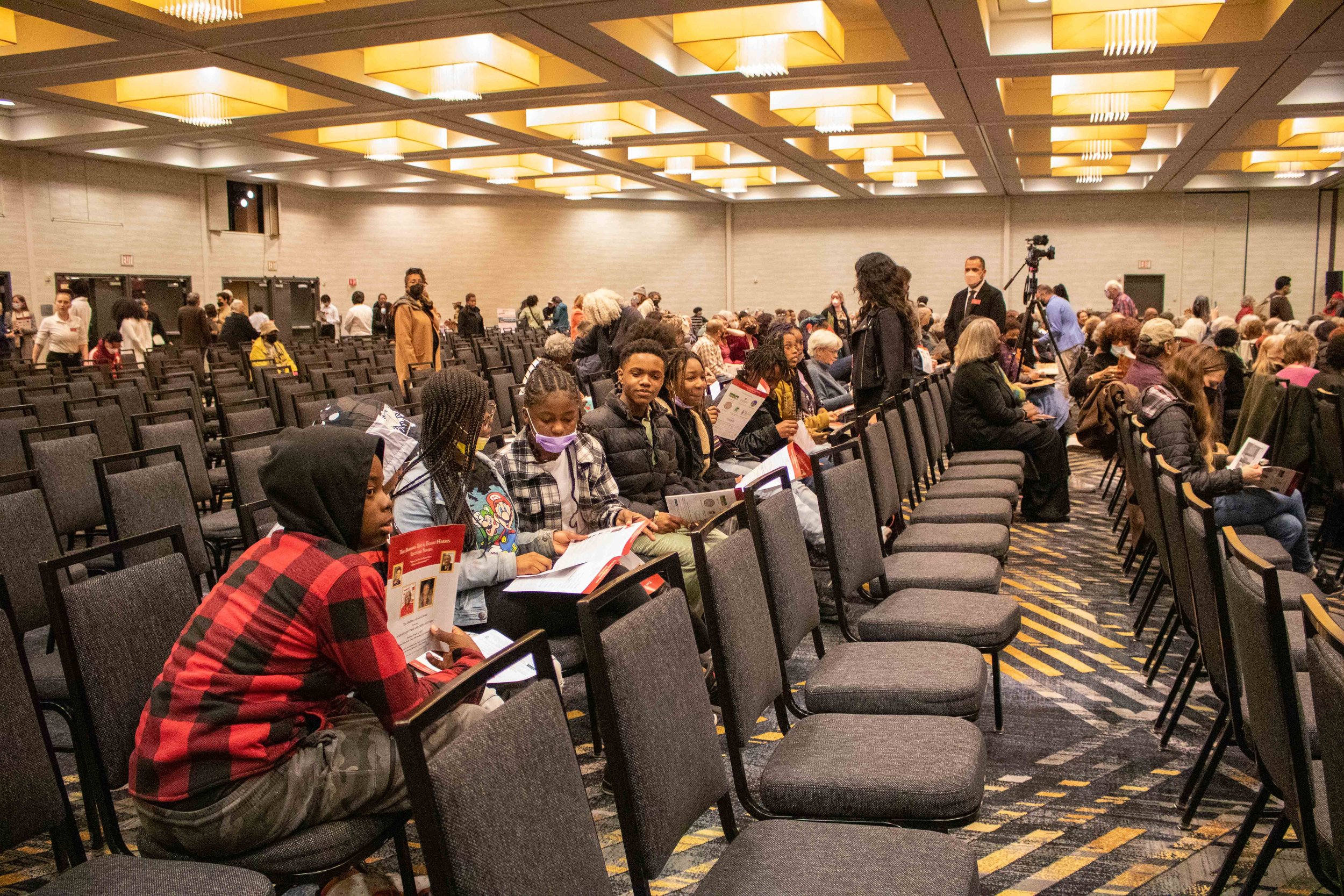
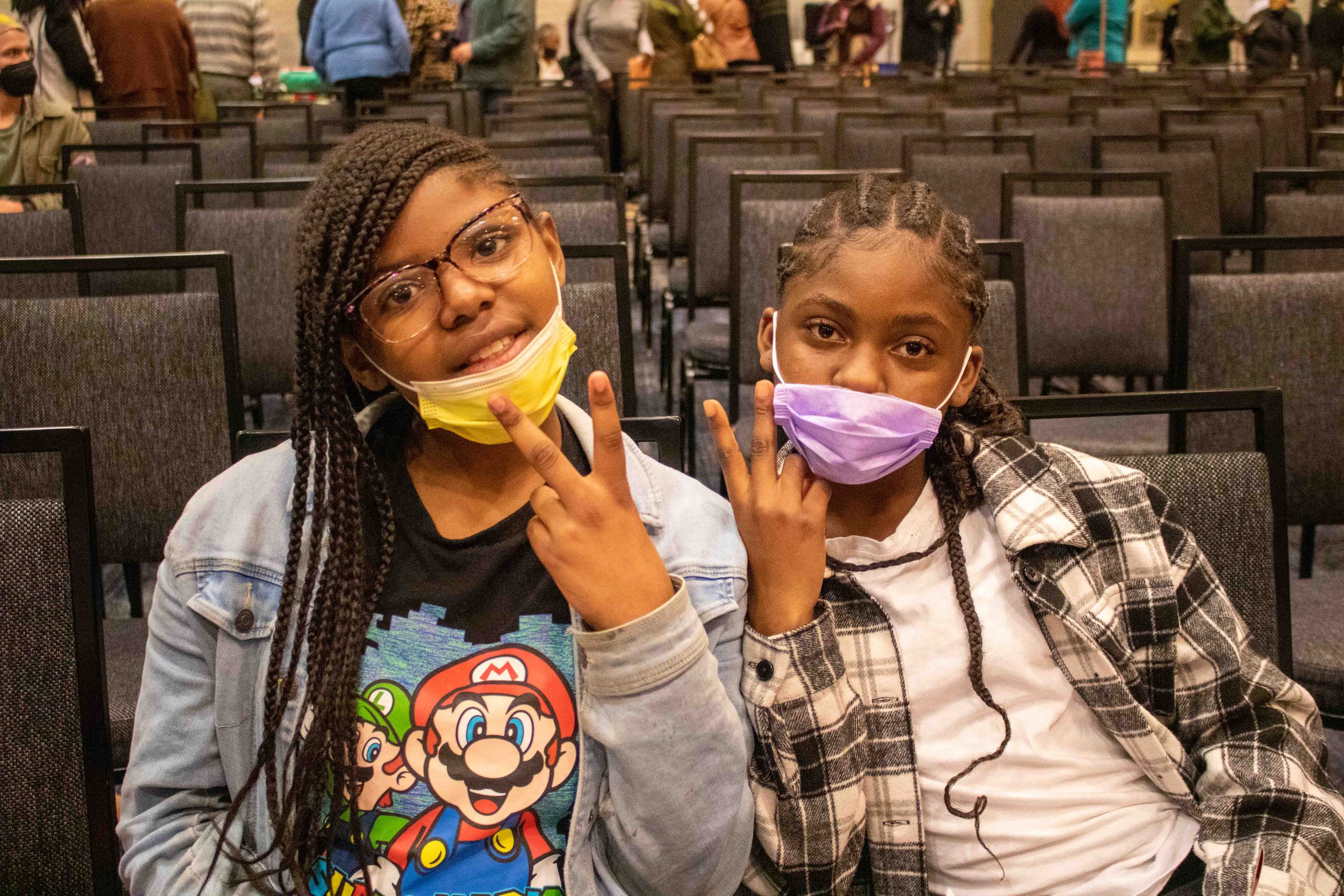
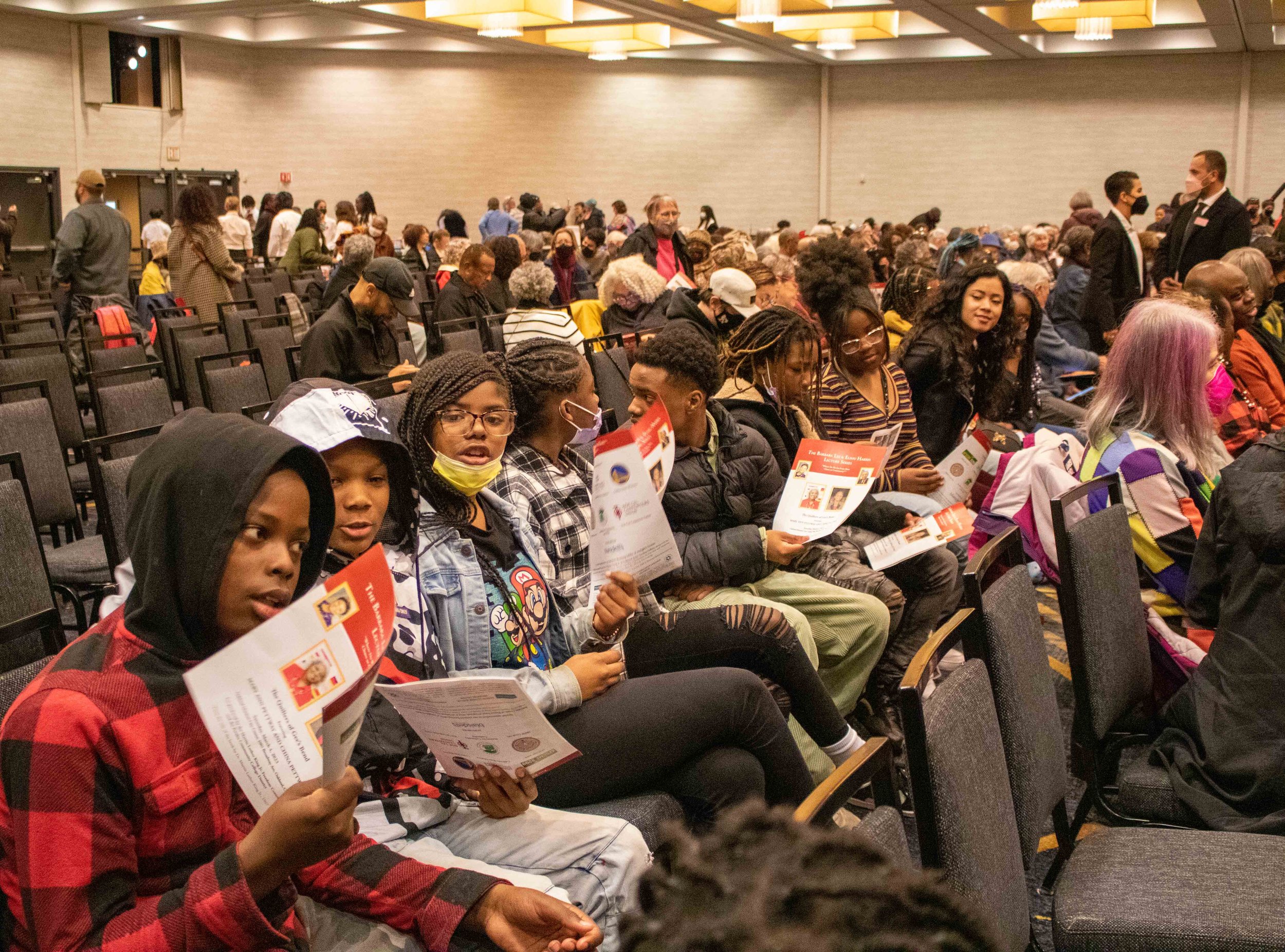

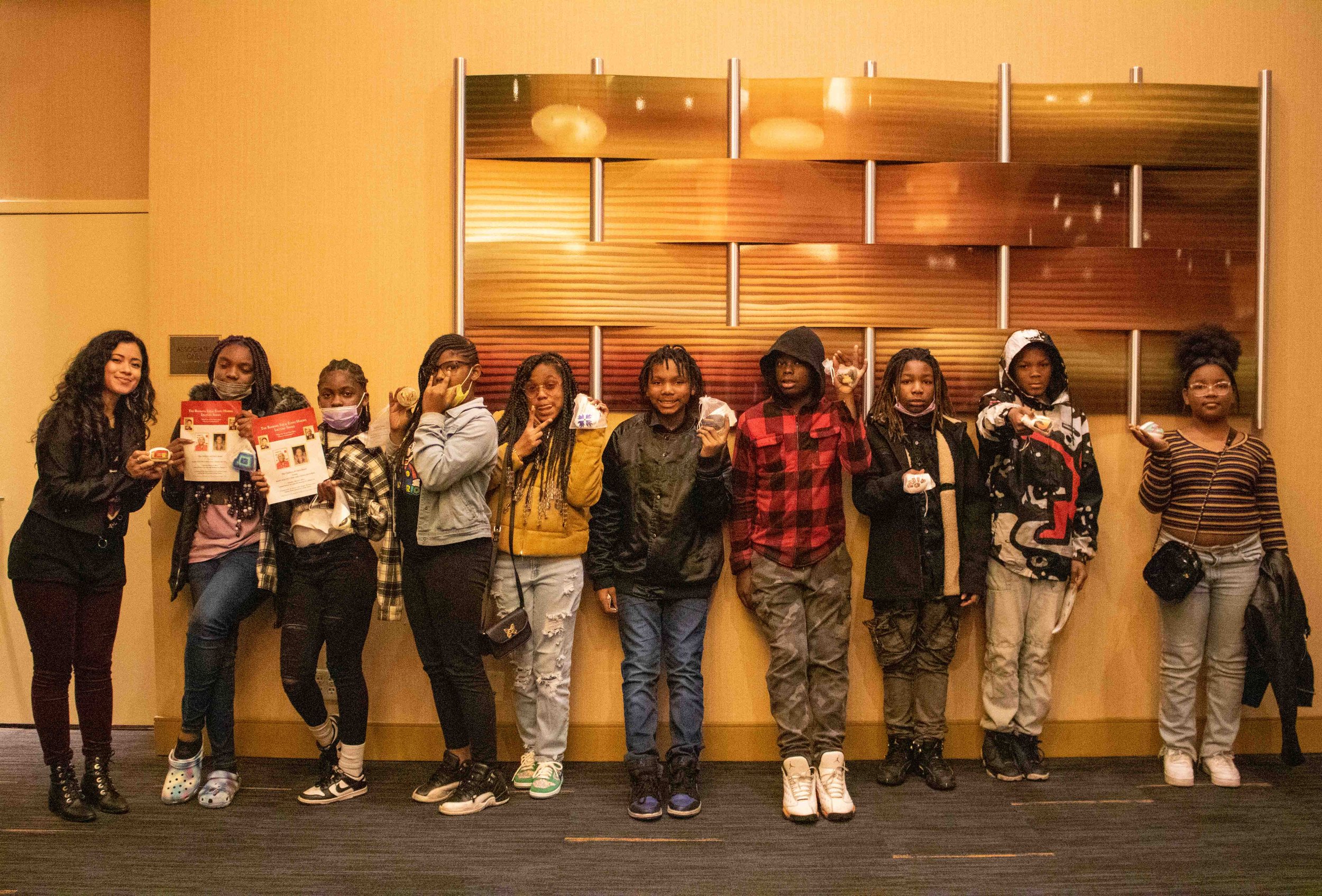
As a continuation of their Gee’s Bend studies and canvas quilt-making, West Oakland Middle School students in Teaching Artist Etty Alberto’s after-school class took a riveting field trip in March. The students toured the Mercury 20 Gallery to see Stopped in Motion: Pandemic Art Quilts then attended a lecture hosted by the Barbara Lee and Elihu Harris Lecture Series, featuring Mary Ann Pettway, Executive Director of the Gee's Bend Quilters Collective, and Collective members China Pettway and Julia Pettway.
The importance of observing handmade quilts in an Oakland gallery and hearing directly from the Gee's Bend quilters cannot be understated for our students. They leaned into the quilts closely, pondering each intersecting patch of fabric and defined stitching style the seasoned textile artists incorporated. The intricate details were met with wide-eyed fascination. Questions burst free regarding fabric scrap origins and pattern choice.
In tandem with the curious energy of their gallery experience, the students listened to the invaluable generational wisdom shared within the Gee's Bend quilters' stories with respect and awe. When planning the field trip, Etty "wanted kids to take away that despite adversities, we always find a way to survive, and that art is always at the forefront of it. The way we live is art, as simple as making a quilt, an everyday object we ritually use." The love, strength, and creative fluidity sewn within each quilt was evident to both the students and field trip chaperone Phyllis Hall, Program Director of The Center for ArtEsteem. She appreciated how the Pettways were "lovingly candid about the little things in their life." Moments like "sitting in the kitchen and being with their mom" and "doing quilts for days and days in a row... or [starting a quilt] because they were upset about this or that."
Art's unifying power of healing brings a past ArtEsteem student's sentiments to mind. Aniya from Community School for Creative Education shared: “Art is a way to release all of your bad feelings, all of your pain; you can turn your pain into something beautiful like a painting on a canvas or a mural in a freeway underpass.” In an IQ Learning Network interview, Mary Ann Pettway reflected upon a similar notion: “Being a quilter is very therapeutic… it’s like medicine. You don’t think about pain… it’s very relaxing.” The universal human experience with art as a vector of emotion and catalyst of expression resonated deeply during the field trip.
Thanks to the work of the Mercury 20 Gallery, the Barbara Lee and Elihu Harris Lecture Series, and the wise women of the Gee’s Bend Quilting Collective, the ArtEsteem program is evermore enriched.
A Community Woven in Love: Exploring Gee’s Bend Quilting at West Oakland Middle School
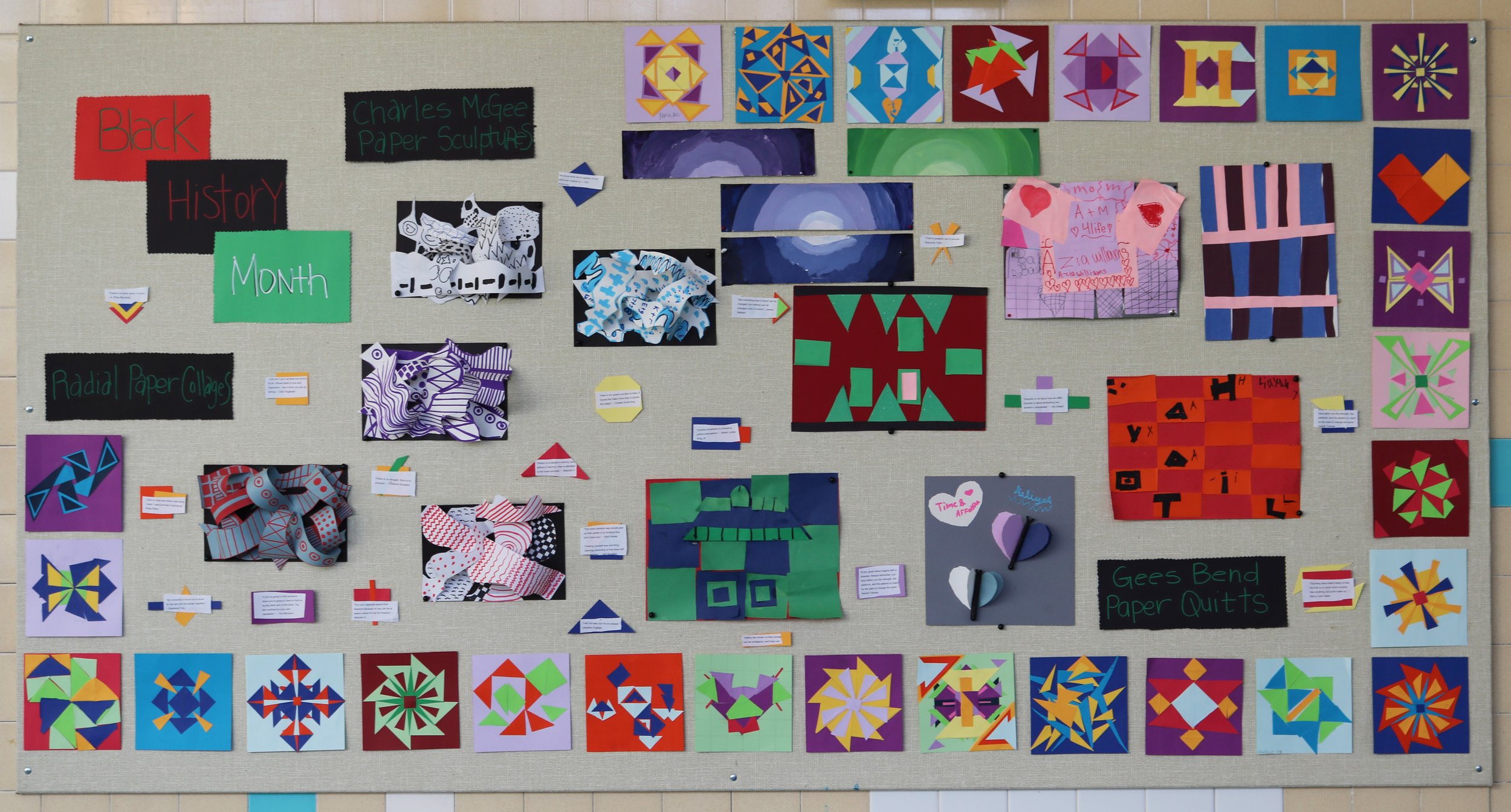
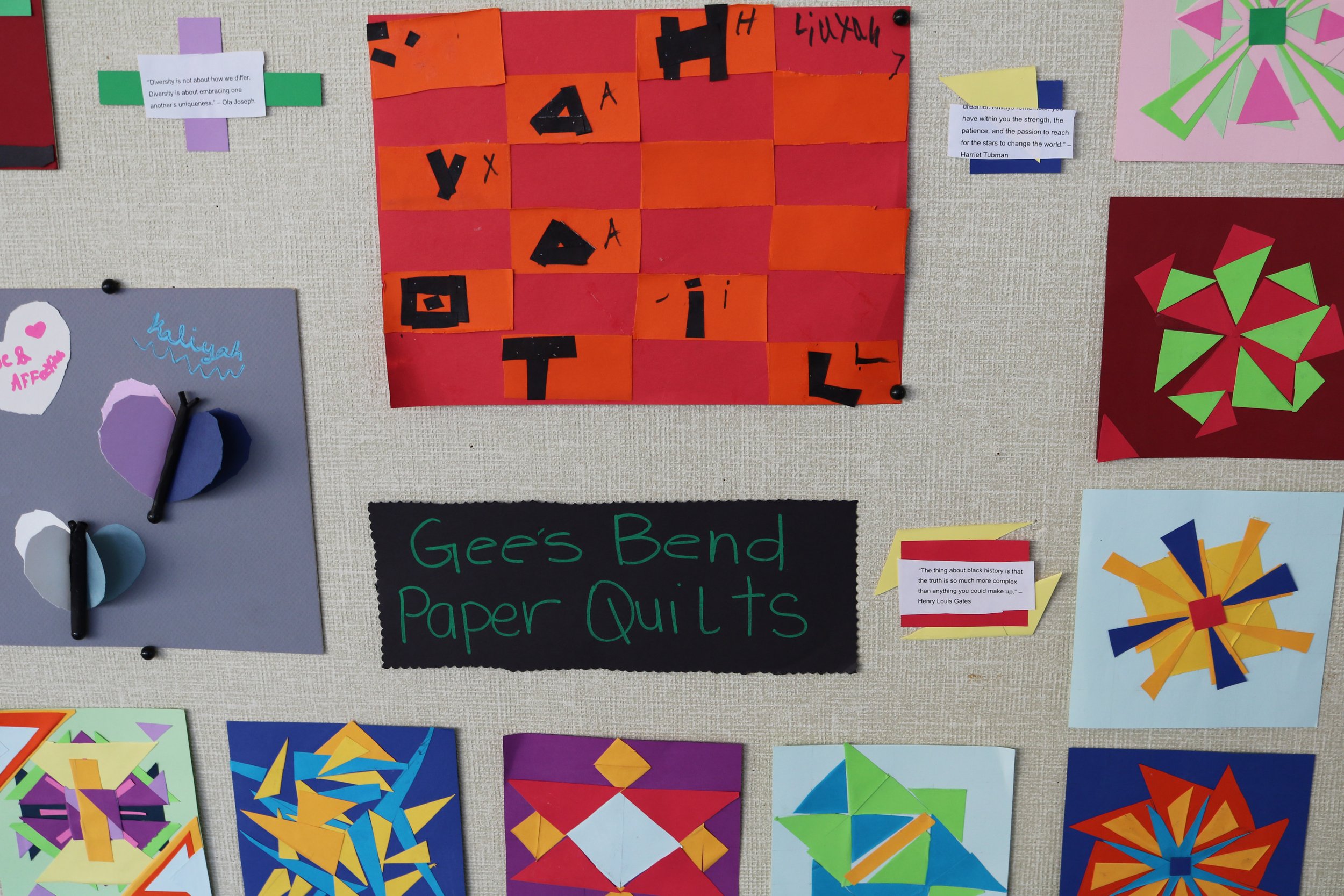
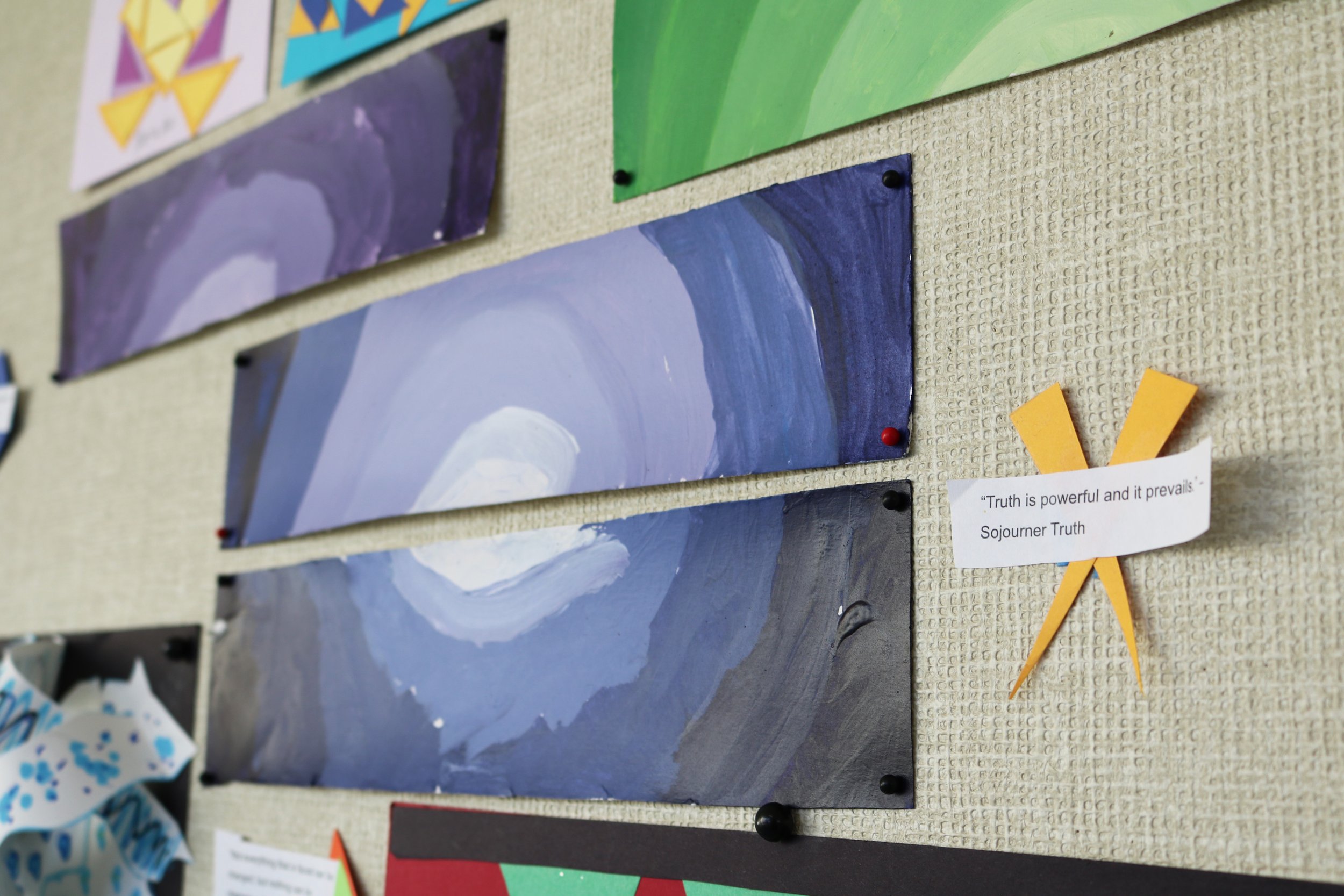
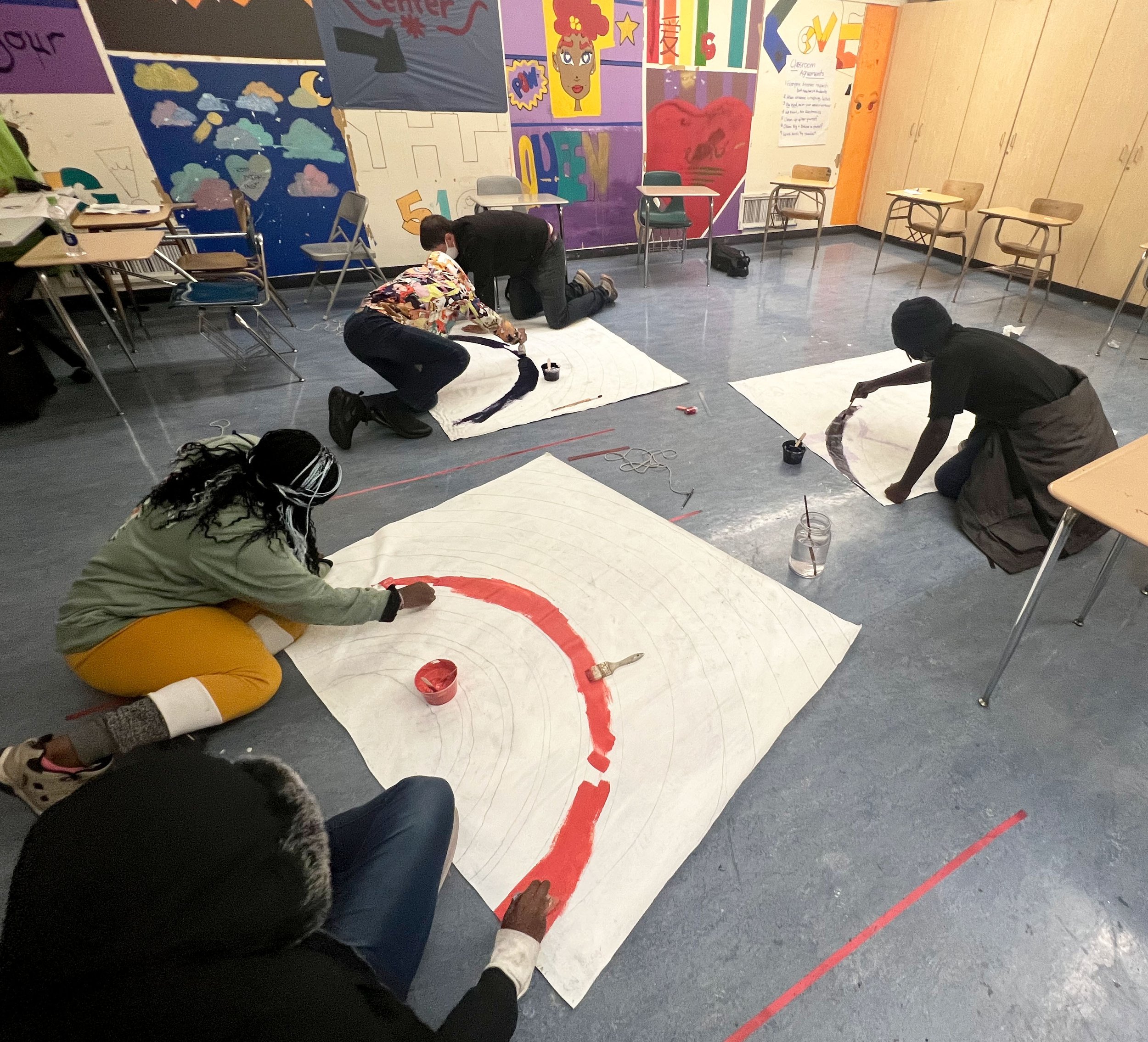
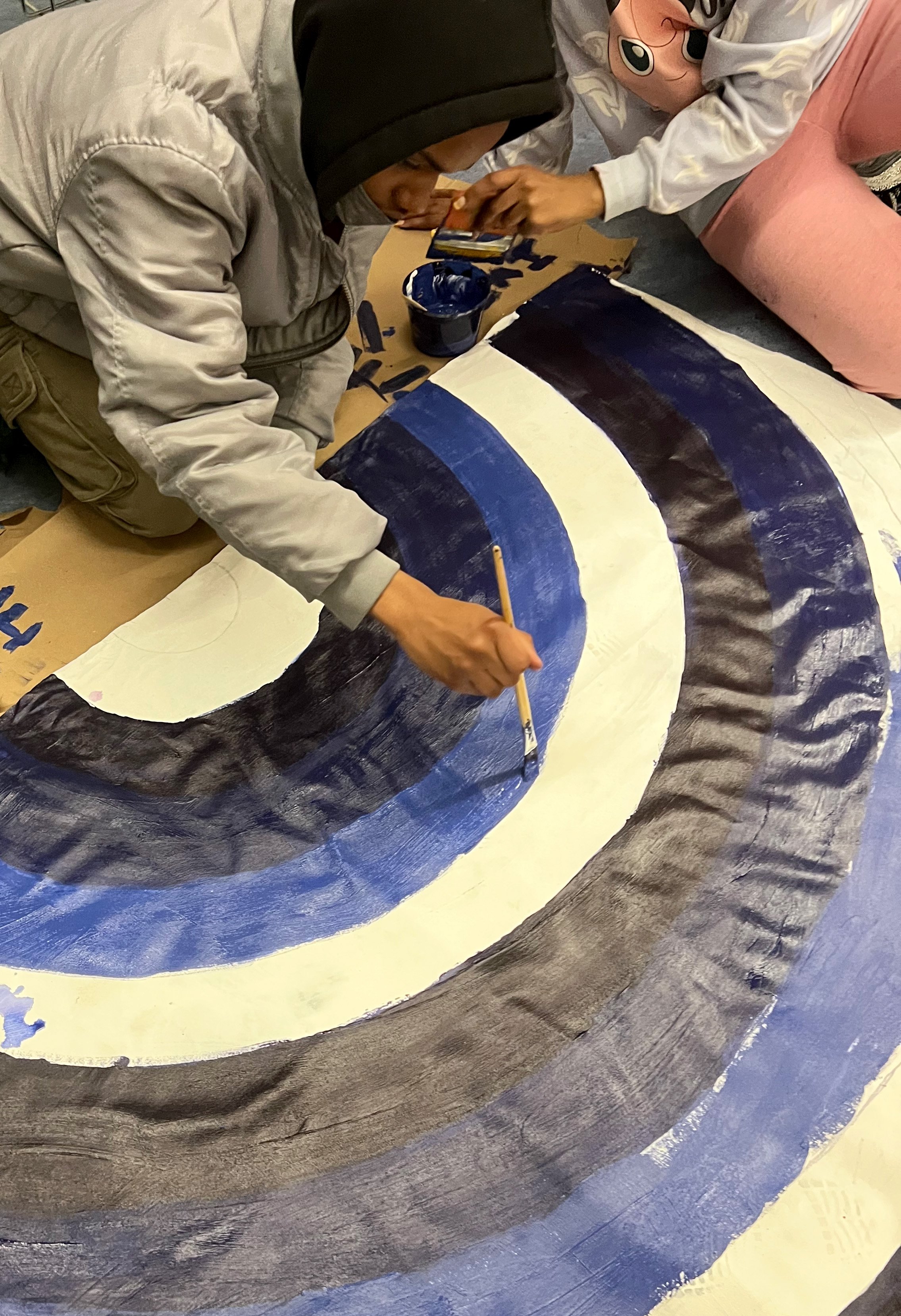
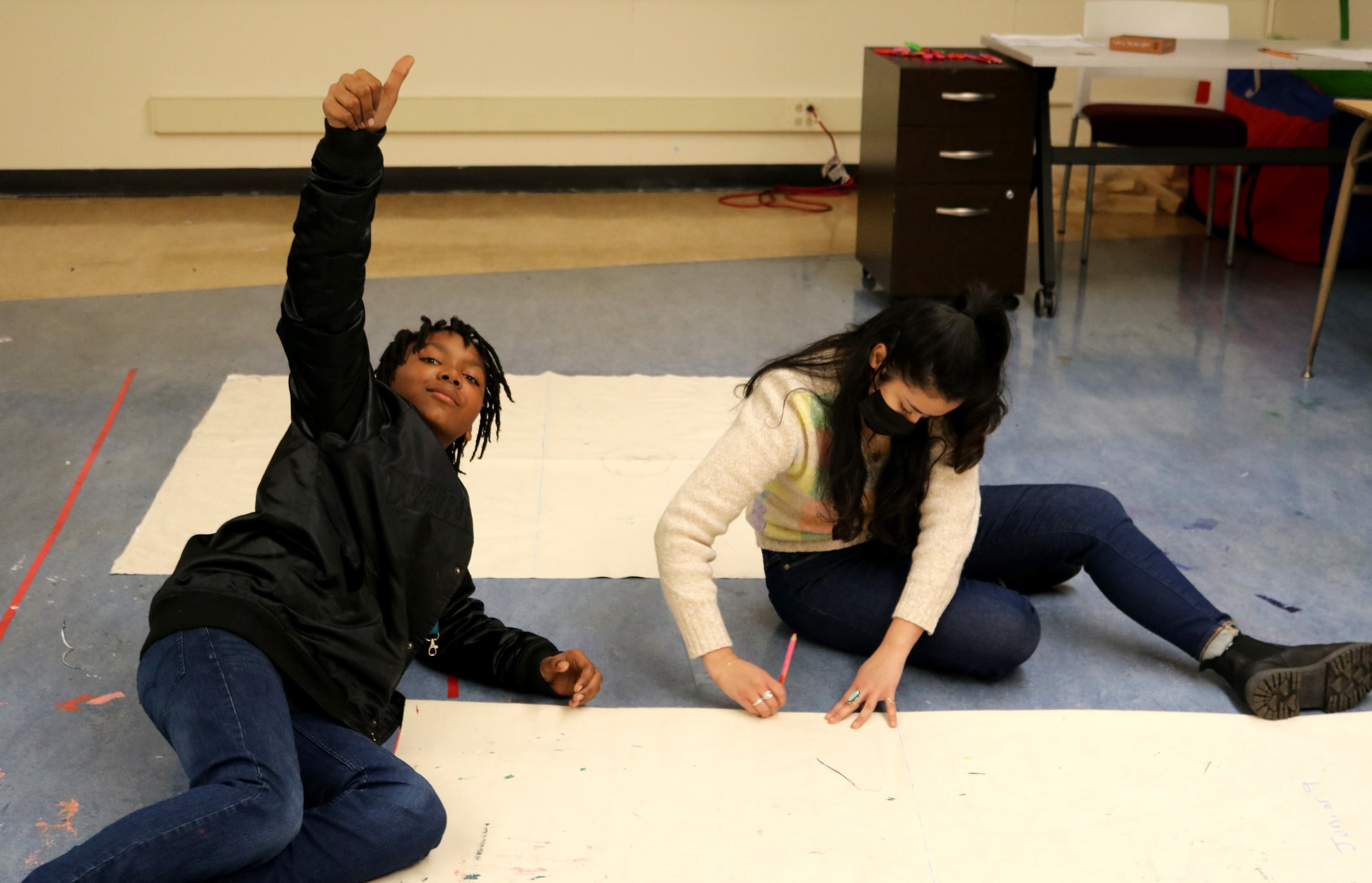
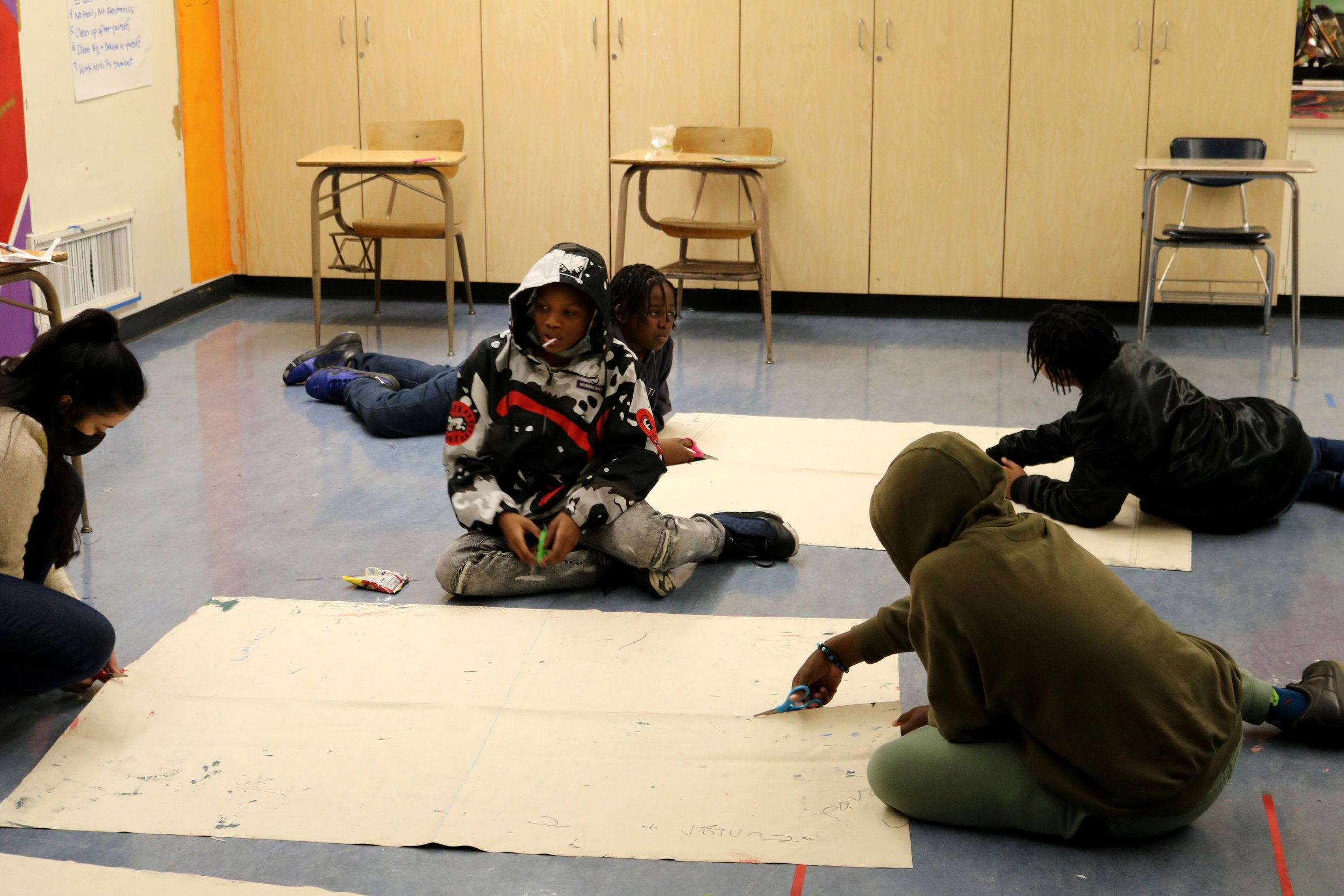
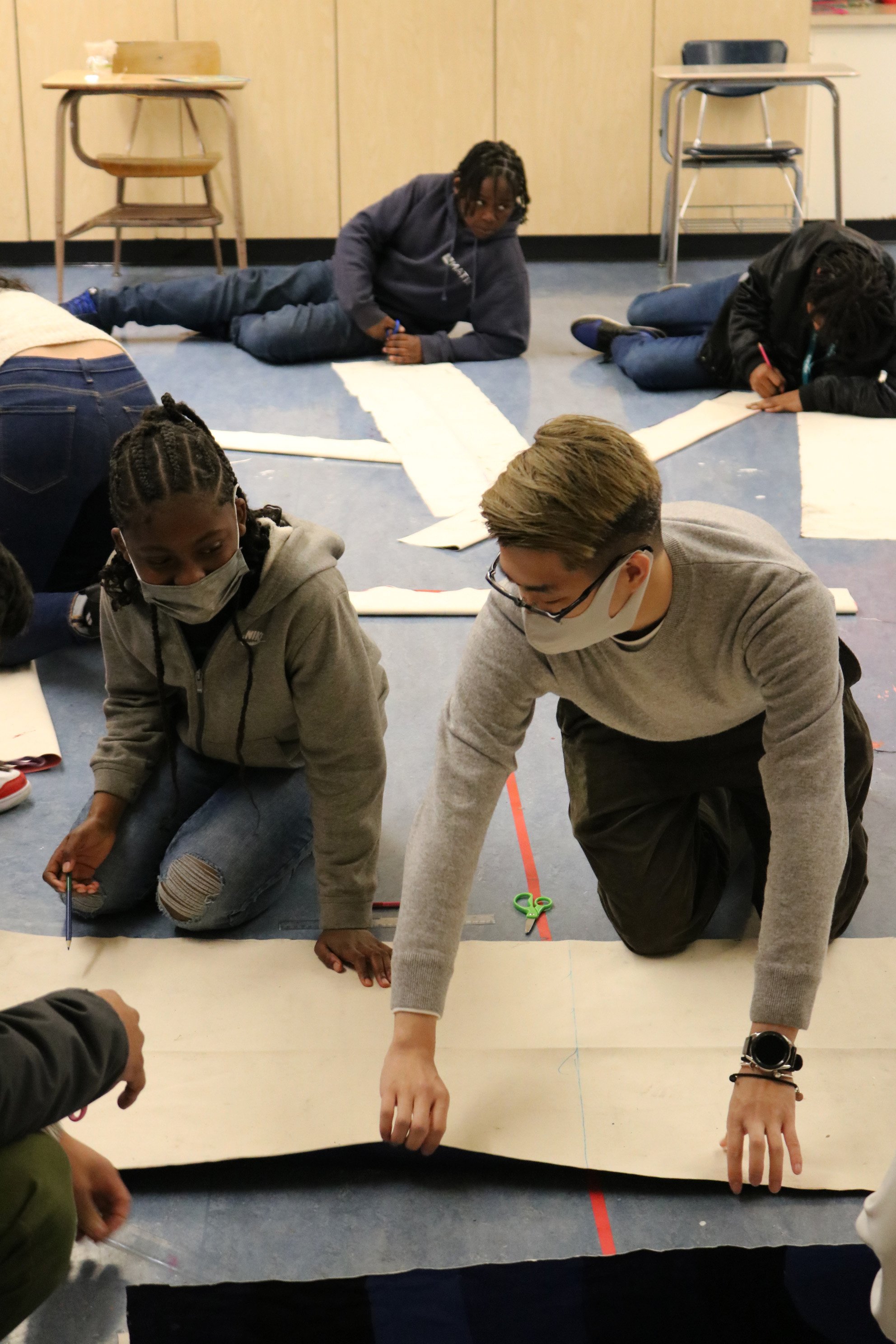
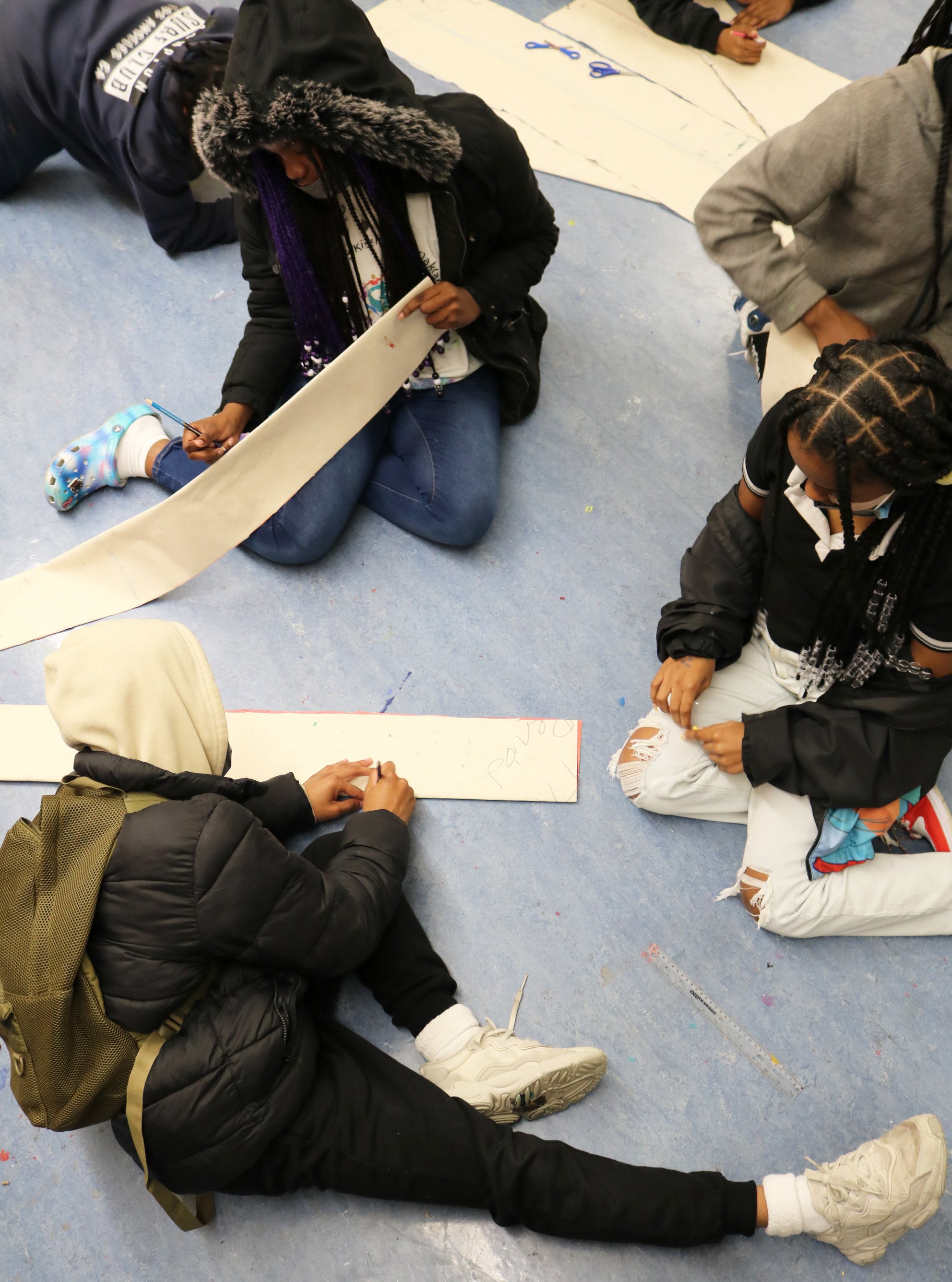
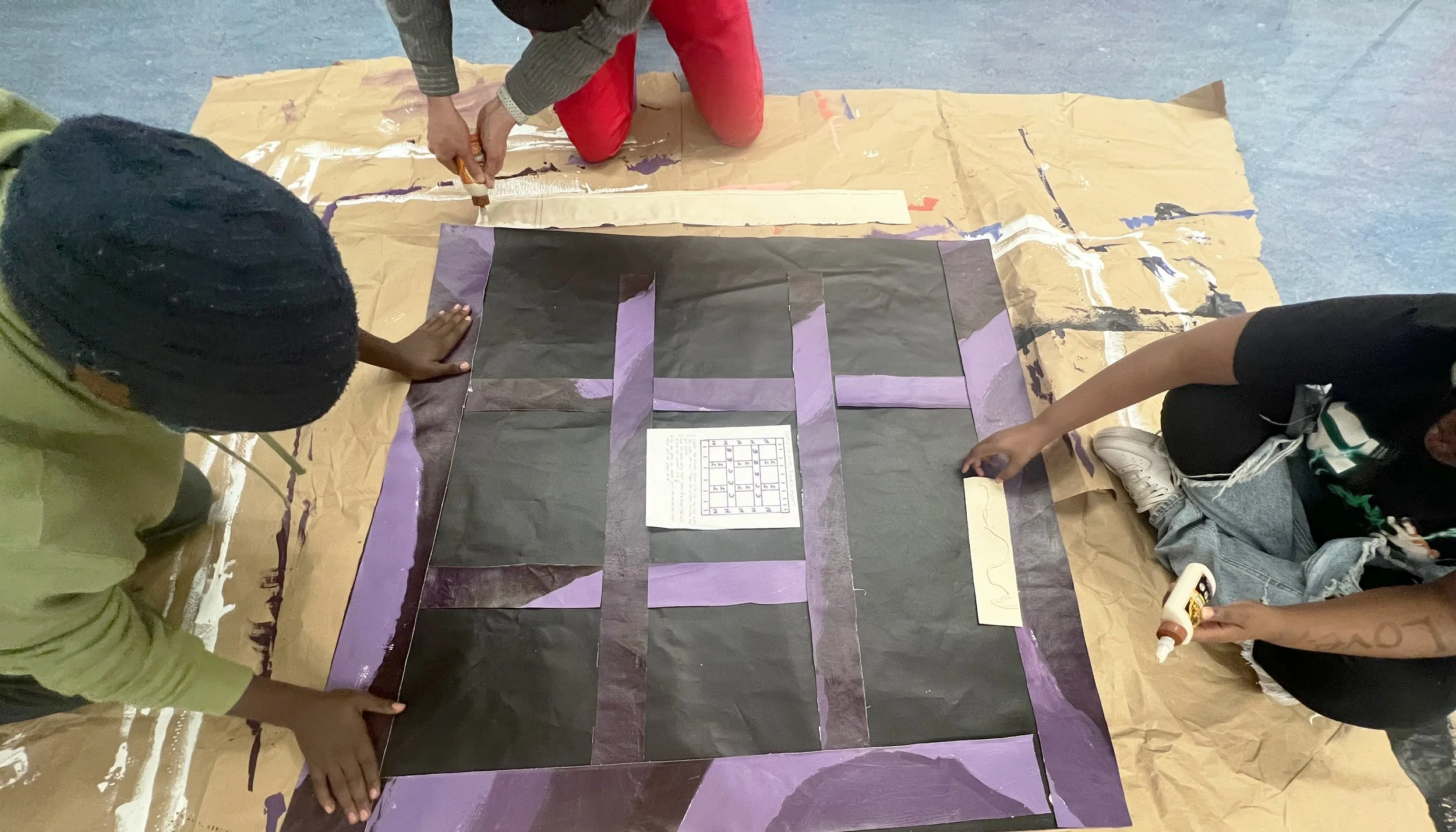
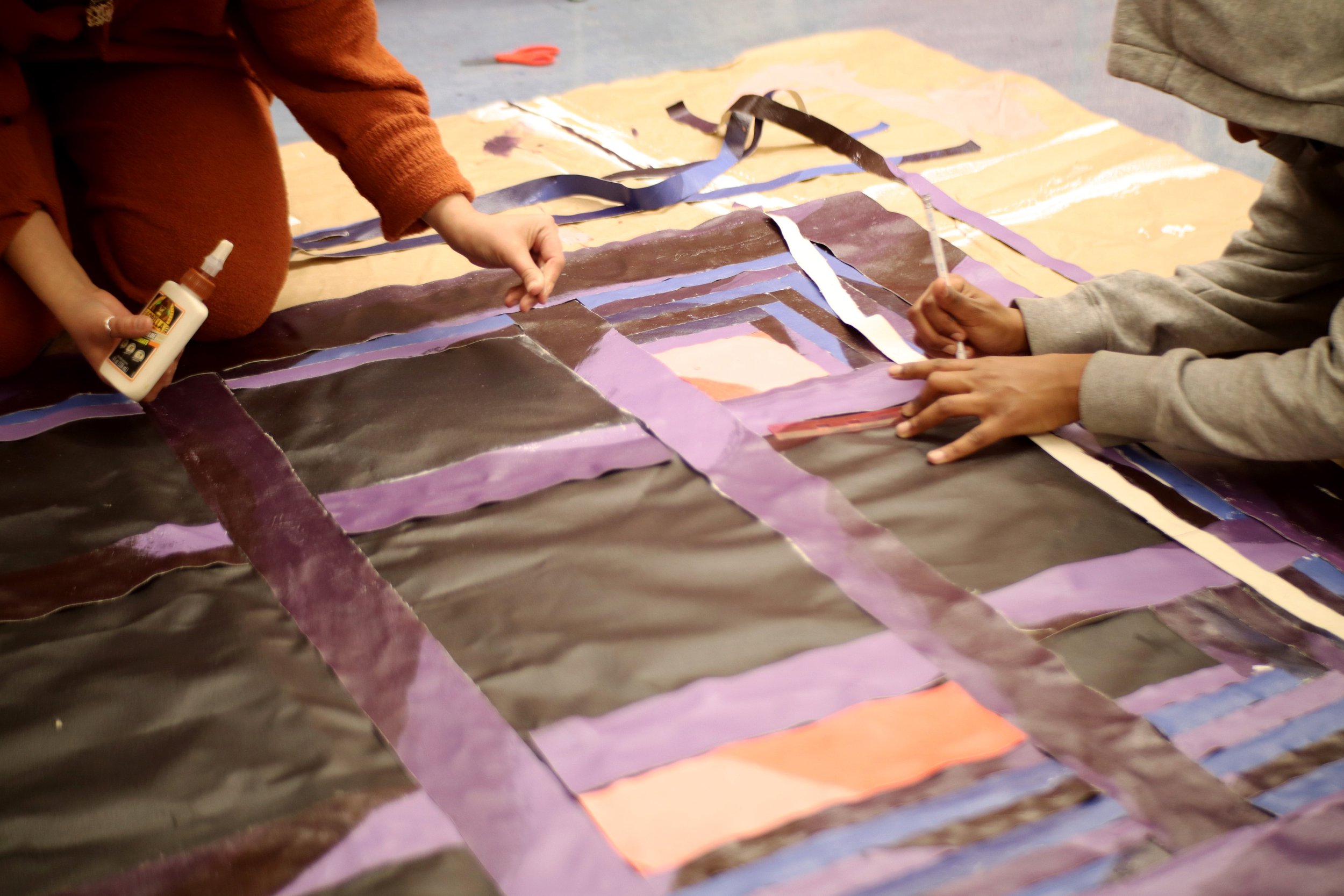
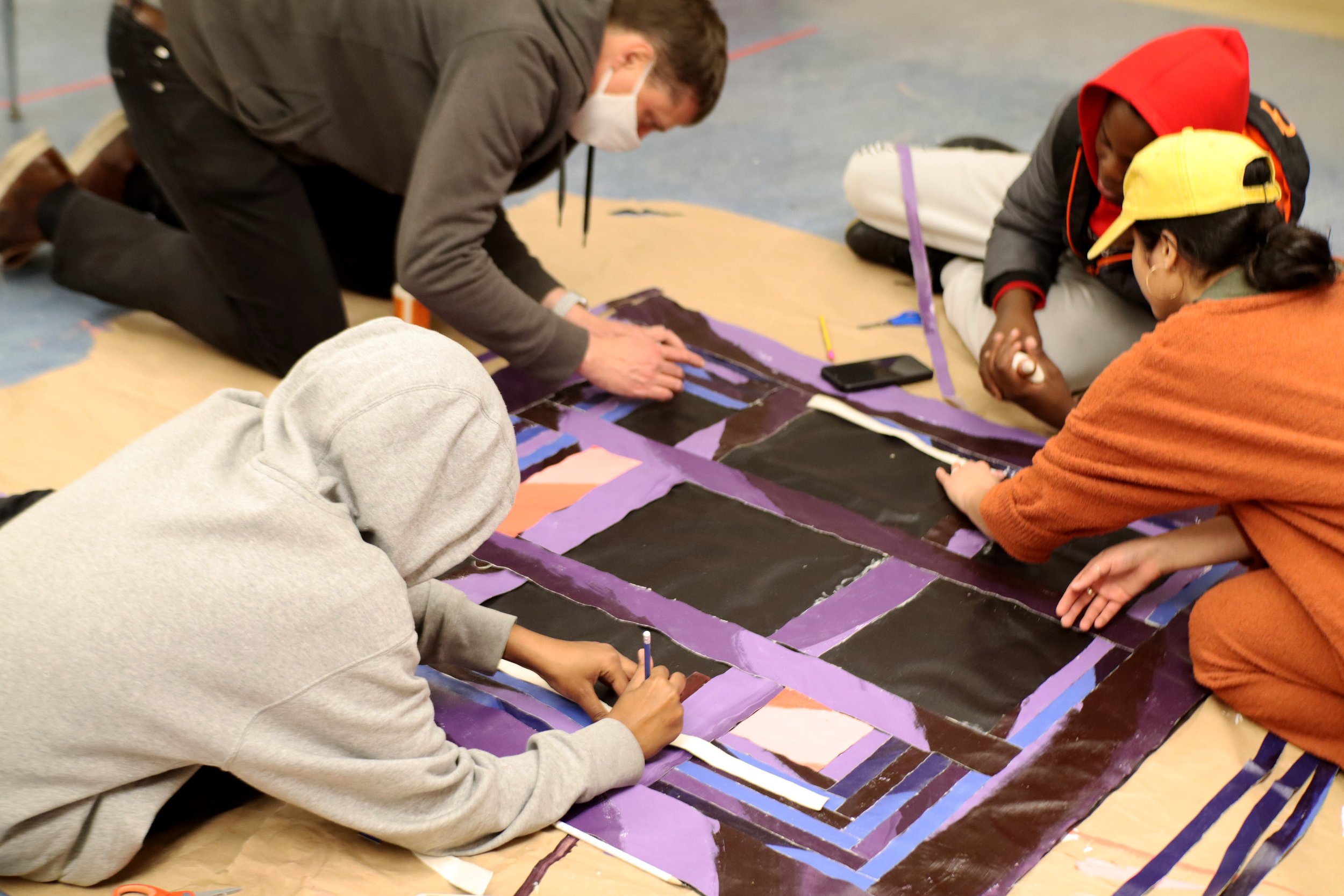
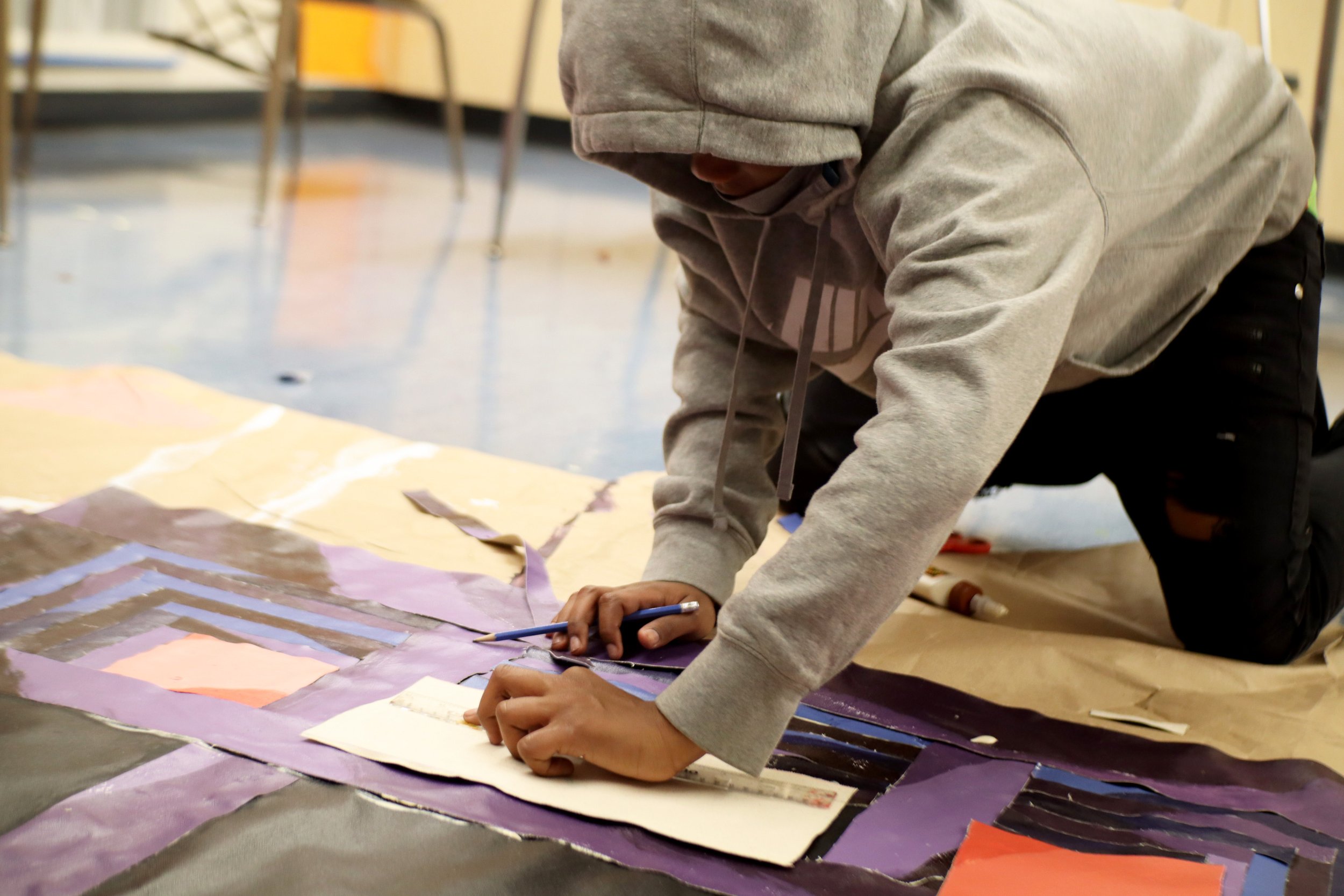
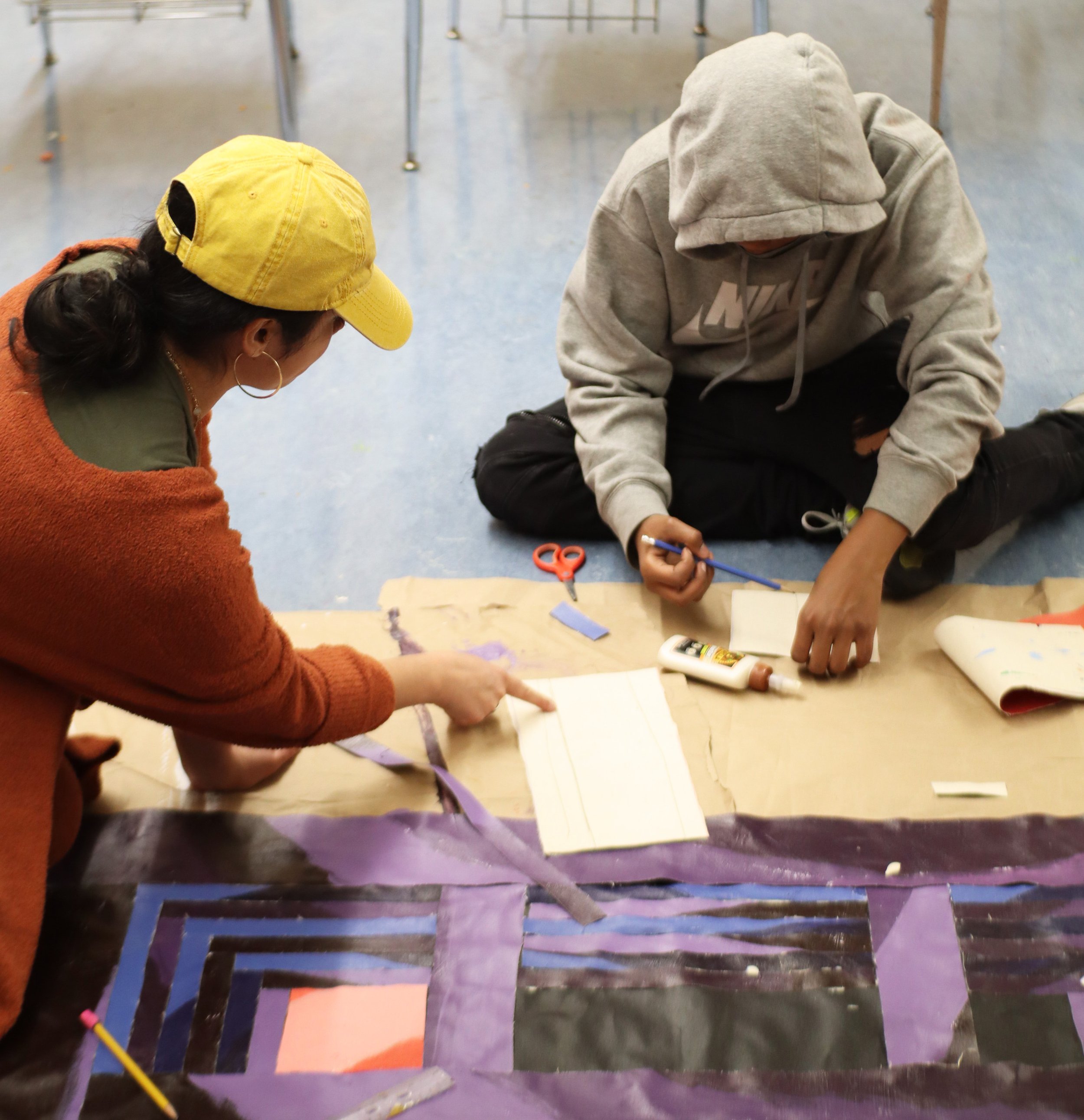
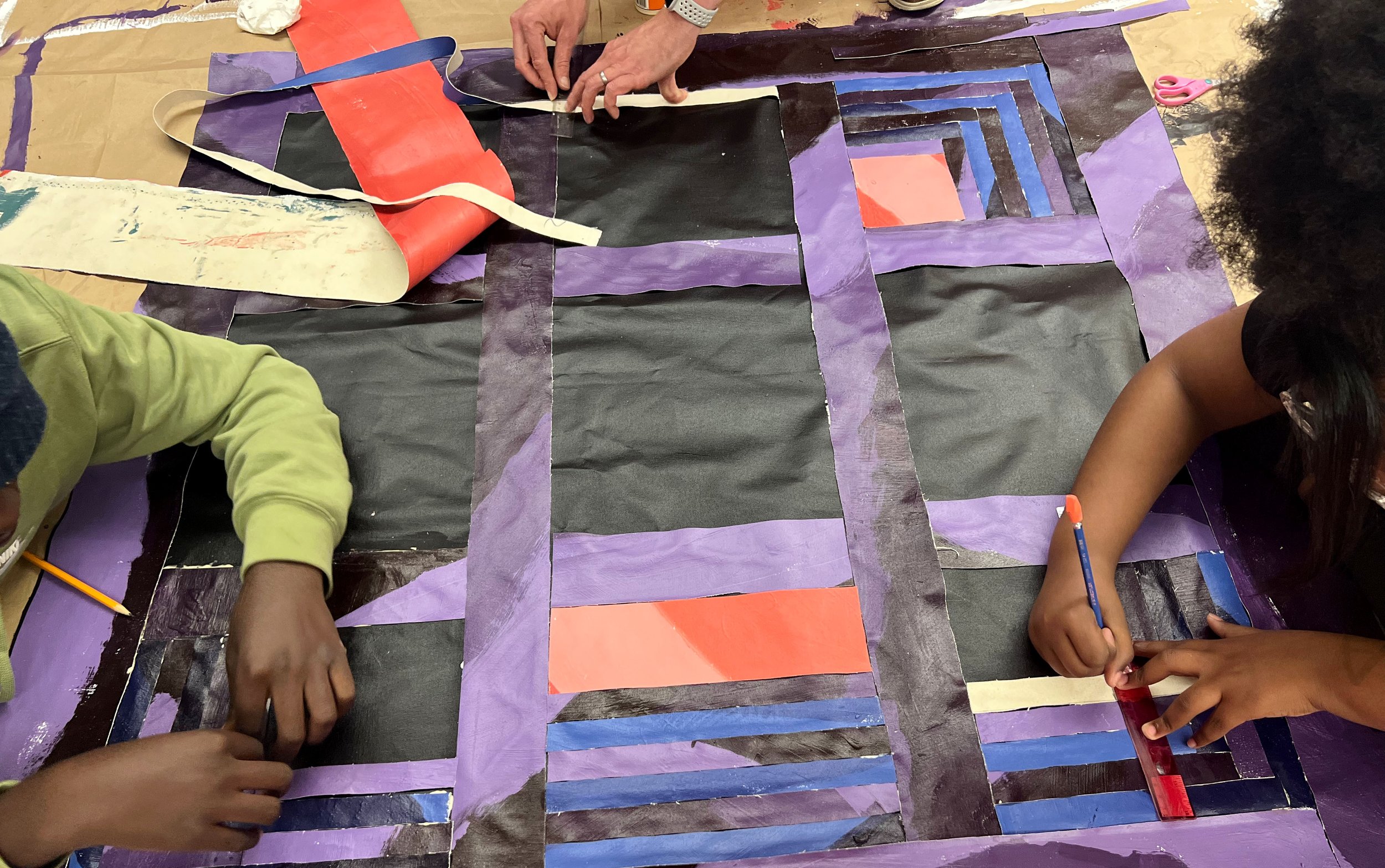
Teaching Artist Etty Alberto cultivates core tenets of the ArtEsteem program's learning goals in her students through her curriculum. Cultural awareness, anti-colonial thinking, sustainable art practice—engaging with these concepts empowers our youth to question, challenge, and deconstruct the systems they develop within.
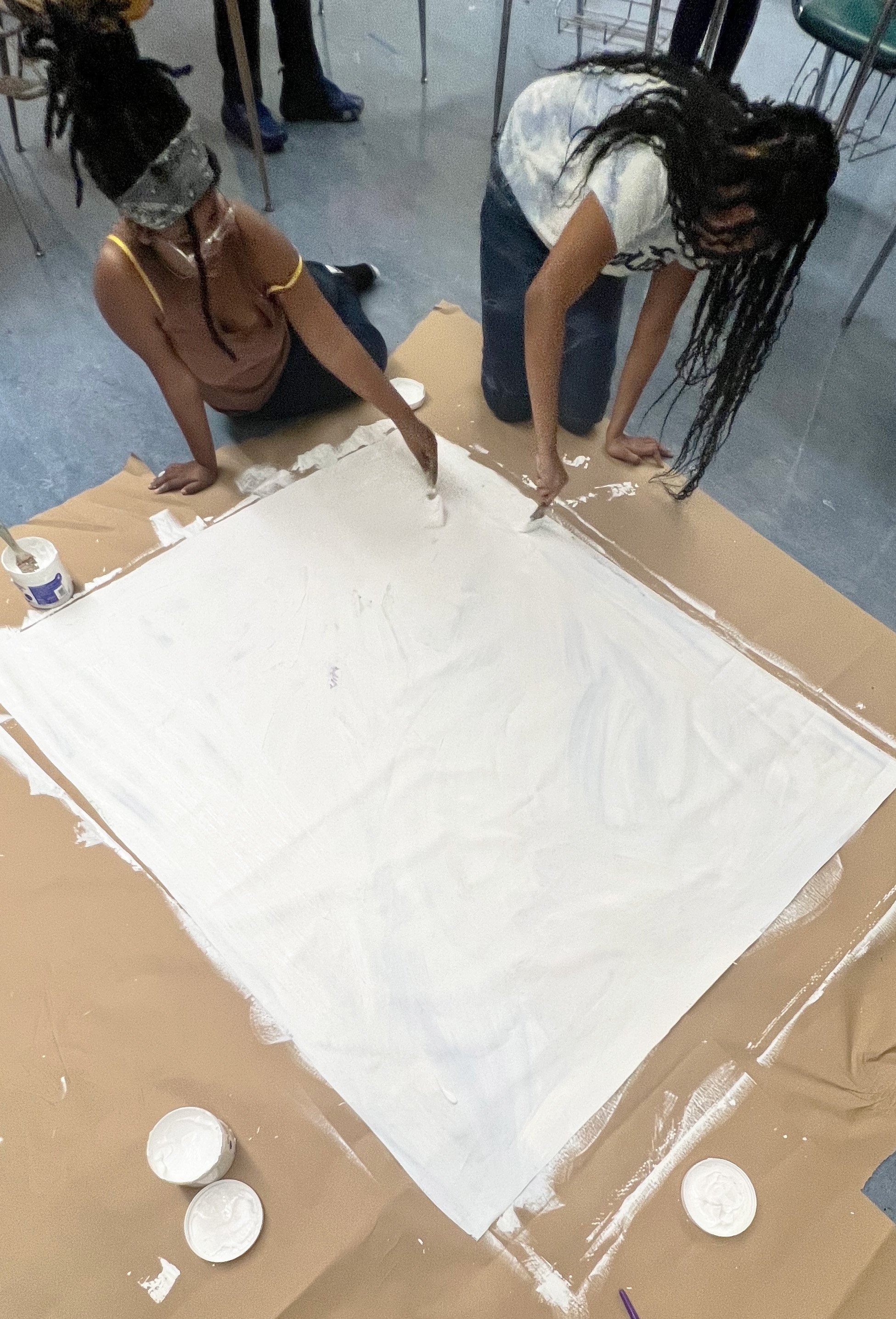
Etty's after-school class at West Oakland Middle School recently completed a canvas quilting project that encompasses the critical comprehension and positive self-expression we advocate for. Inspired by the quilting practice passed down by generations in Gee's Bend, Alabama, the canvas quilt was made by repurposing unfinished cotton canvases from past ArtEsteem students. Through a process of learning, designing, gessoing, painting, cutting, and weaving, the once-abandoned canvases now yield new life and meaning.
In her art practice, Etty is "highly influenced by patterns, including patterns that have cultural ties to [her] and [her] personal experiences. [She is] always inspired by communities with intricate and decorative craftsmanship in their handicrafts and artisanal objects. Patterns are always the common denominator [humanity shares] universally, and [she] was excited to share this with [her] class." During her research for the lessons, Etty learned about quilts from all parts of the world. She noted that reuse is a global practice for quilting, and tied this concept of sustainability and perseverance into the project's knowledge points around overcoming adversity within Black history.
In Gee's Bend, repair and repurposing have been essential for survival. The community has continuously struggled for resources and economic development, similar in experience to many descendants of enslaved peoples but distinctive in their geographic isolation. Located at a deep bend on the Alabama River, the waters nearly encircle the town. Their population, a majority of whom descend from enslaved people on the Pettway plantation, has historically fluctuated between a mite less than 100 and scarcely over 500 people.
These circumstances gave great importance to each item of clothing and the skills needed to repair and repurpose them. Quilting emerged from enslaved families' need for warmth and bedding in makeshift cottages without heating, and has continued as a practical and cultural tradition.
When first learning about the history of Gee's Bend, Azia, a 7th grader, noted with sadness that "when [Gee's Bend residents] were growing up, [they] didn't have a lot to do and used to sneak to go to school." Another classmate, a 6th grader named Robert, connected experiences of youth in Gee's Bend with Oakland's youth, expressing that ArtEsteem "is a very good class" and "[he] thinks everyone should go to it," citing his friends' improvement in artistic skills and focus in the classroom. 6th grader Clarence expressed his appreciation for the quilters' skills, wondering: "How did they make [the quilts] since they didn't have resources?" Pondering further, he made a parallel with Oakland's artistic culture, mentioning that "Blank walls become nice, beautiful murals."
As with Oakland's murals, Gee's Bend quilts enrich the culture of the community and serve as vessels of expression, remembering, preservation, and pride. While we should not forget the racist, classist, capitalist systems that breed the art of resilience we see, we can take a moment to revel in the realities and beauty within our communities' colorful expressions.
The "WOMS Living" Collection: Creation Process & Exhibition Debut
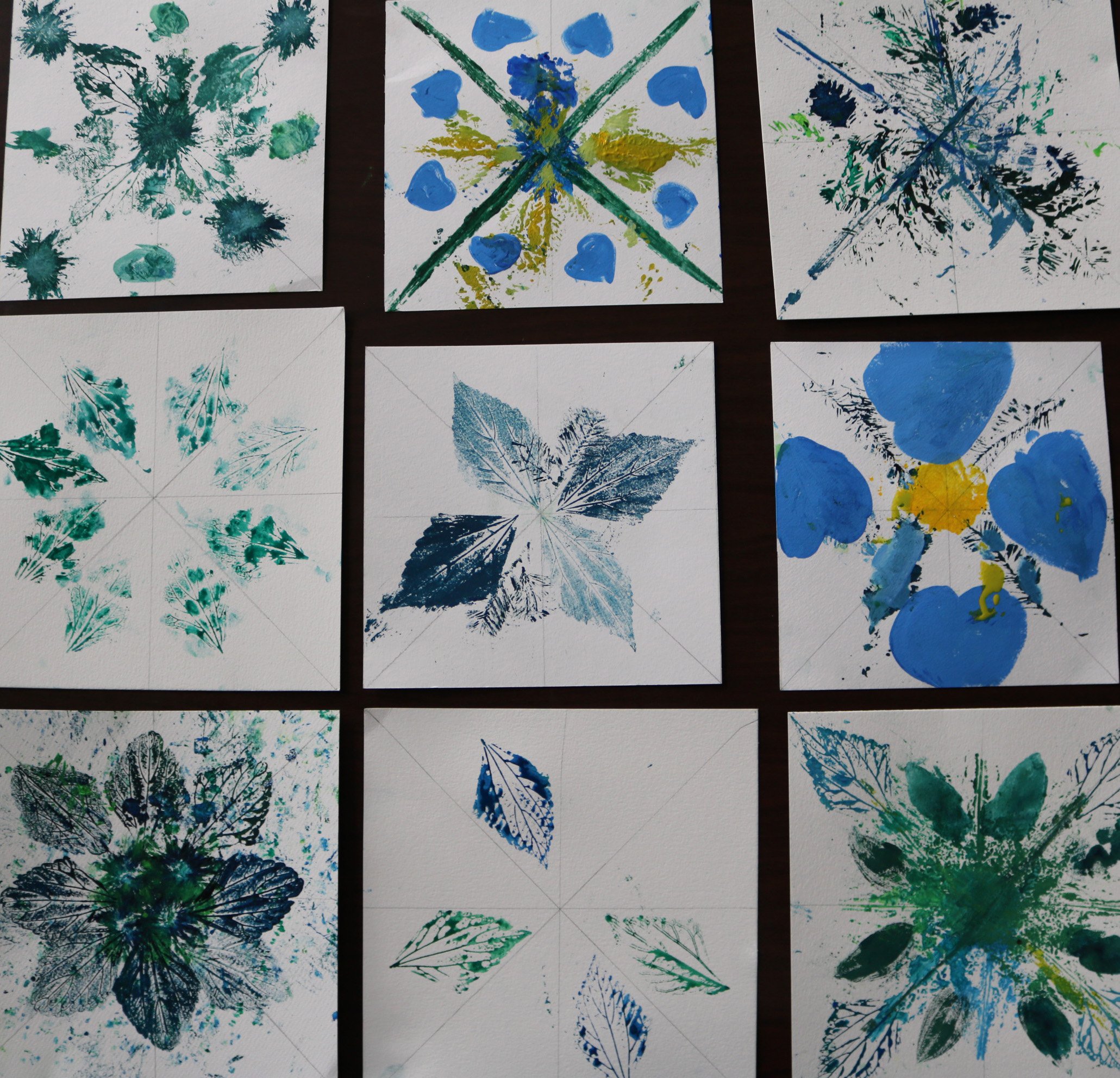
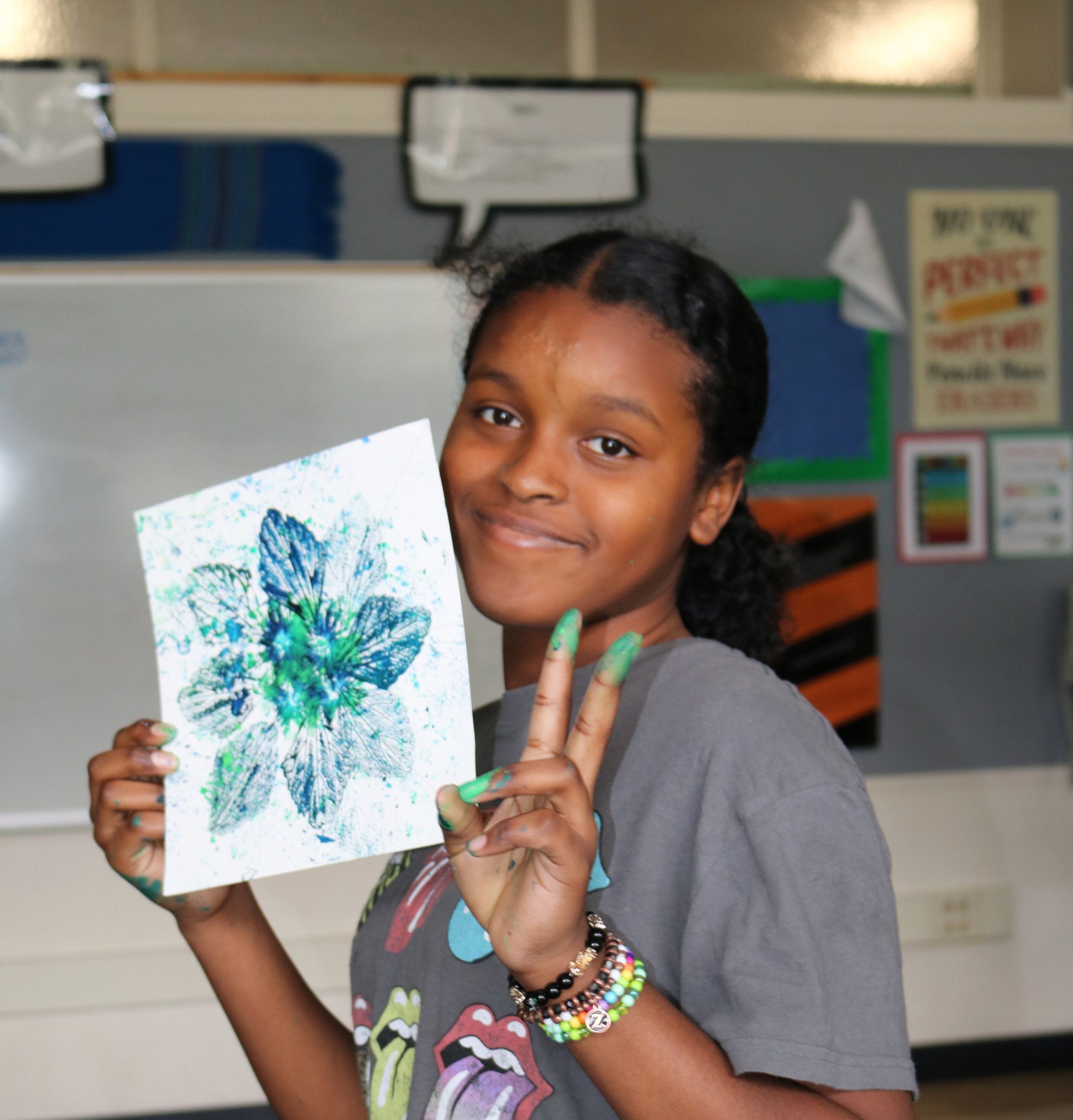
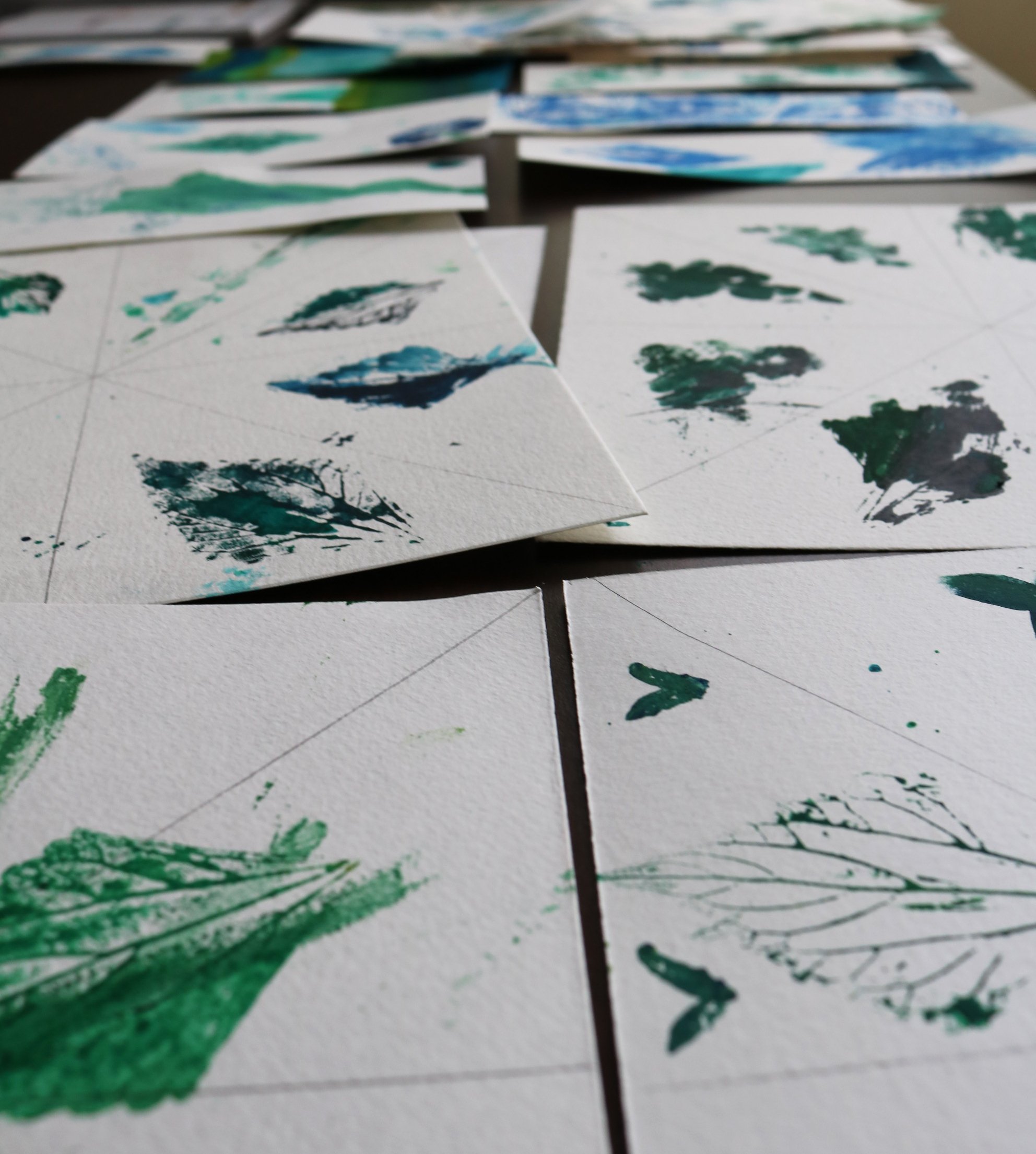

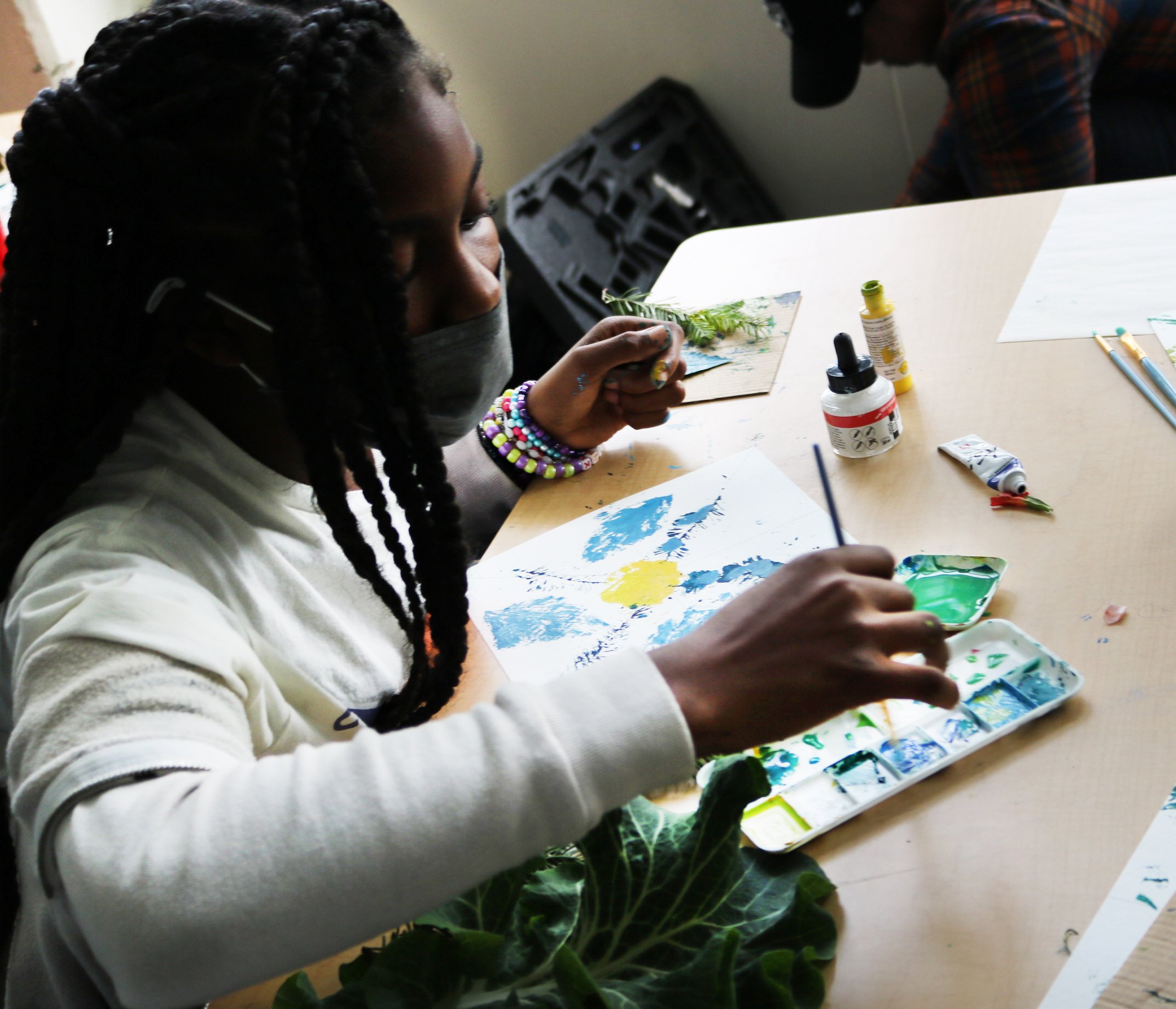


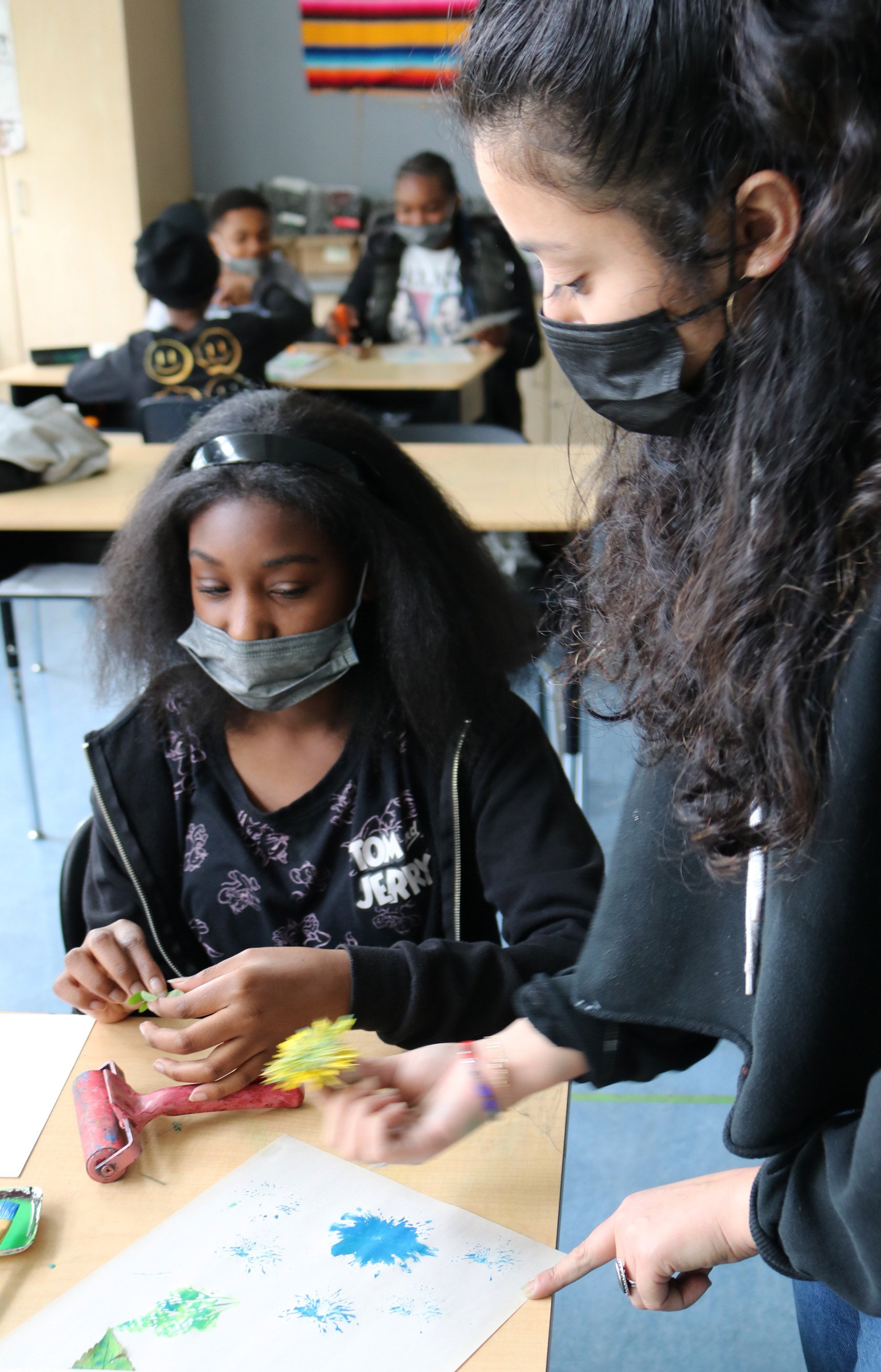
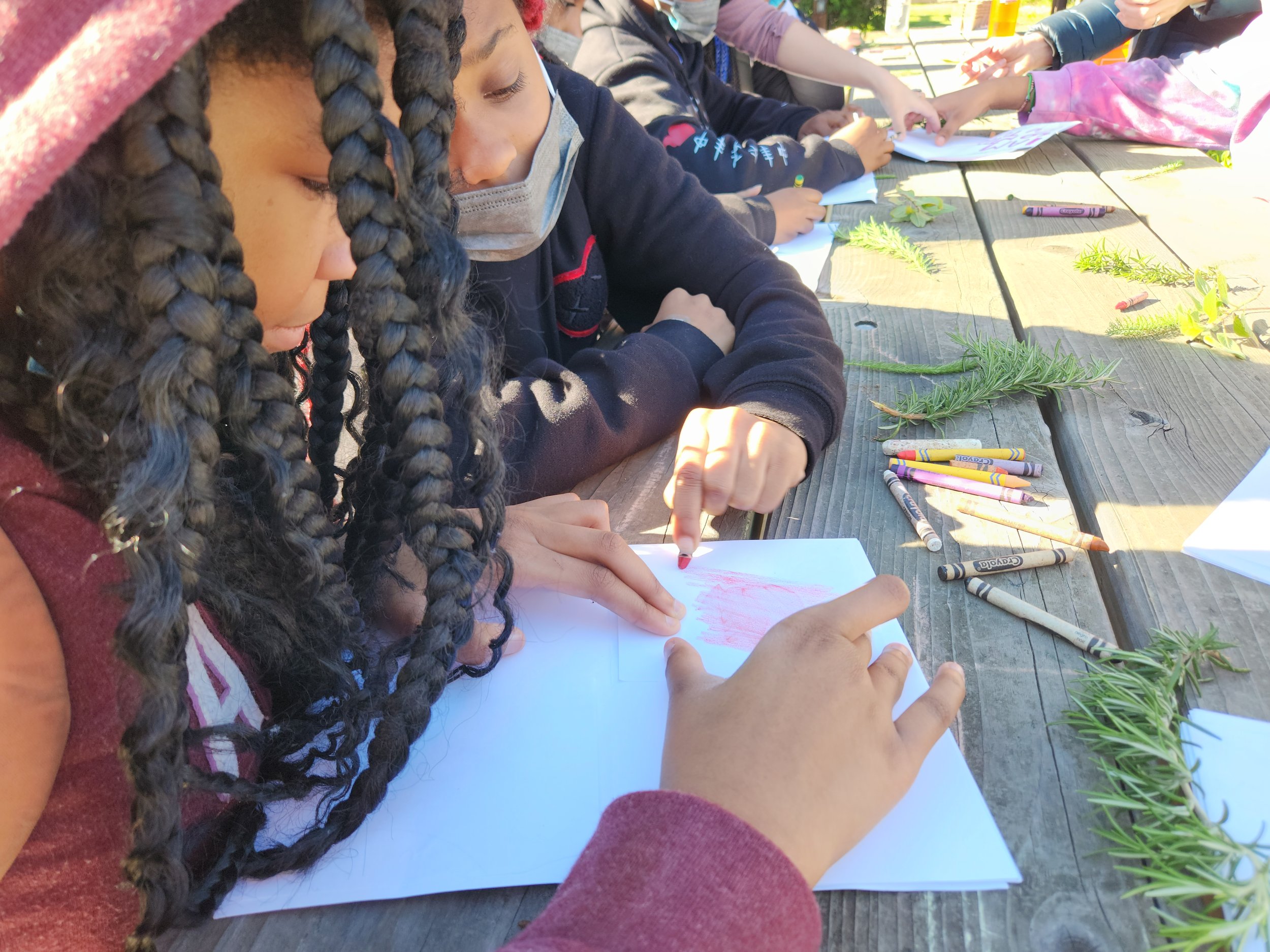
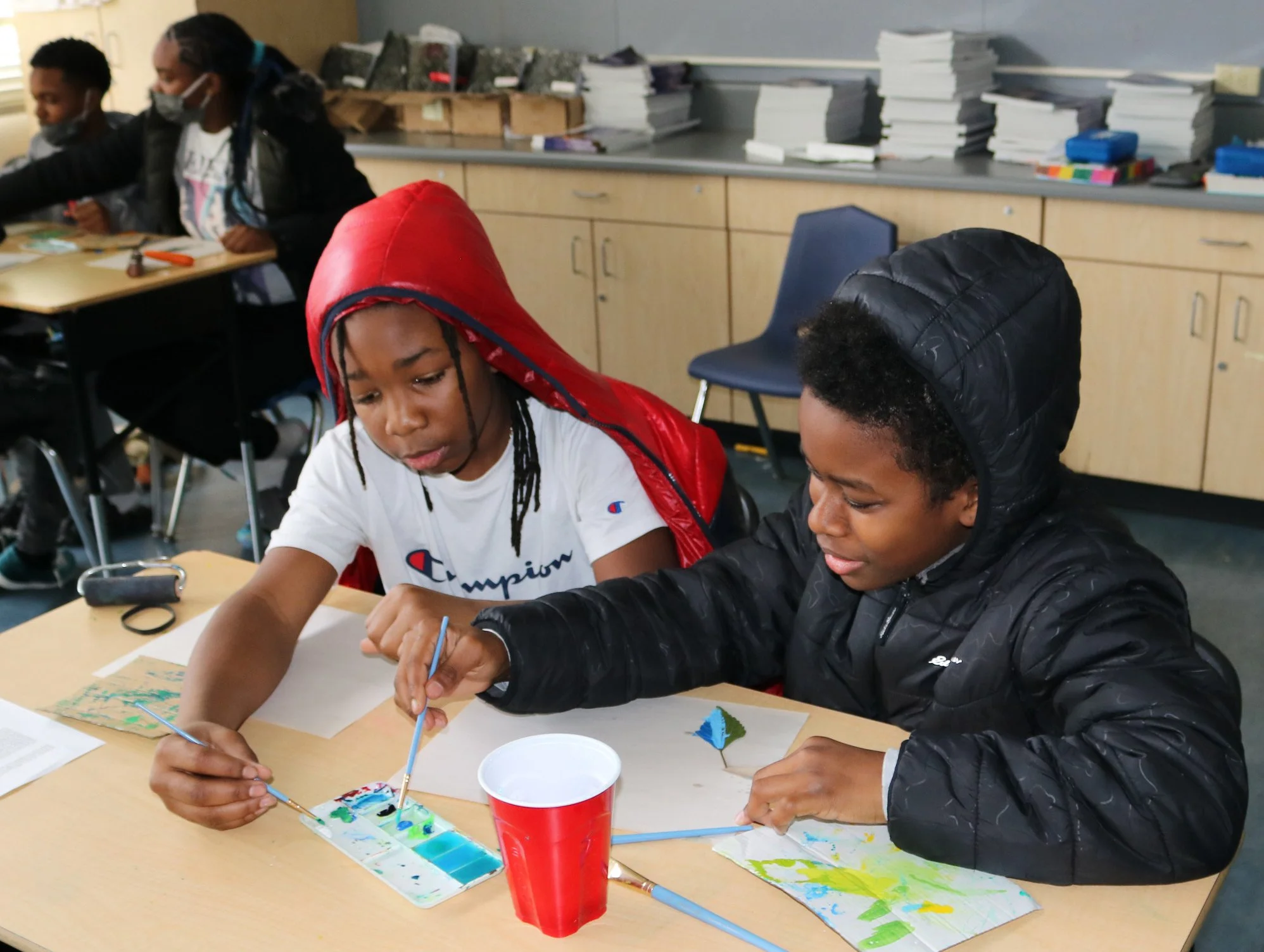
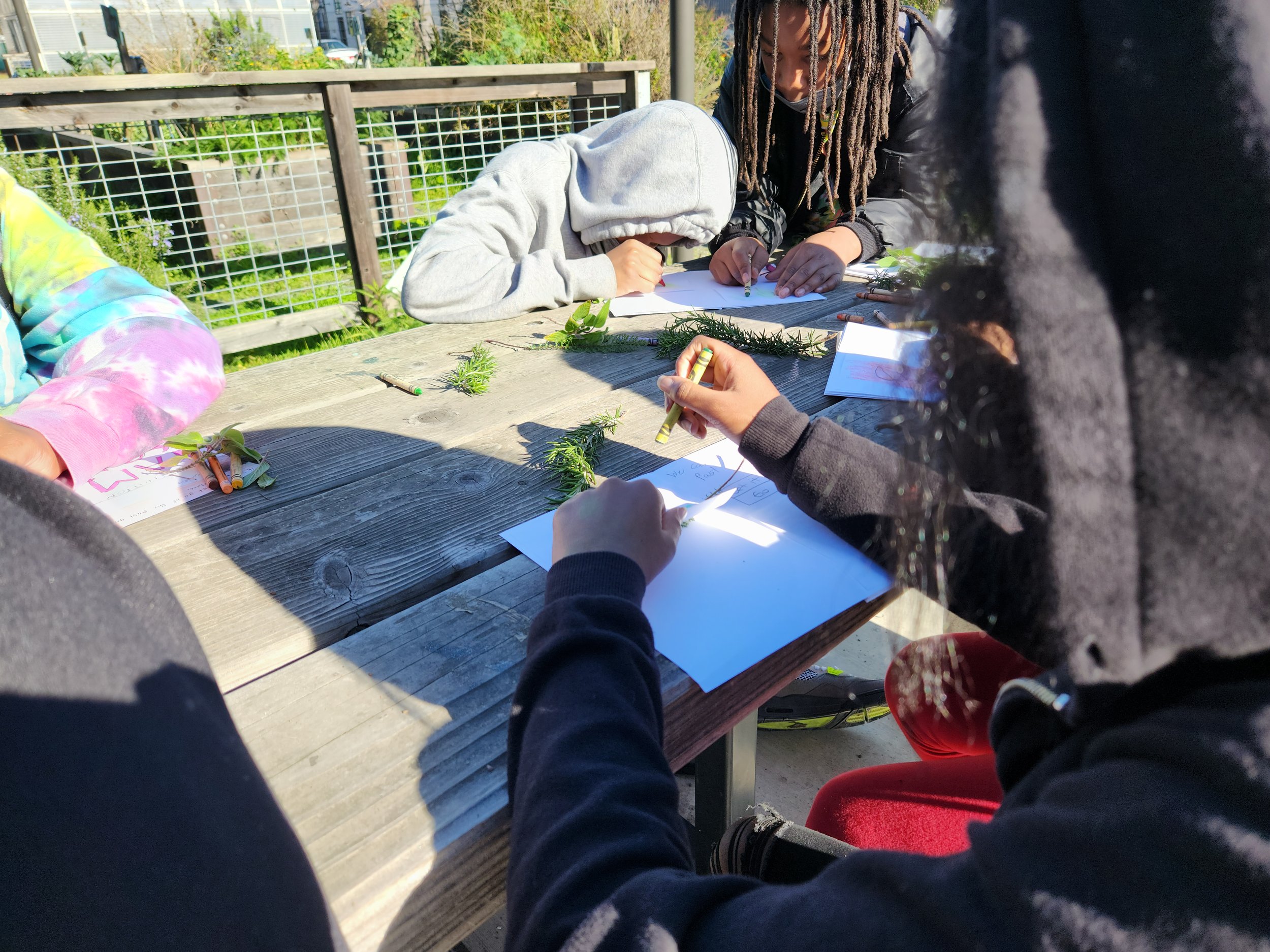
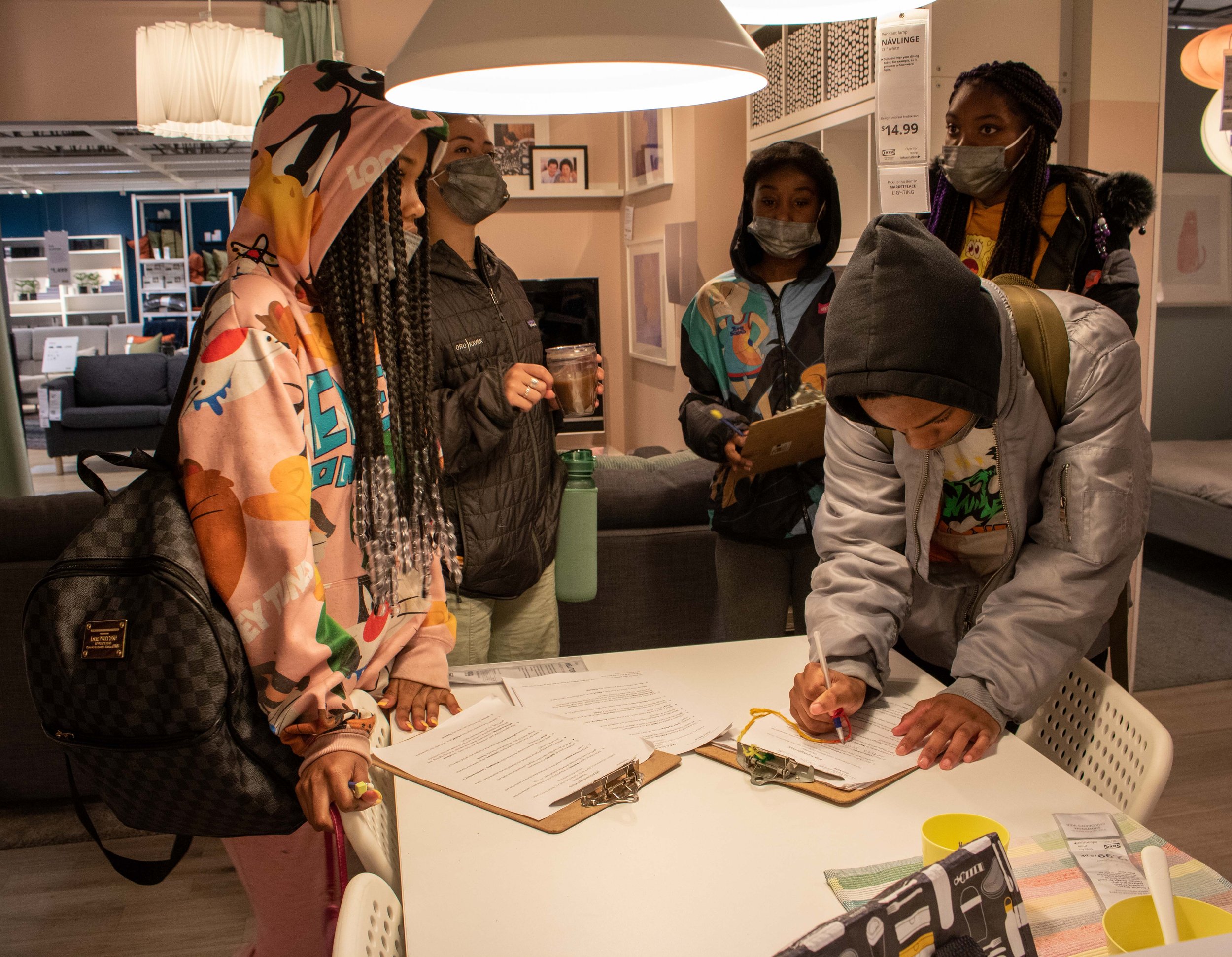
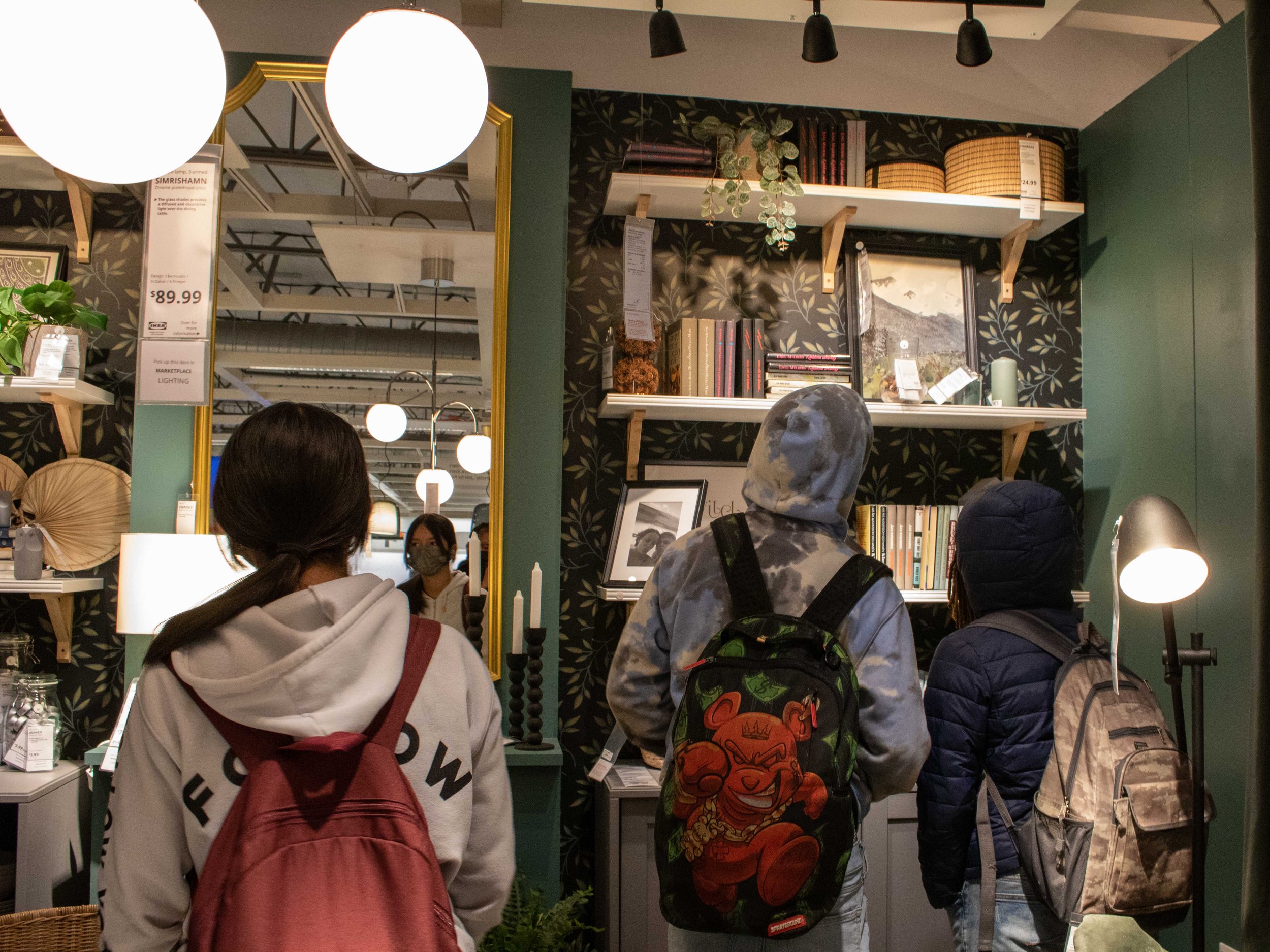
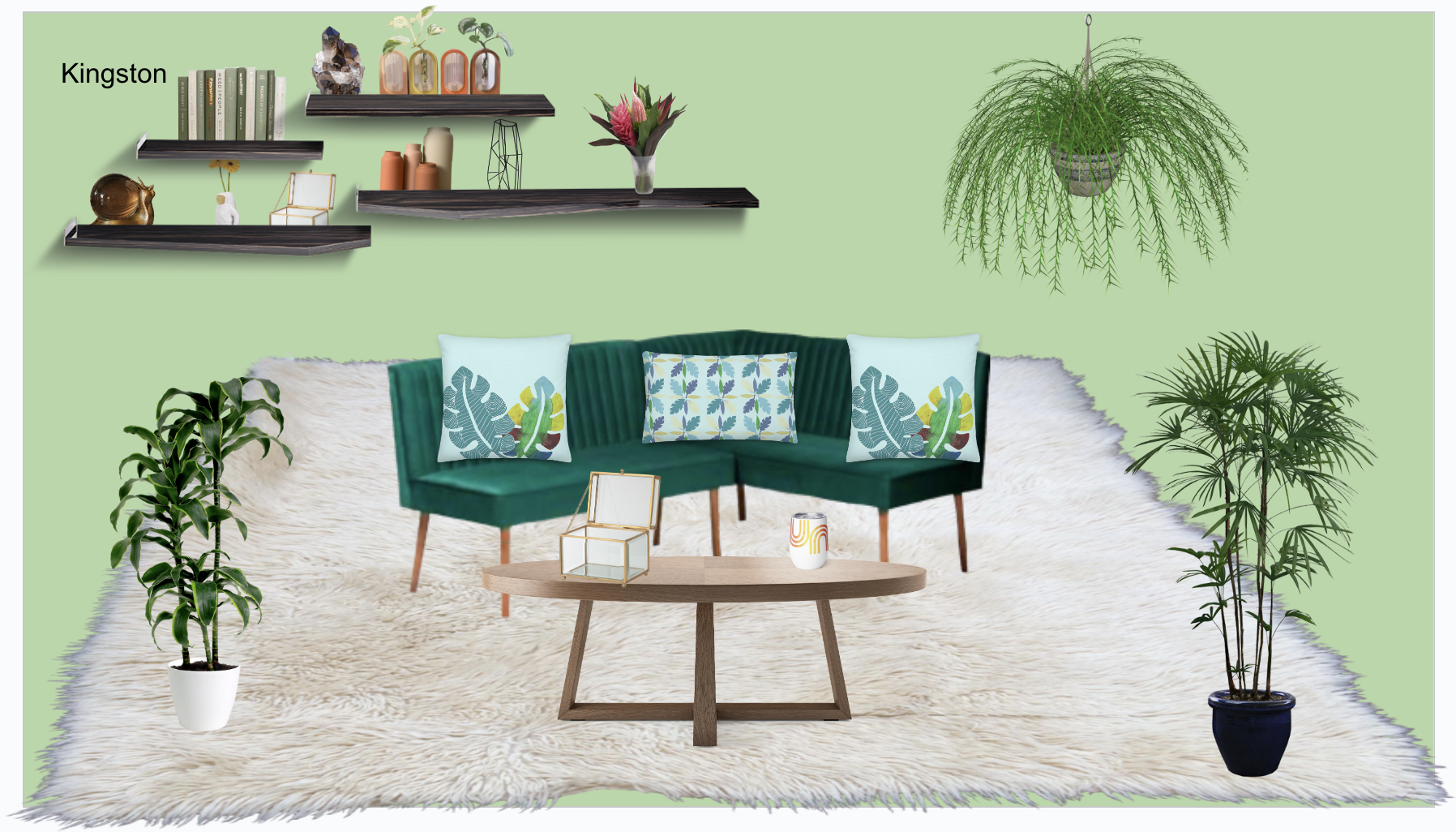
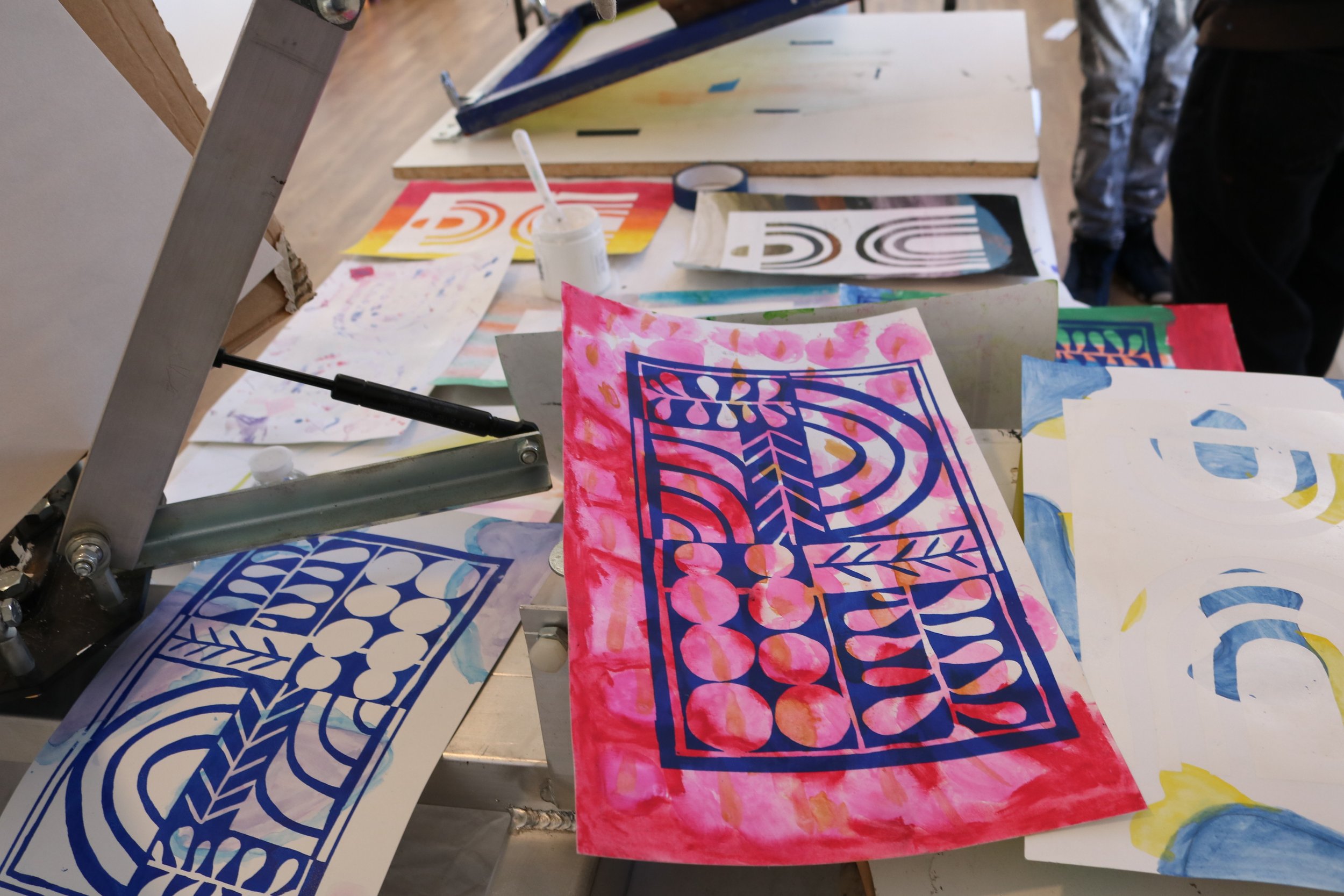
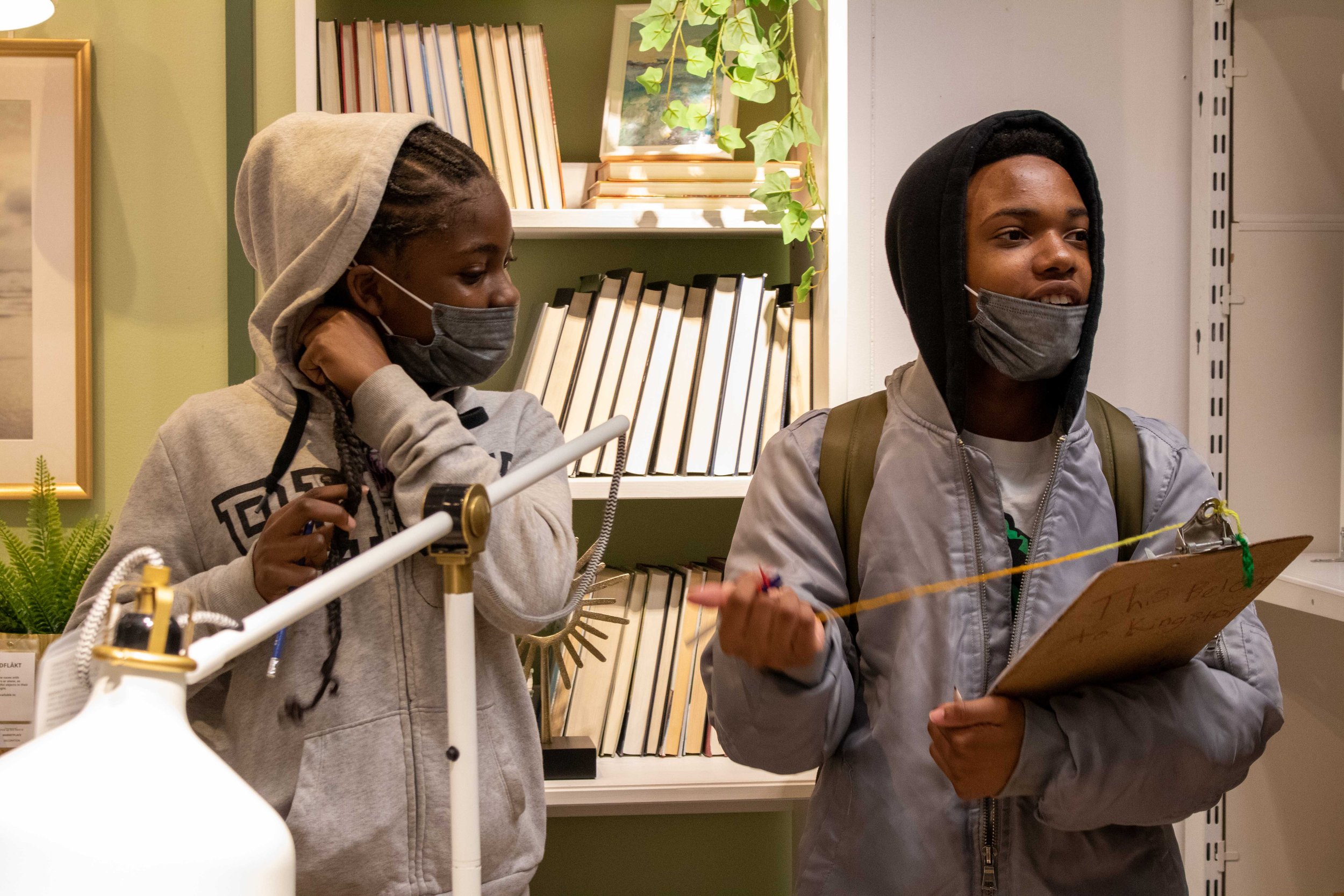
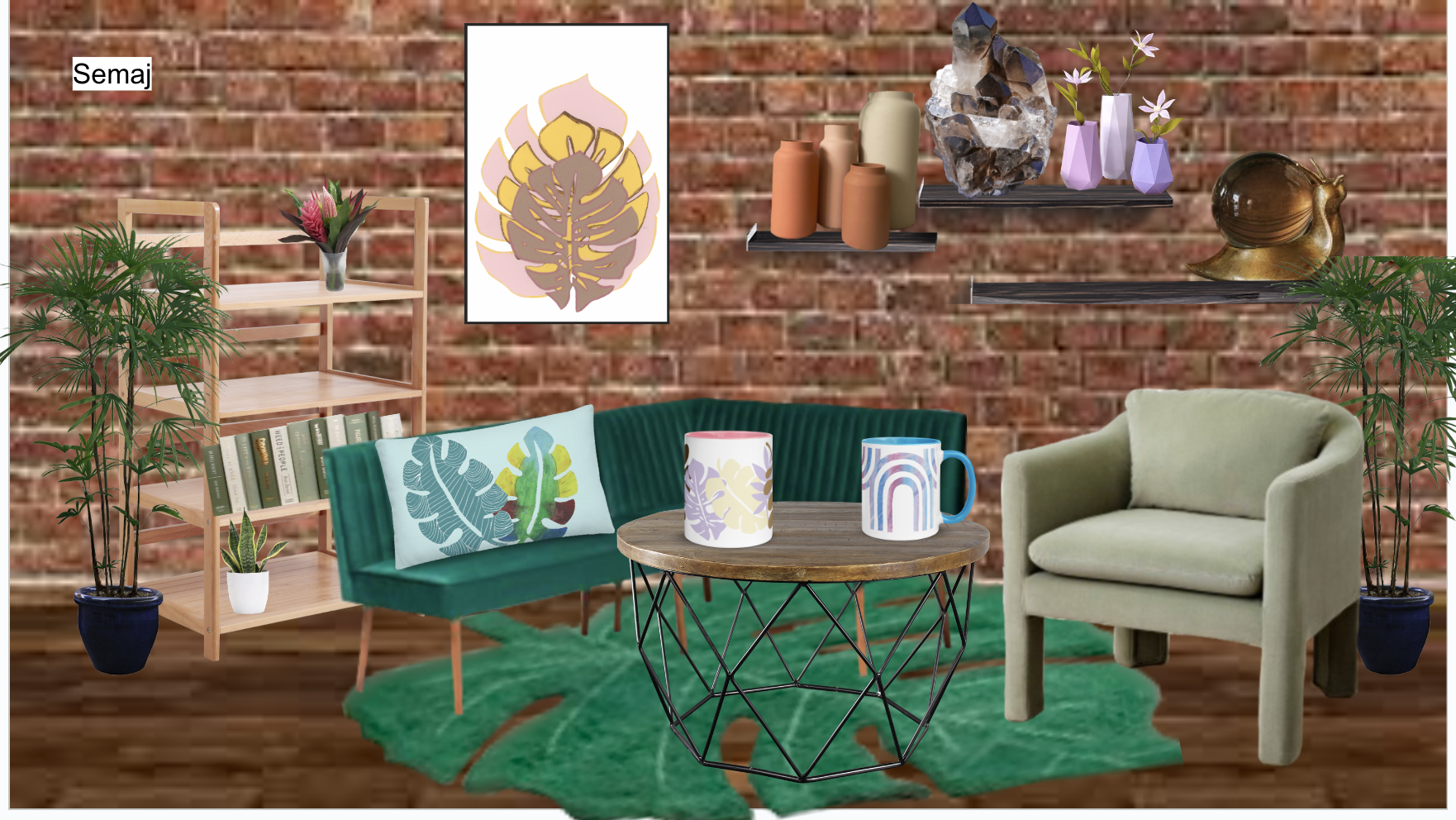
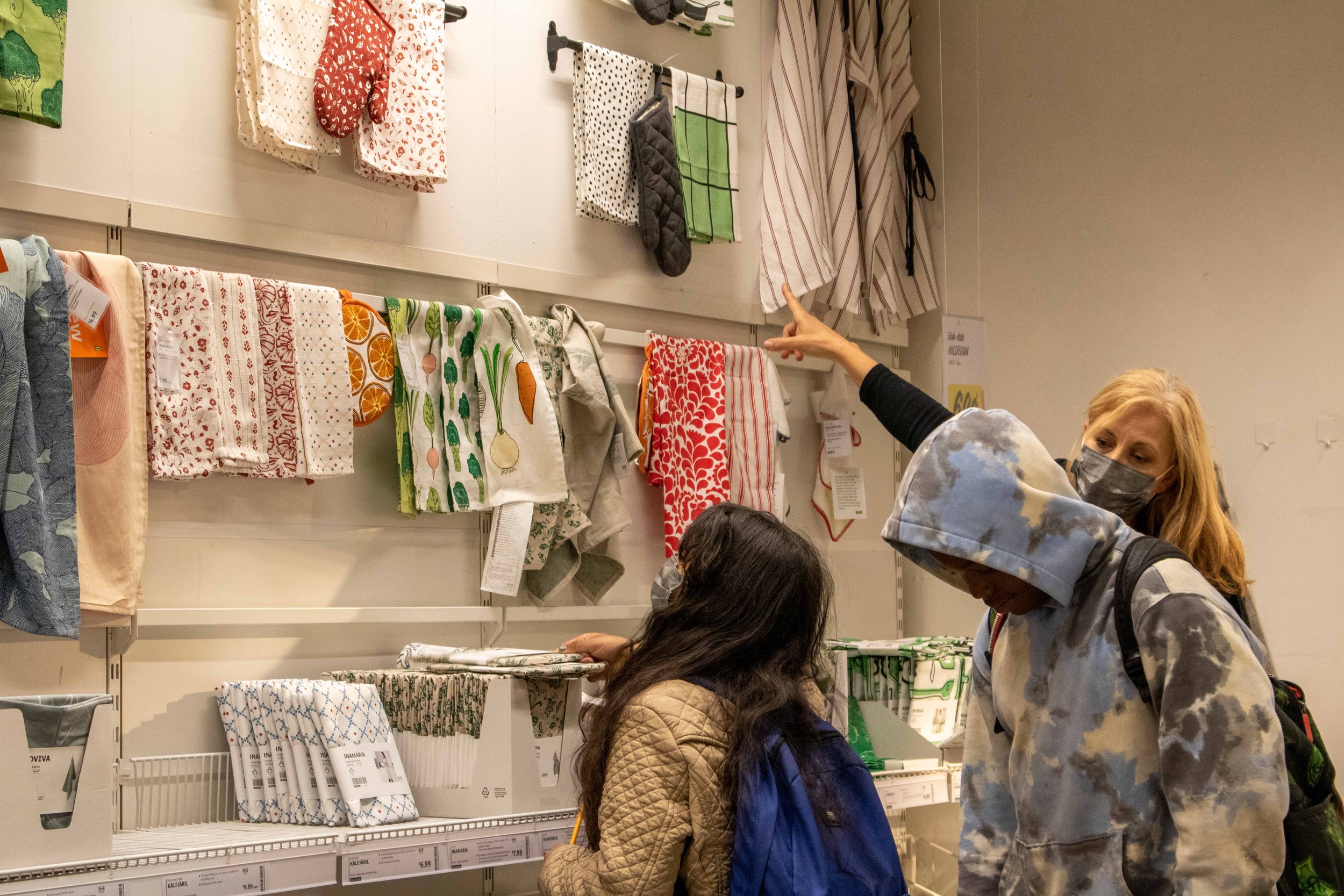
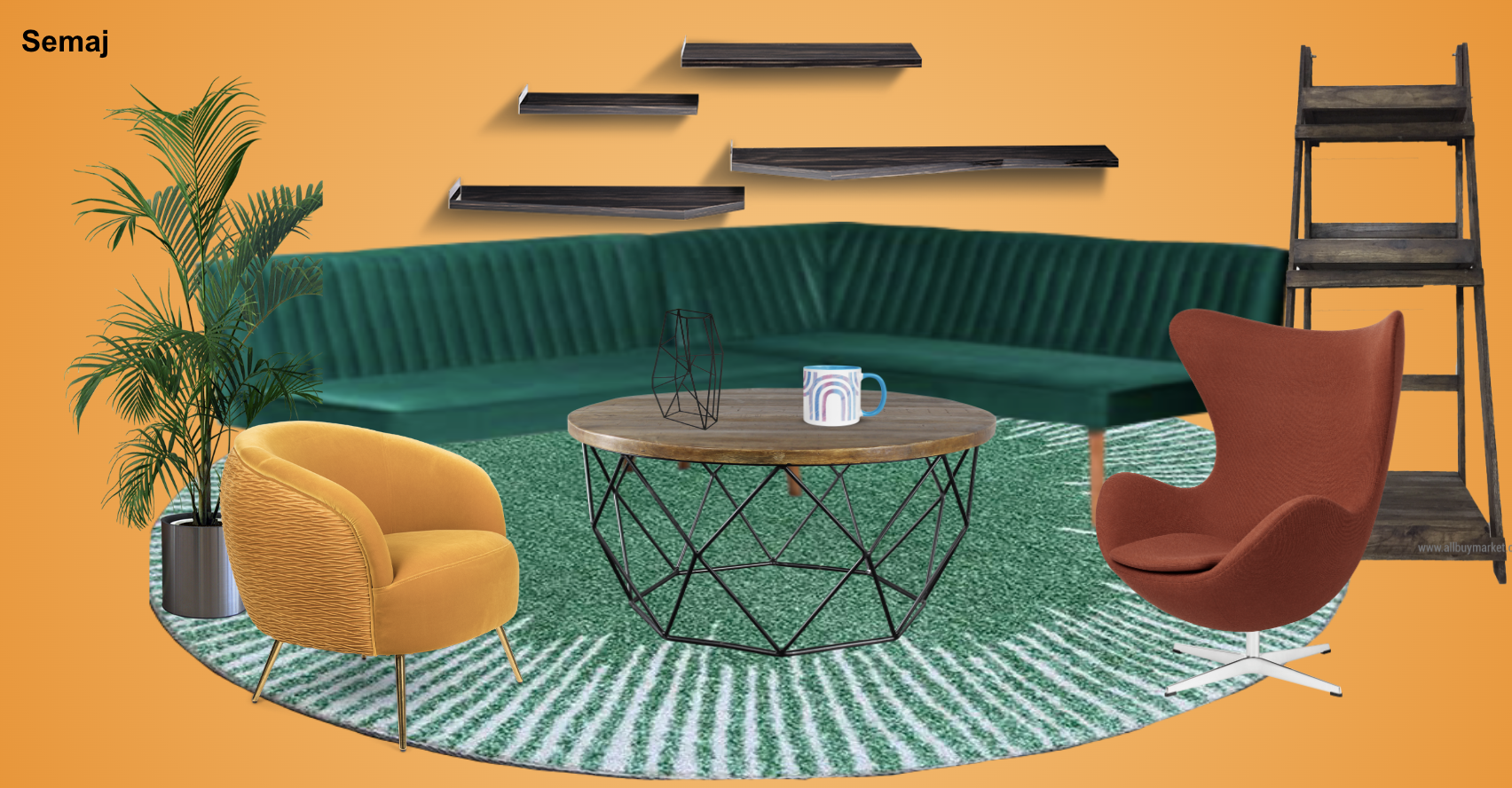
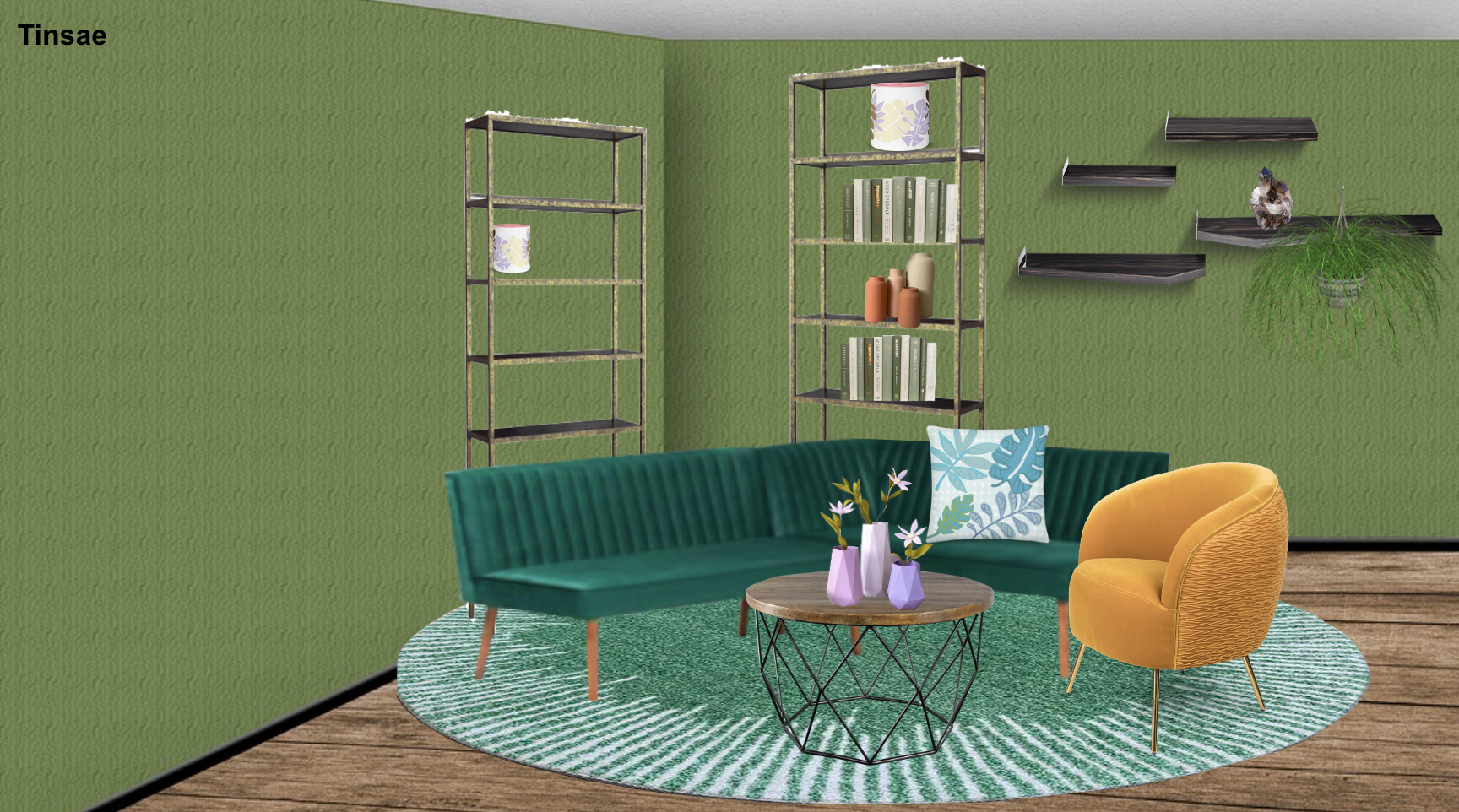
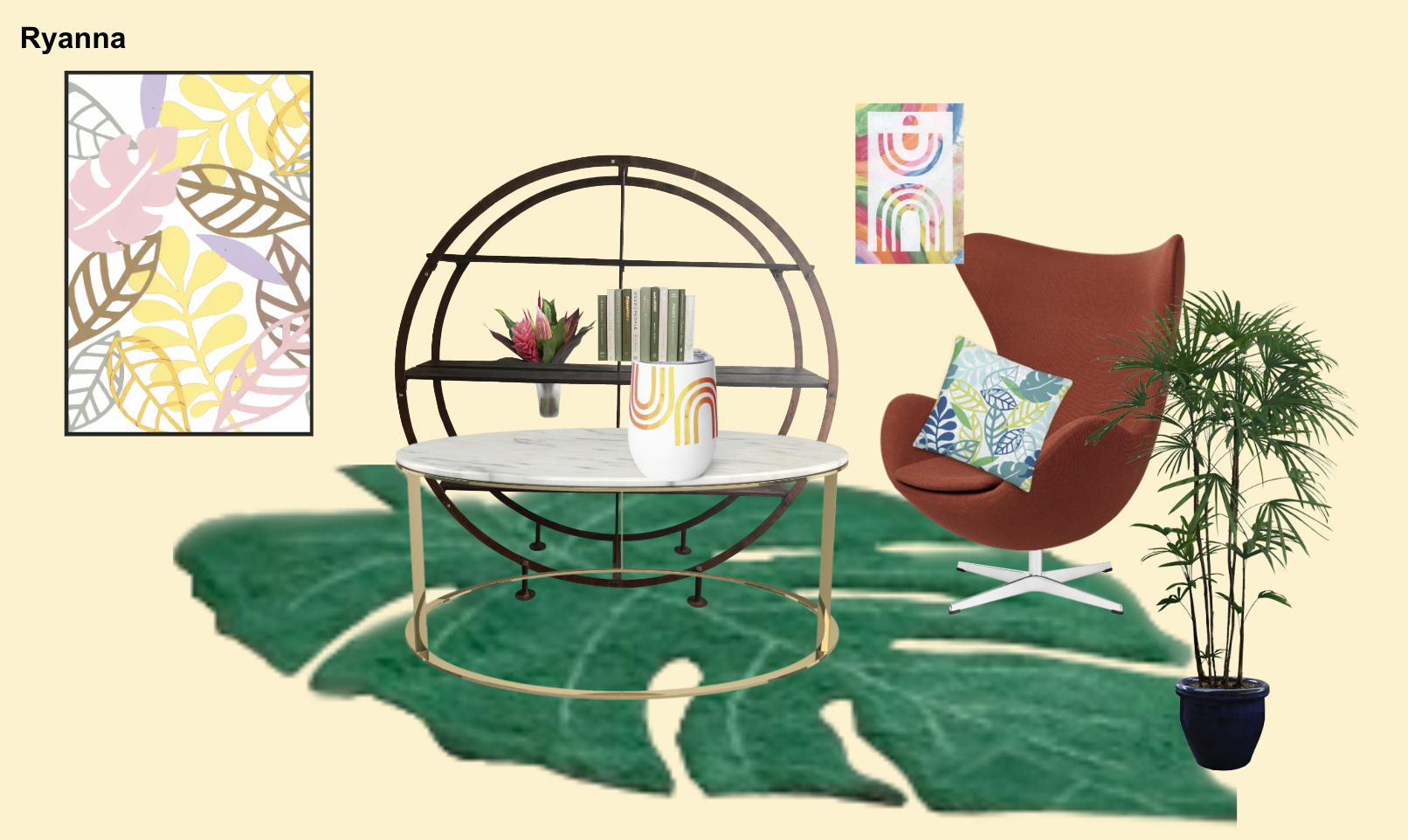


Not many middle schoolers can say that they have designed their own home goods product line, but the ArtEsteem students at West Oakland Middle School (WOMS) can proudly add that feat to their list of accomplishments. Teaching Artist Etty Alberto led students on a journey of native ethnobotany, geometric compositions, and designing their own showrooms.
With the support of volunteer Julia Gamble’s expertise as a home product designer at Room Creative, students used this knowledge to create nature-inspired pattern designs. These original pieces will be curated in a home goods collection, “WOMS Living”, available for purchase starting on Apr 28, 2023. The samples from the collection can also be viewed in a showroom at the 25th Annual ArtEsteem Exhibition on May 6, 2023!
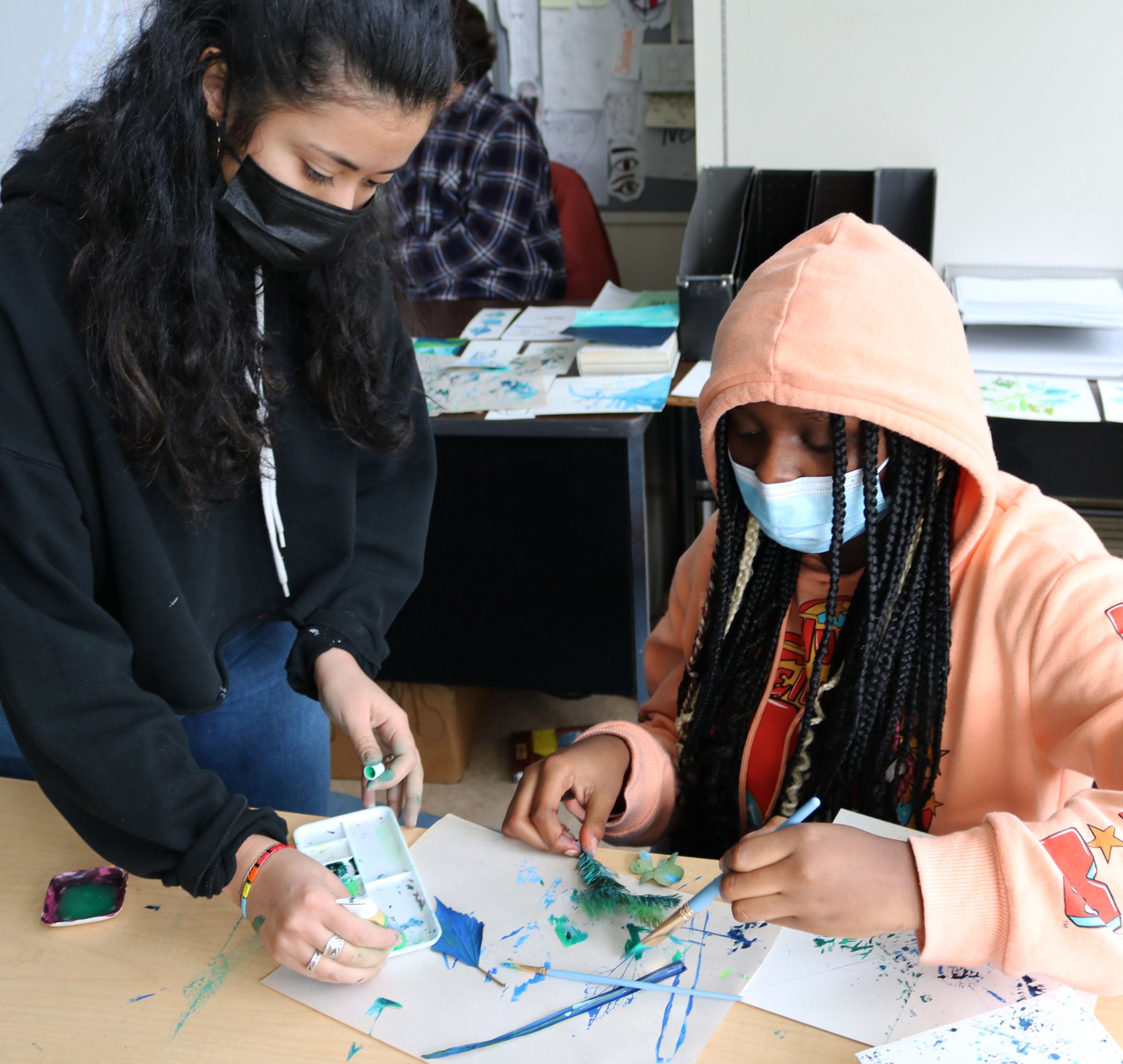
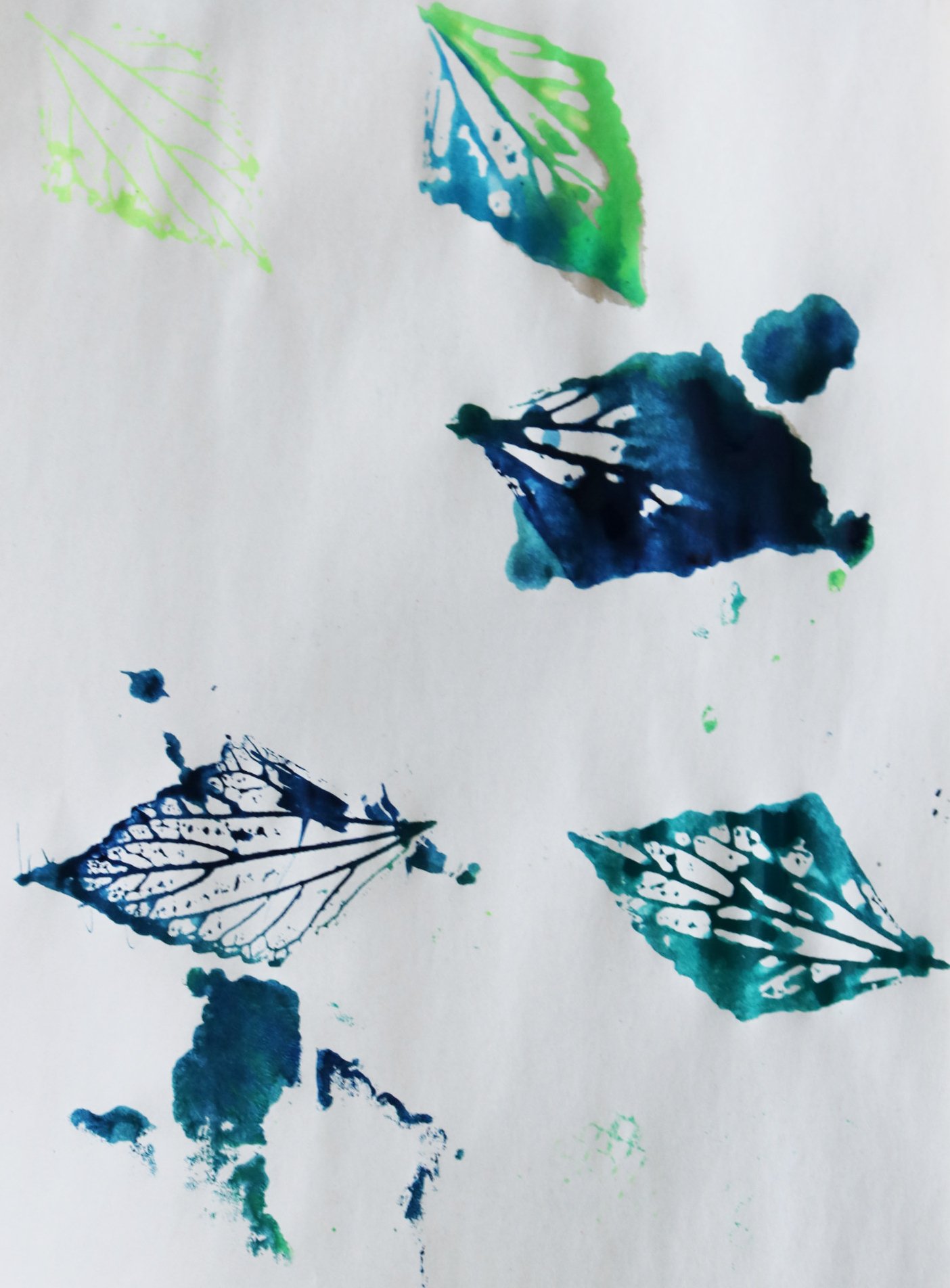
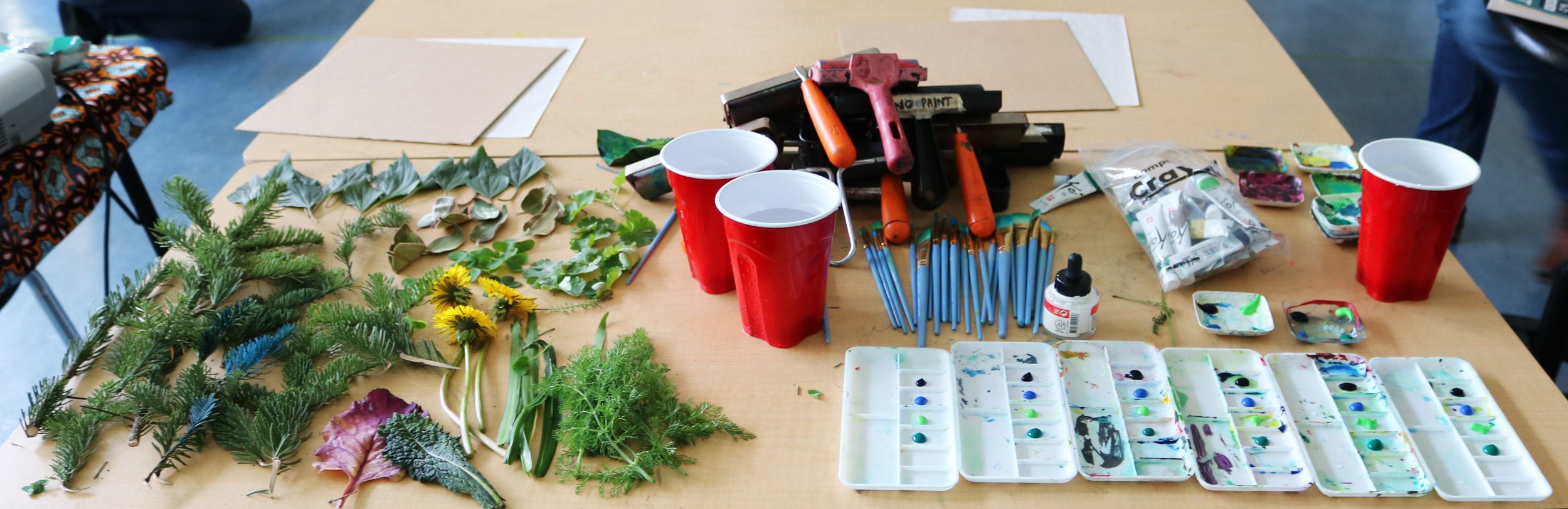
Students began this semester learning about the environmental significance of California native plants. While studying the physical differences of each plant, they learned to recognize radial designs and symmetry in how they grow. For their first project, they brought leaf cuttings from their neighborhoods to be used in a leaf relief pattern print. Learn more about the process here.
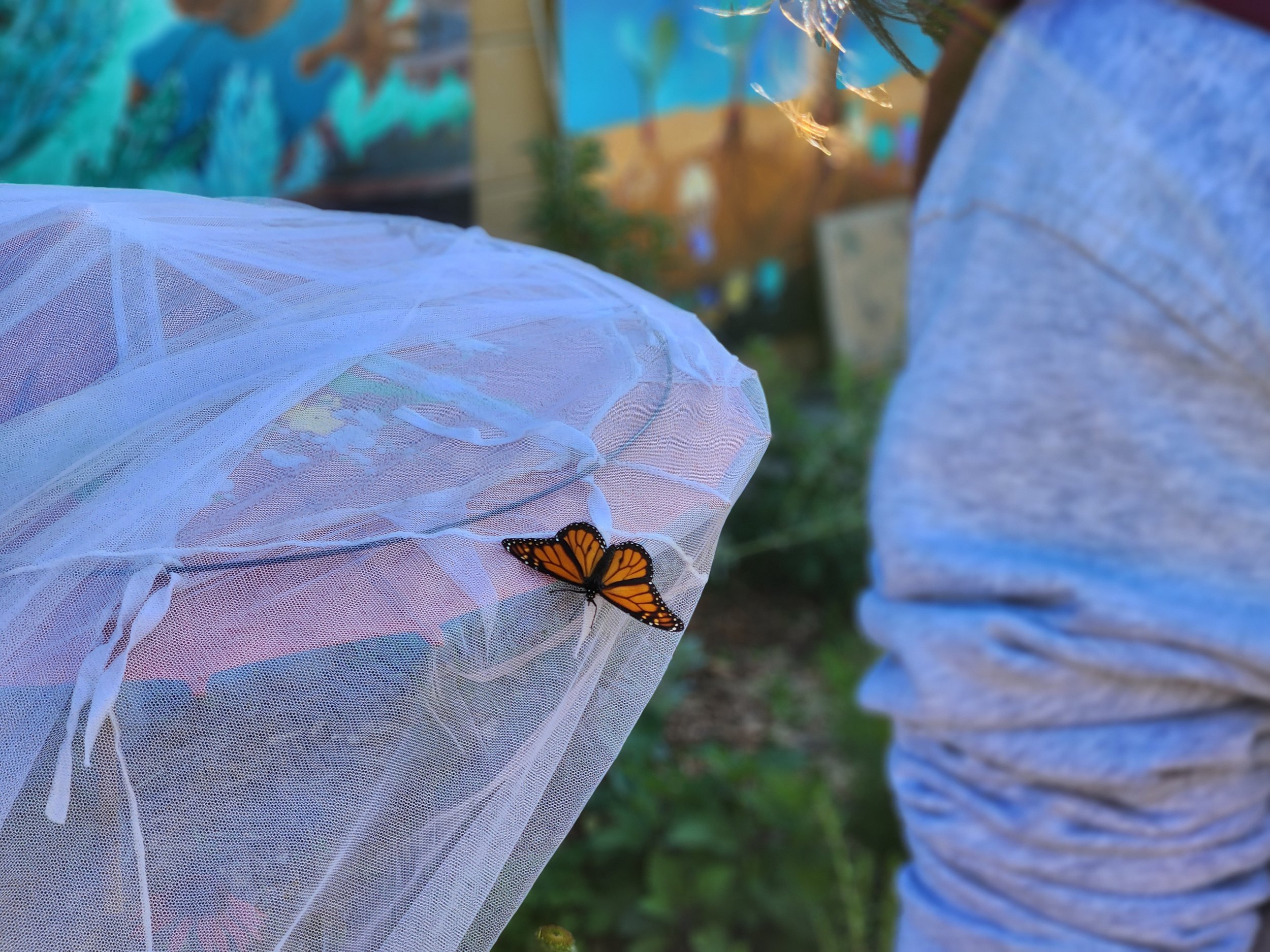
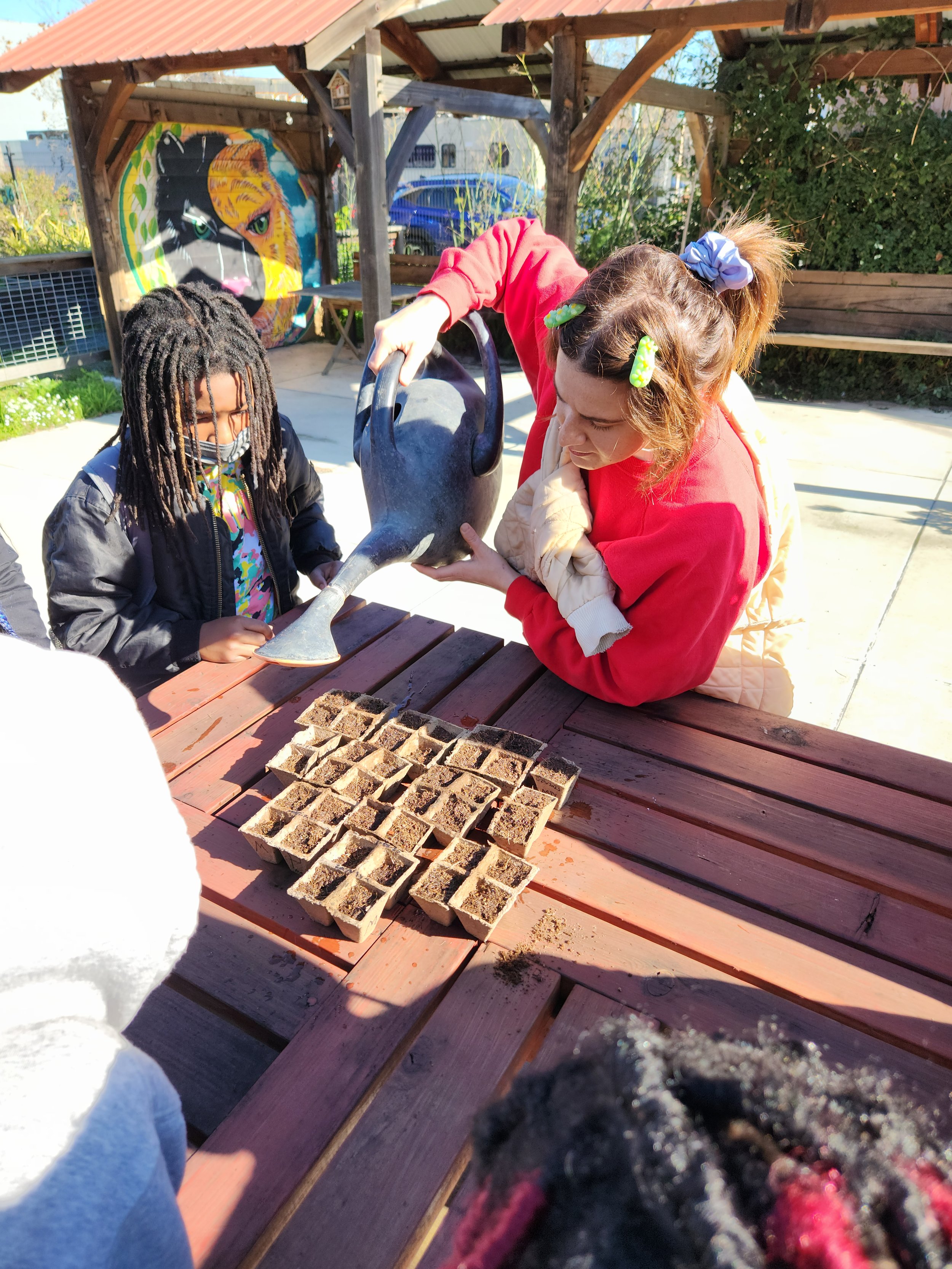
At City Slicker Farms, students had the chance to have a hands-on approach to their lessons in native ethnobotany. CSF educators engaged students in the cultural significance of native plants and environmental factors currently threatening them. Students planted native milkweed and California poppies to bring back home and encourage native pollinators. Ms. Etty then led them through a lesson on silhouette impressions using crayons and floral plants such as pineapple sage and rosemary. This lesson would inform their understanding of positive and negative space in art.
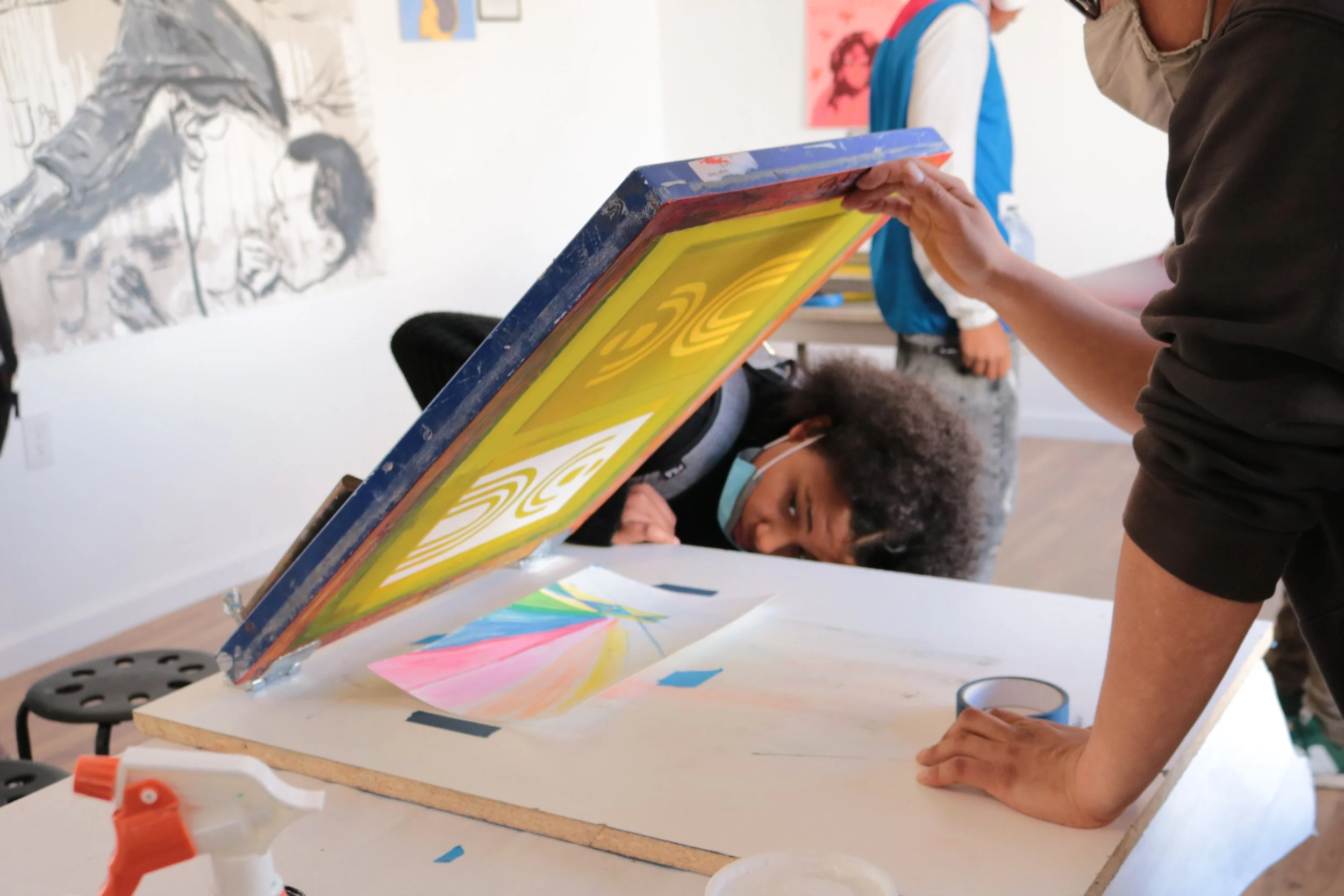
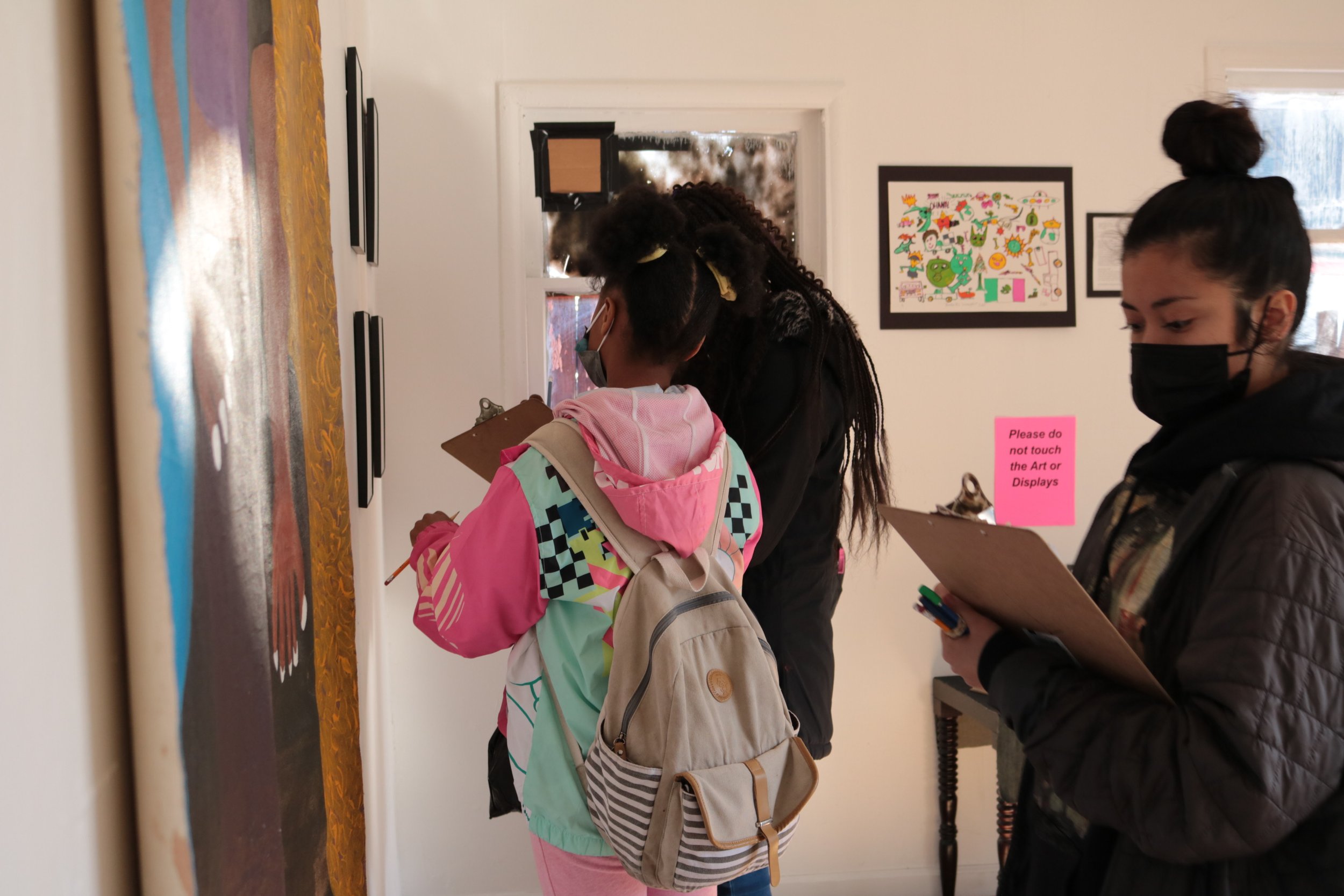
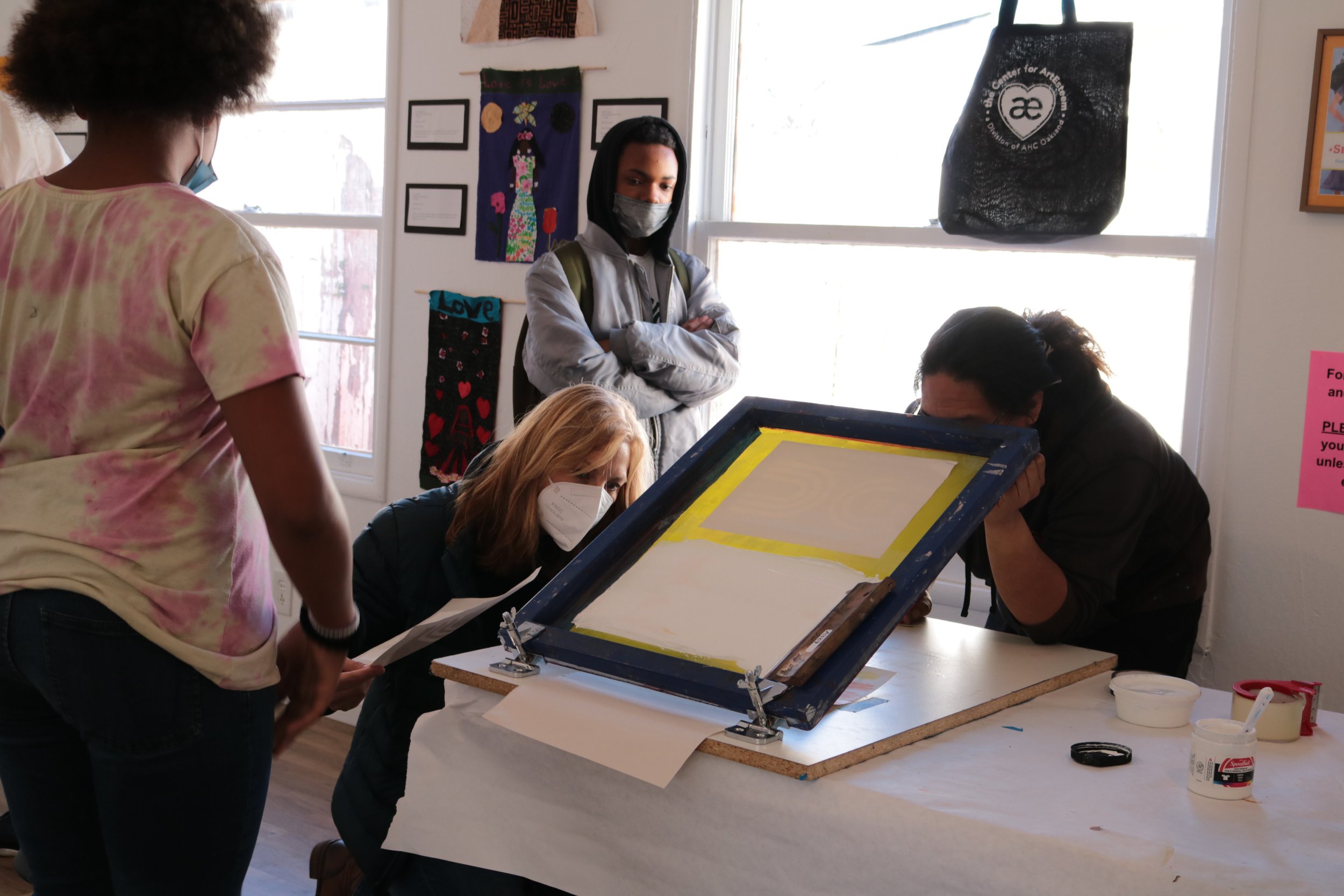
Shifting towards the design process of their nature-inspired art, WOMS students visited the ArtEsteem Gallery to observe patterns and composition in the artwork of previous ArtEsteem students. The class was joined by Lead Teaching Artist Angel Perez to complete their geometric design screenprints. The positive and negative space of their prints highlighted their original color palette. Learn more about their visit here.
Hear what one student, Zaniya Watts, had to say about her screen printing piece titled Color: “This piece represents my mood and how they change in the process. I learned how to paint and how to mix different materials together. I really enjoyed making this piece.”
West Oakland Middle School Students Tour & Screen Print at The Center for ArtEsteem Gallery

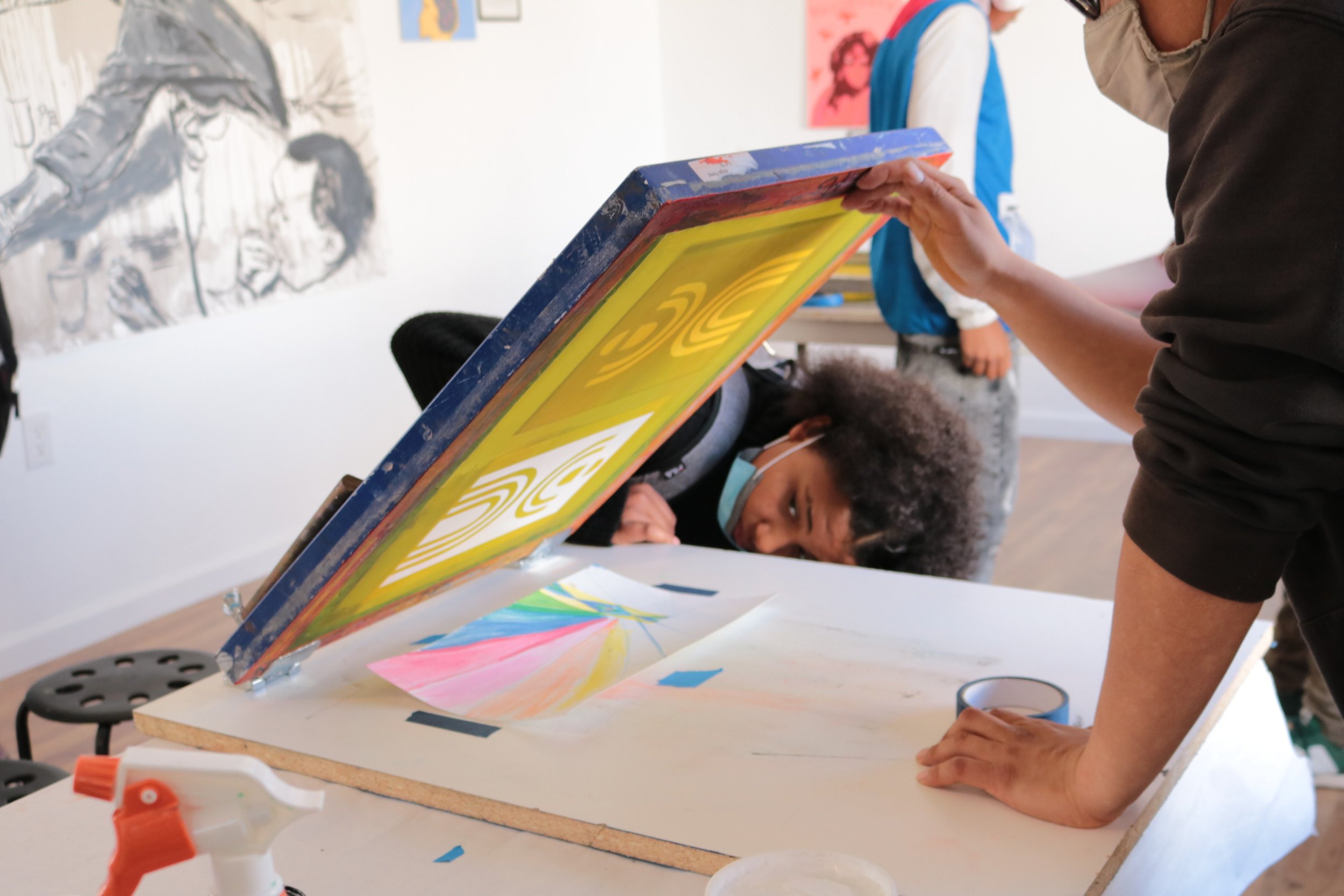
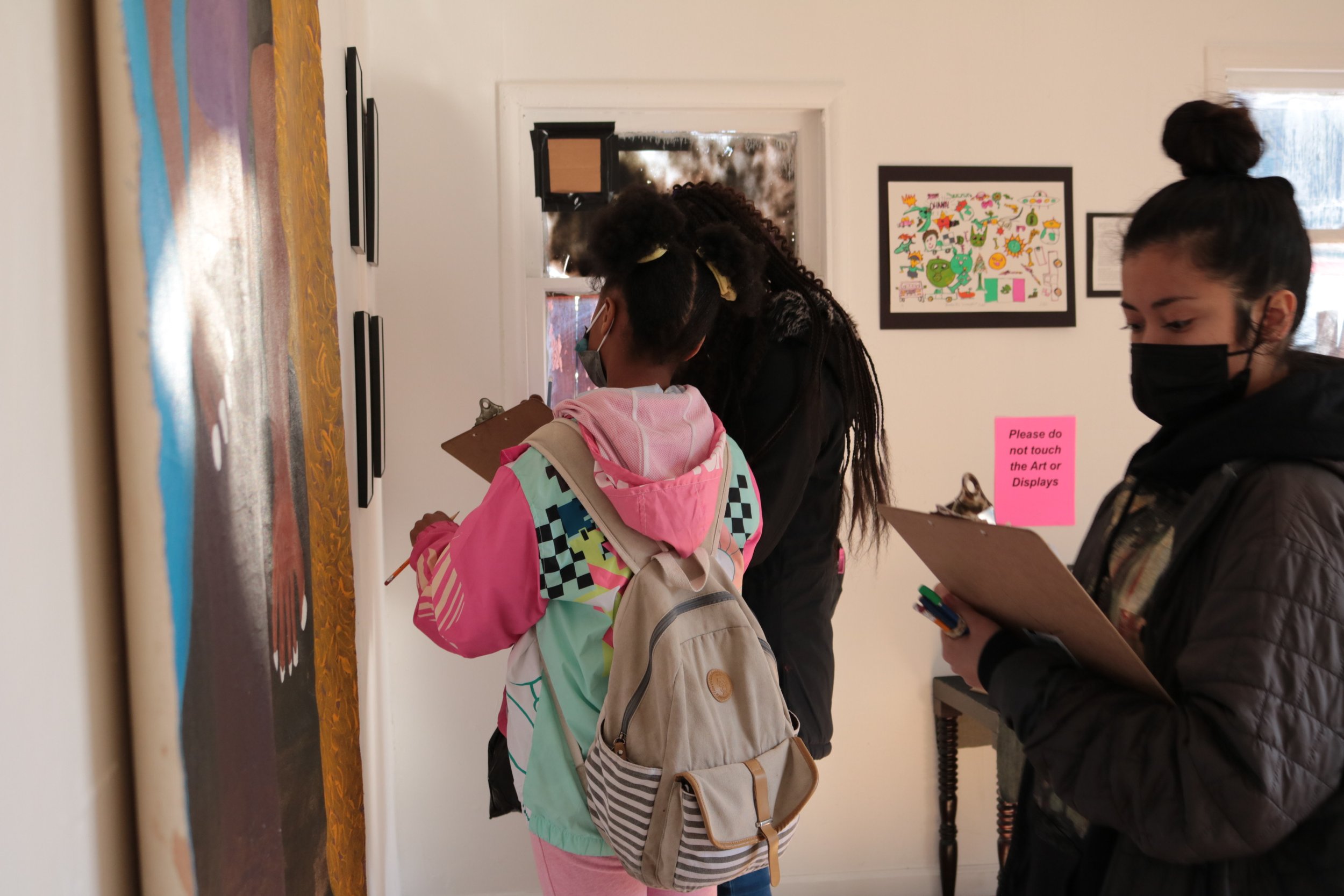
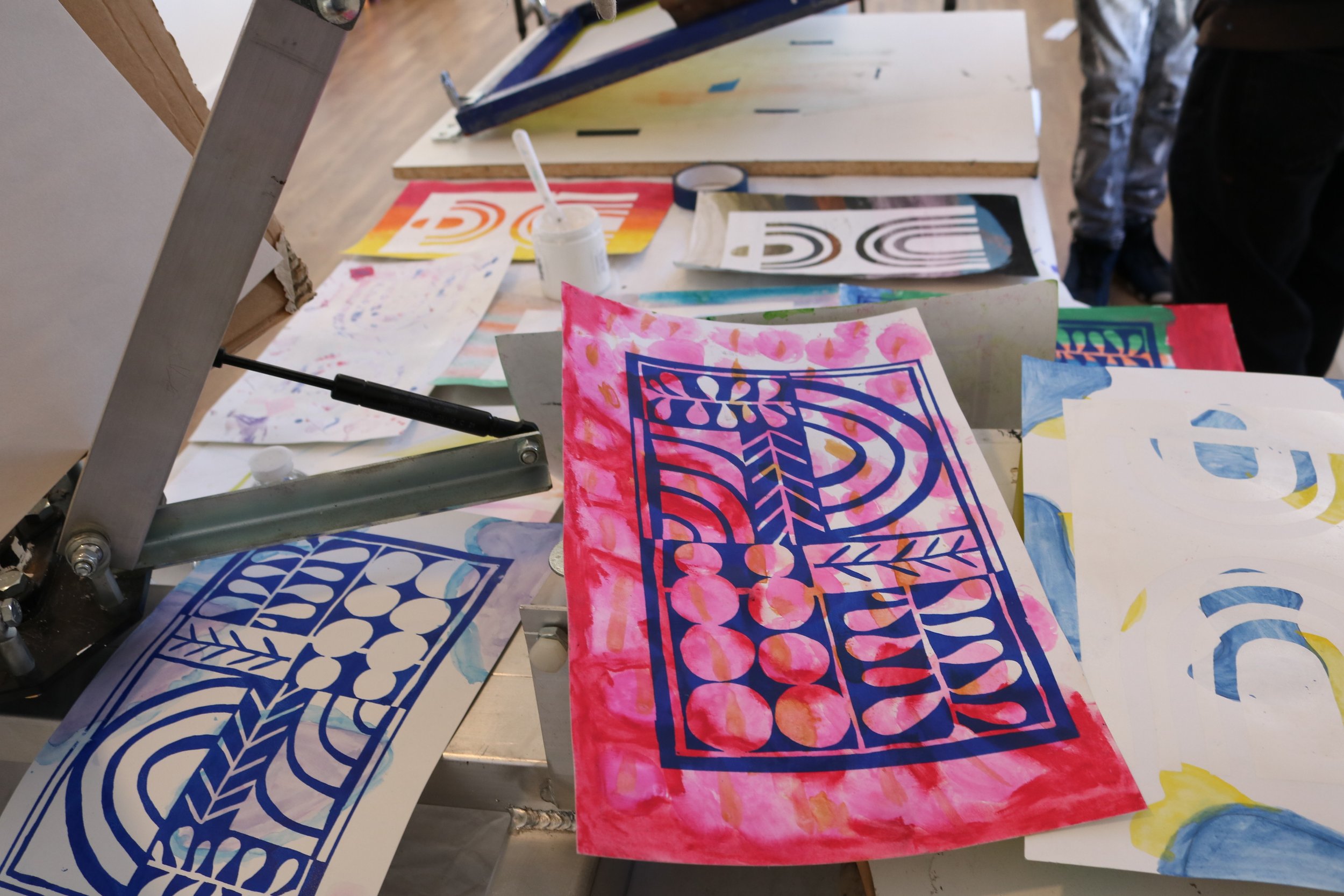
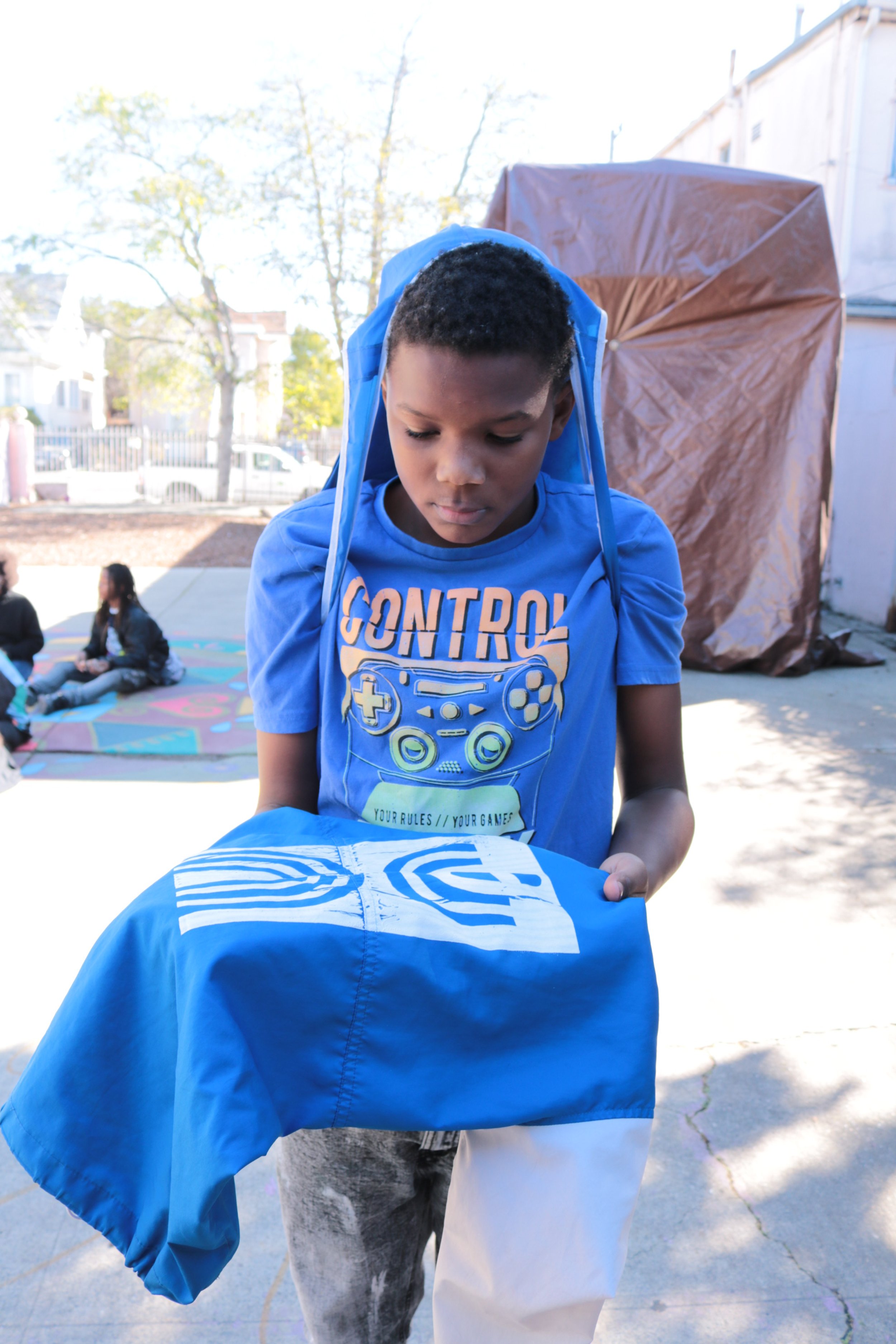
West Oakland Middle School students continued their native plant textile unit this month with Lead Teaching Artist Etty Alberto by visiting our very own ArtEsteem Gallery. This is their second field trip in a series to deepen their understanding of product design.
Class started with an opening circle around a radial mandala mural Etty completed last year. She explained, “I made this, and it’s my job. You can do art as a career!” In this unit, students are developing skills to support their future entry into the visual arts workforce. Whether it’s murals, apparel, or home goods, students saw how art is found everywhere, and there is an artist behind each piece of work.
In a previous lesson, students used watercolors to demonstrate their understanding of color palettes. Students were then able to build on this project at the gallery in a screen printing demonstration with Teaching Artist Angel Perez. Angel guided the students through the chemical process of silk screen printing. Another guiding presence, volunteer Julia Gamble, was present to teach the students. Julia brings years of experience in product design and development to the class, and is helping to inform the trajectory of their textile unit projects. She designed the geometric screen print design that would go over their watercolor pieces, and emphasized how the negative and positive space of the geometric print highlights the watercolors’ composition.
One particular student, Robert, seized the opportunity to print the geometric design on his own sweatshirt. When it was complete, Julia told him, “No one in the world has this piece of art, except you. It is a one-of-a-kind sweatshirt.”
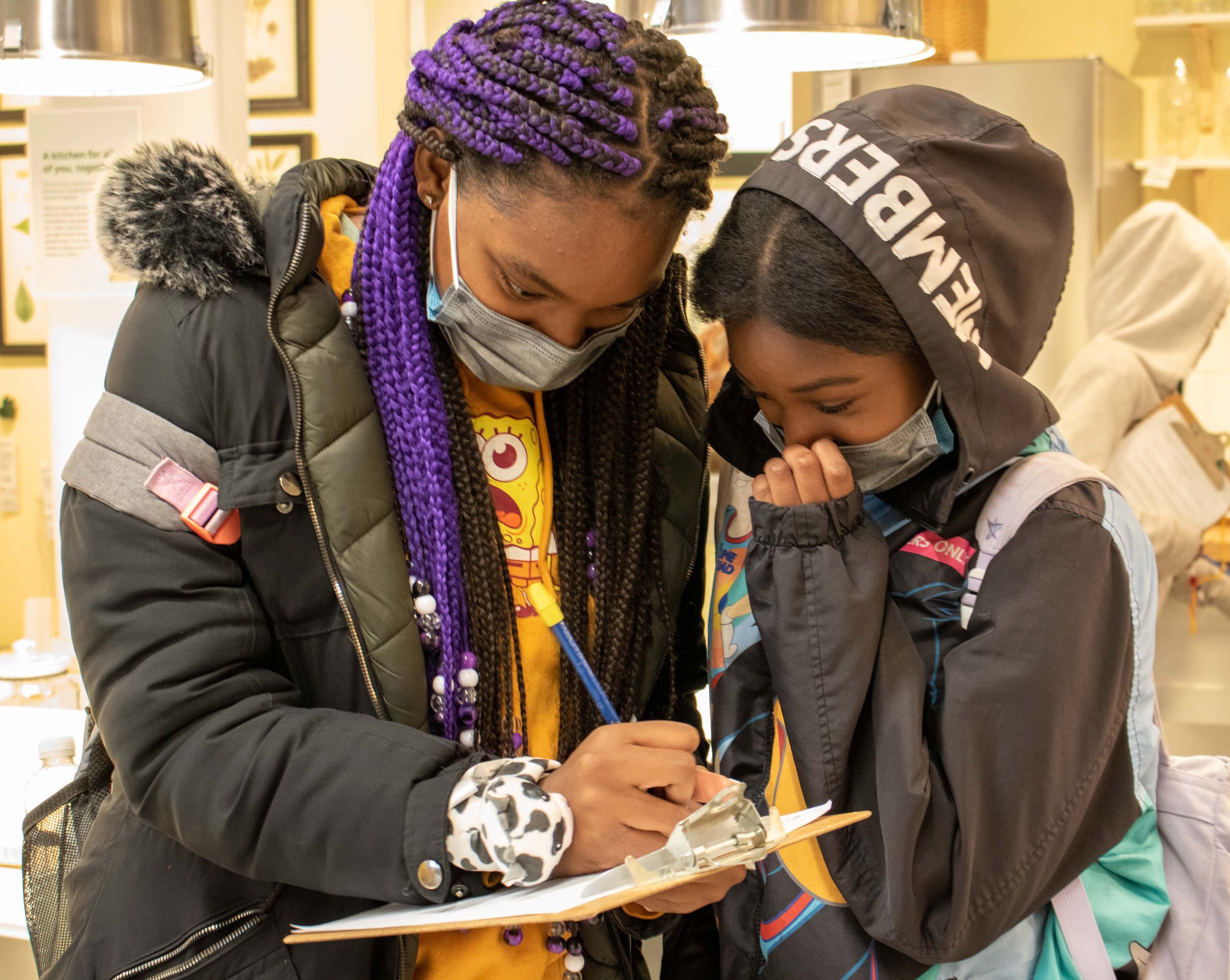
For the second part of gallery activities, Etty led students on a scavenger hunt around the space. Students observed the artwork and made deductions from the artist statements. By seeing past ArtEsteem students’ work, as well as understanding what inspired them, WOMS students can reflect on how they want to design their final project.
This unit will culminate in a field trip to IKEA, in which students will be able to take their knowledge in surface pattern designs and explore how it can be applied to home good collections and showrooms.
Black History Month ArtMobile Event at Martin Luther King Jr. Elementary
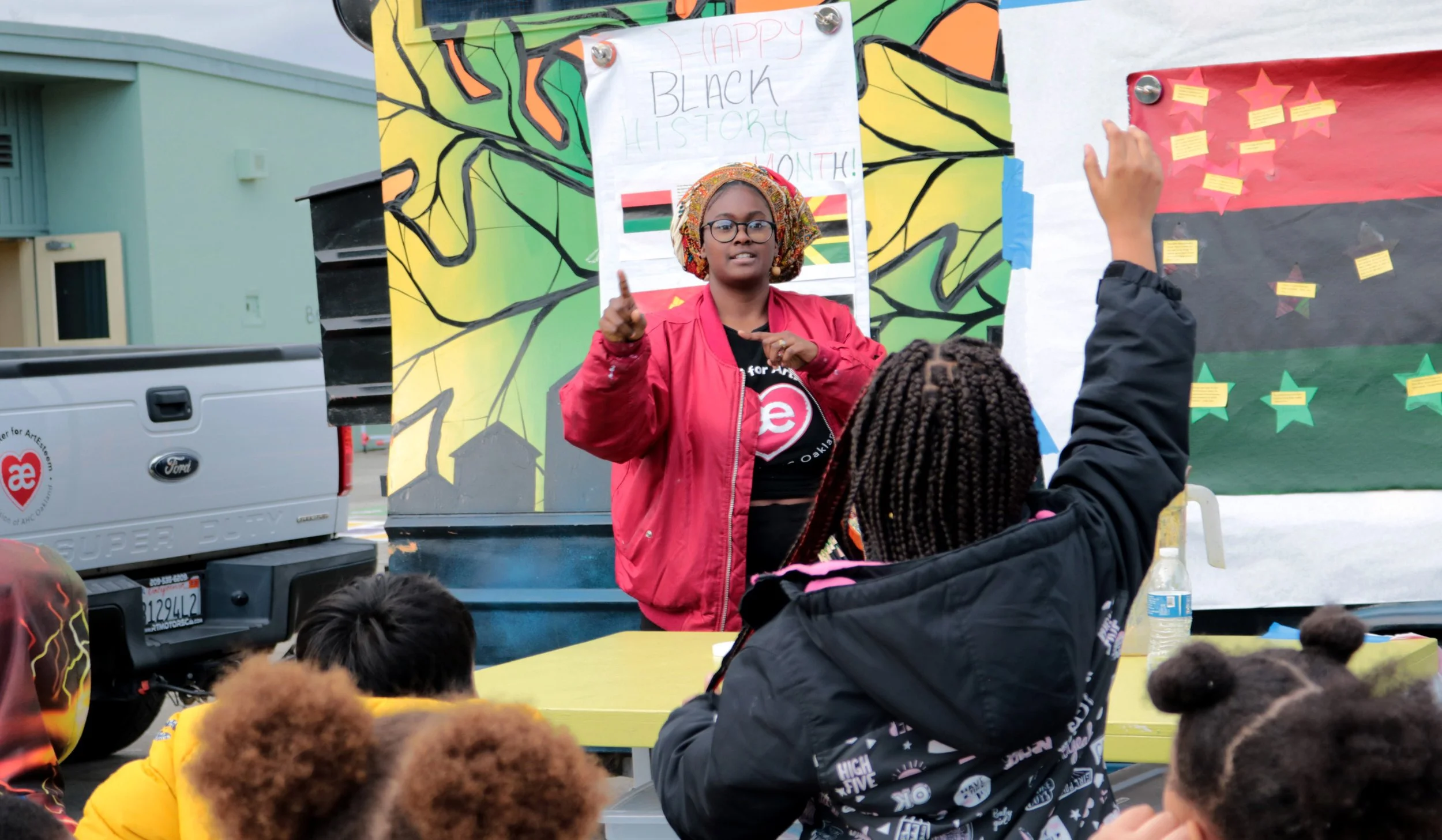
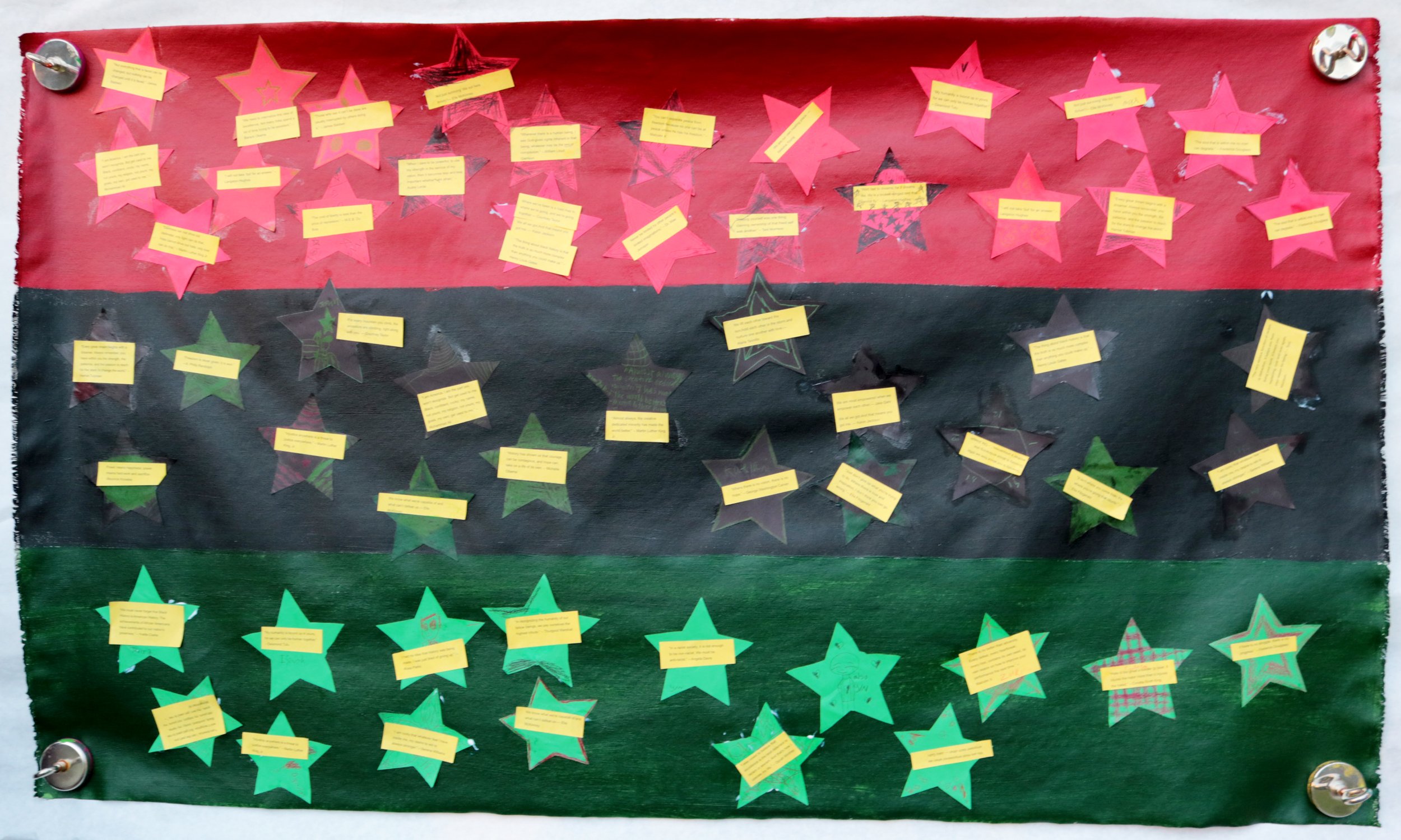
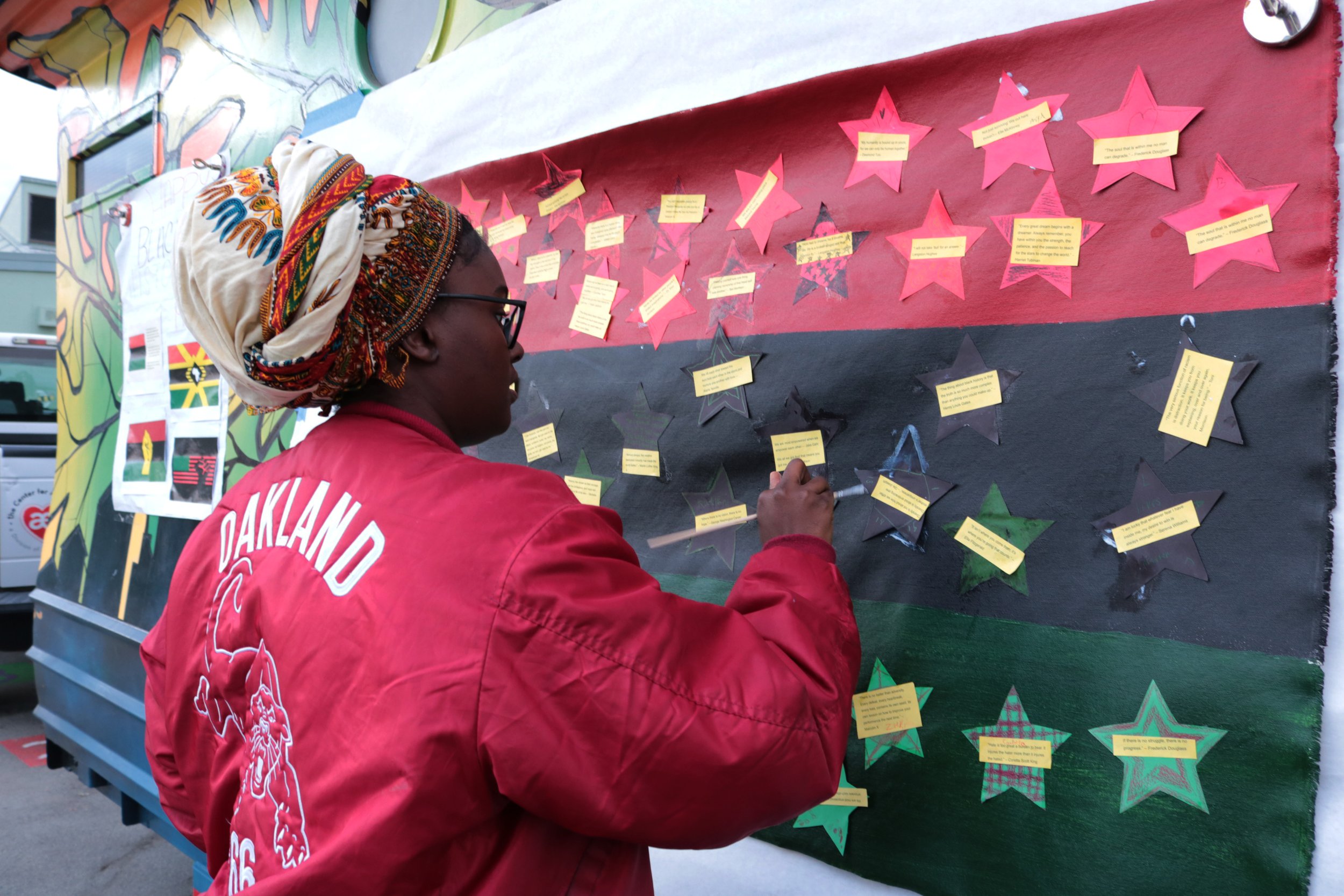
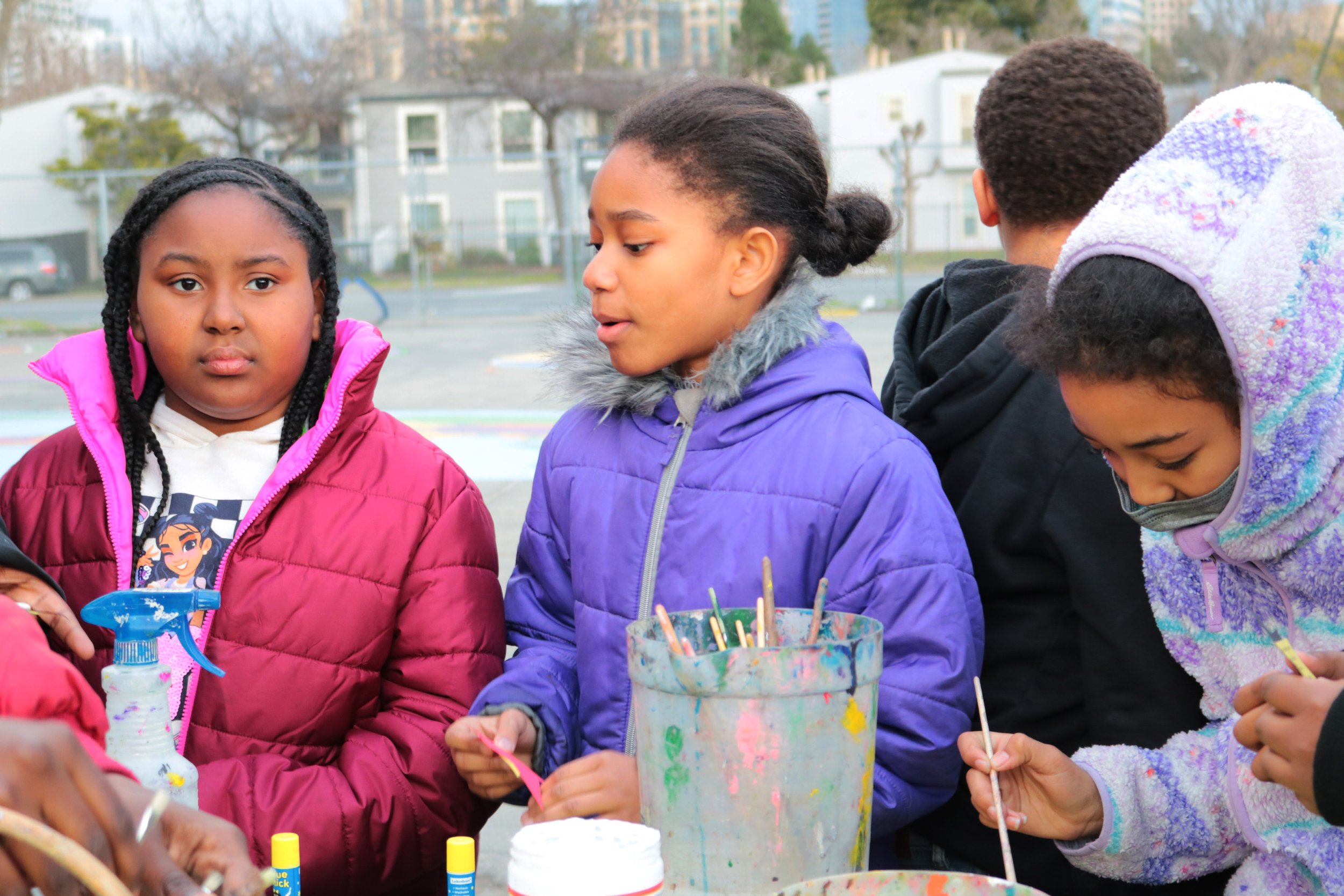
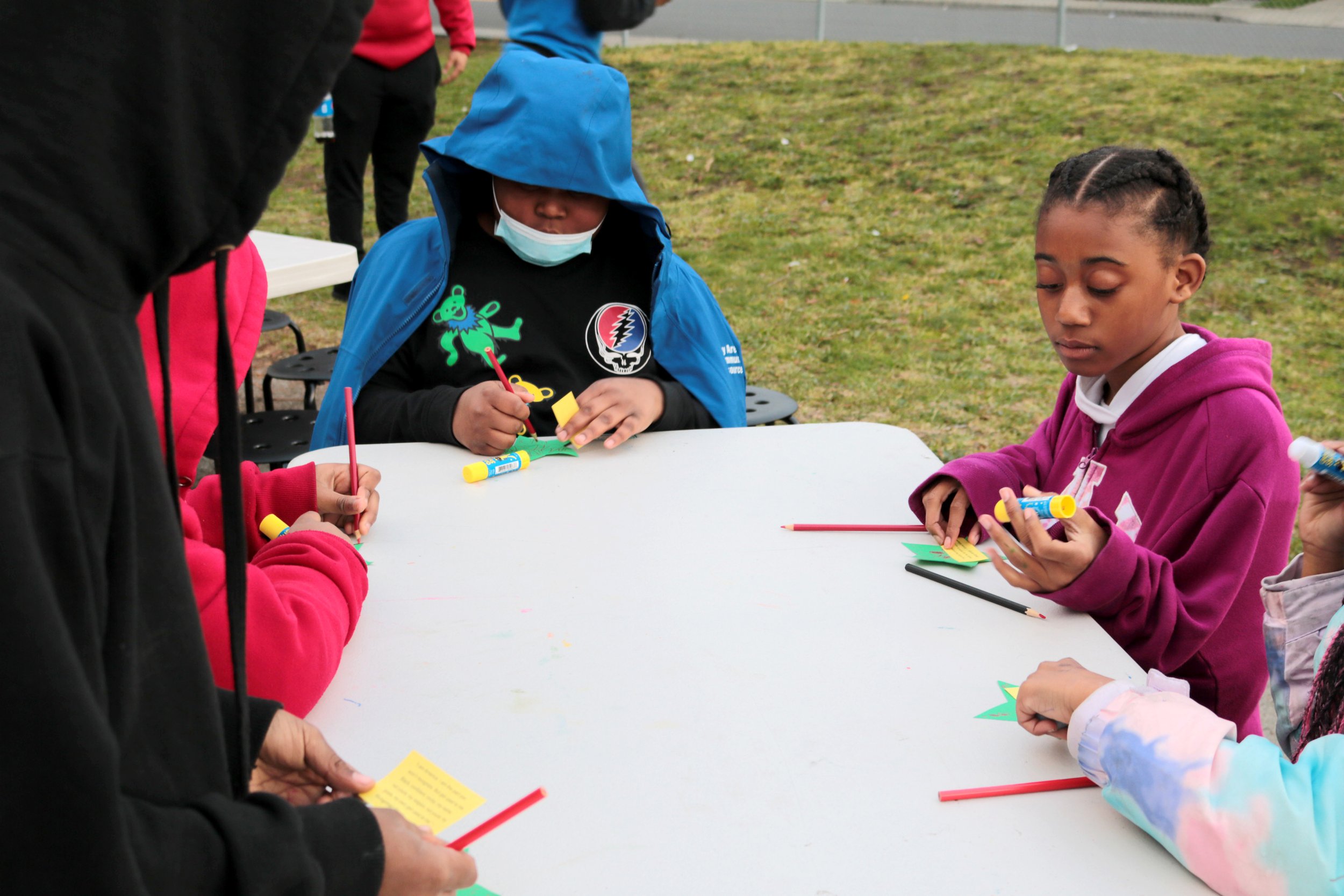

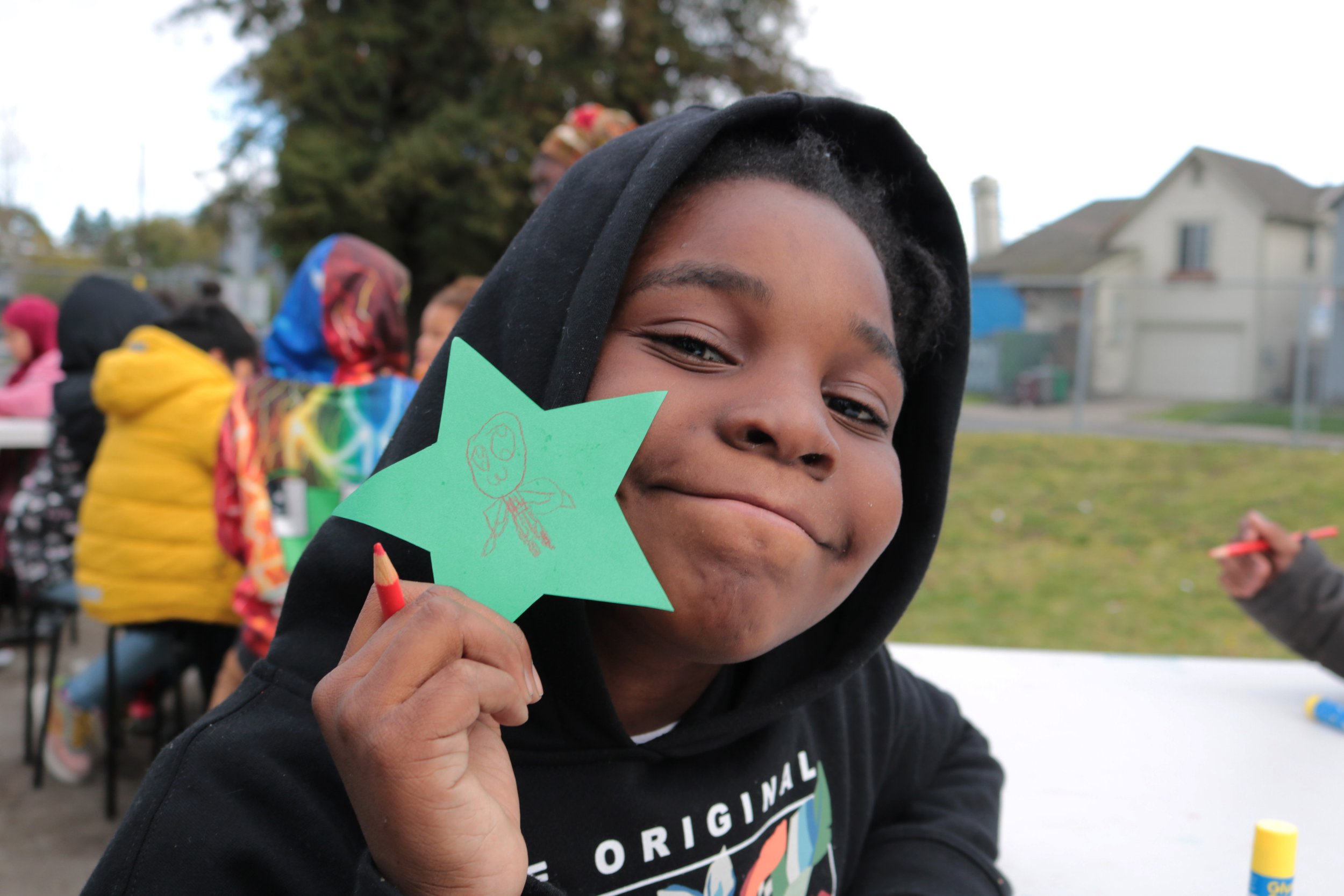
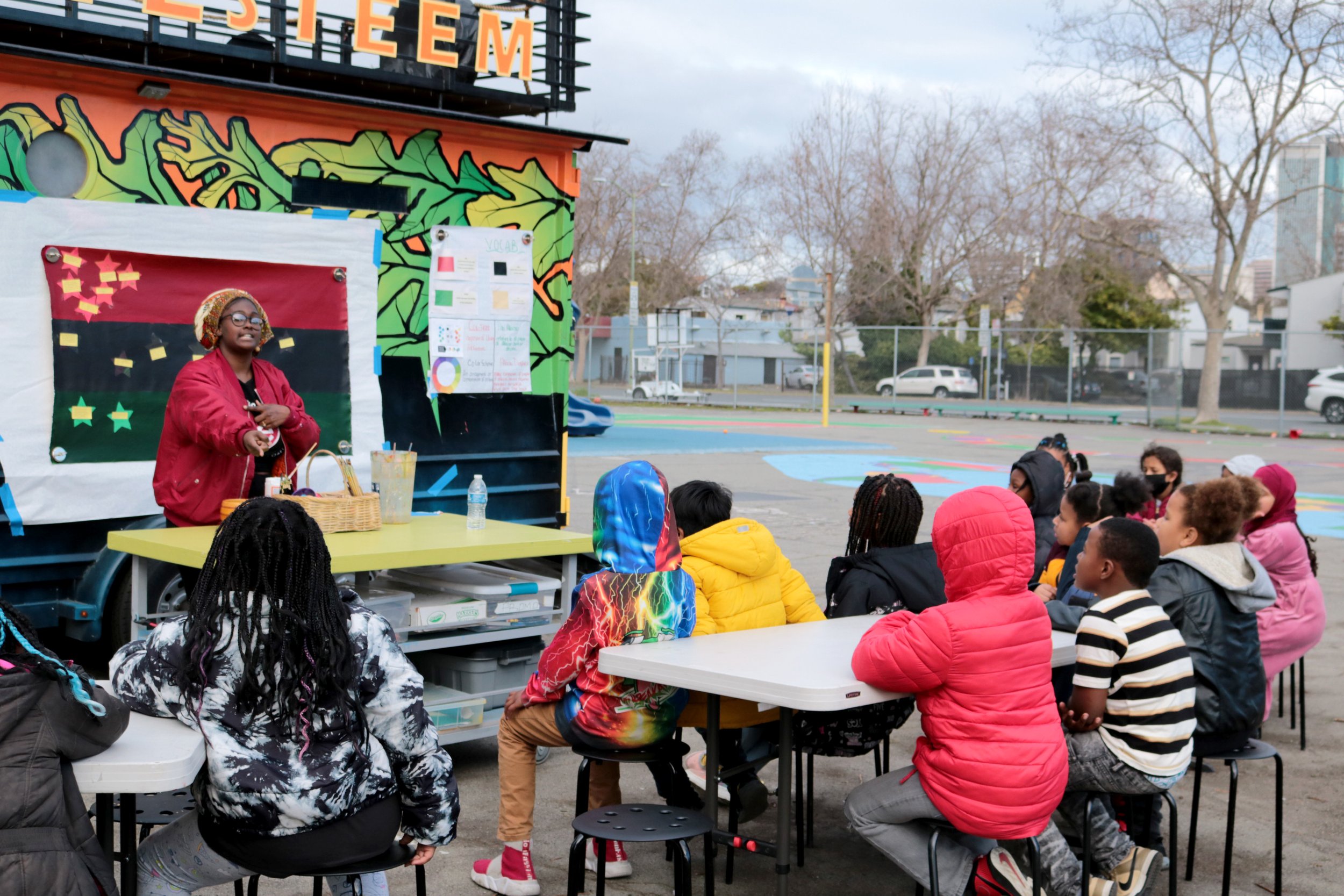
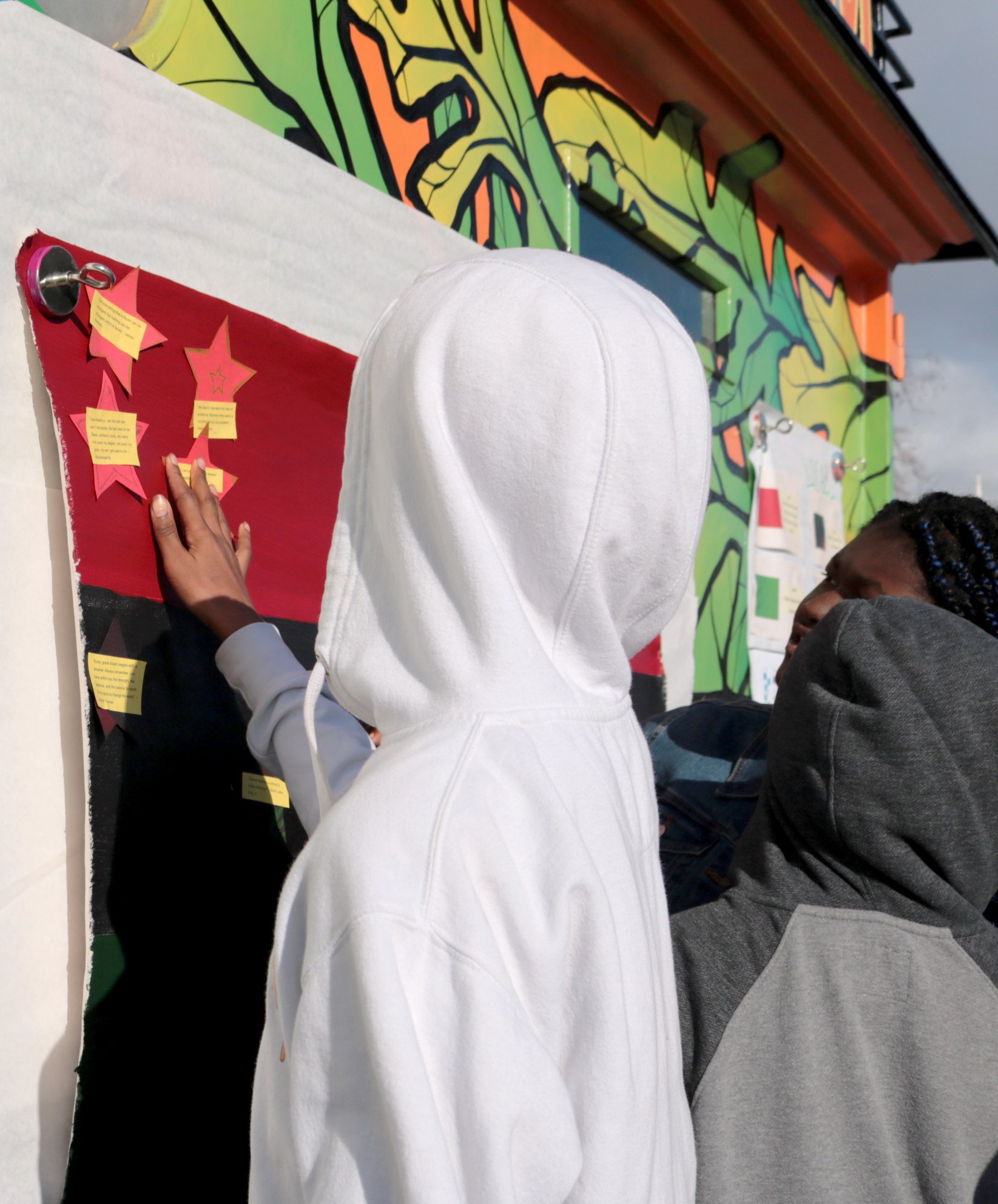
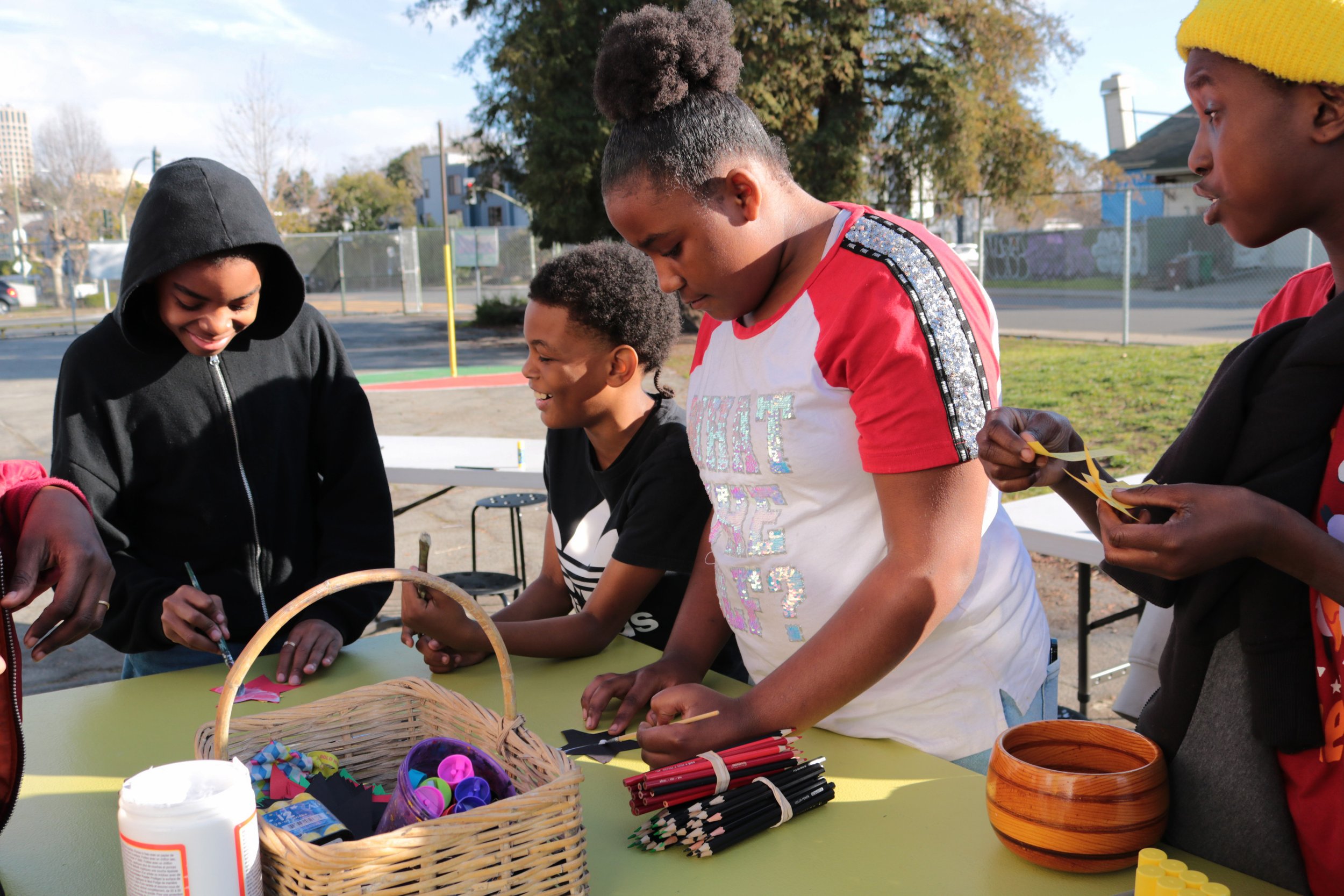
Three classes from Martin Luther King Jr. Elementary's after school program weathered the cold to celebrate Black History Month with the ArtMobile! Led by teaching artist Jamiani Gray, the students collaborated on a quote-mural, encouraging them to be proud of the color of their skin, their culture, and where they come from.
The lesson started with learning the history of the Pan-African flag by Marcus Garvey. Ms. Jamiani tells the class what each color means. “Red for the blood of our people, black for our beautiful skin, and green for the bountiful riches of our motherland.” Students were then split into groups to create shading and designs on stars that correlated with the flag colors. The creativity of their designs ranged from geometric shapes, to flowers, to self-portraits.
Students then chose from 100+ quotes by prominent Black historical and modern-day figures to be glued on top of their star. Each student was able to add their completed star to the mural in the corresponding color area. Together, these stars represent both the students’ unity and individuality in their identities.
Ms. Jamiani ended the ArtMobile session by calling up students to read a quote from the mural. Each quote was met with applause from their fellow classmates, but the class especially erupted in uproar when one student read a Martin Luther King Jr. quote.
Celebrating the Black History Month through art is a chance for youth to recognize the strength of their people and inspire them to continue building on their legacy. Ms. Jamiani and other AHC staff sought to uplift their creative curiosity and confidence through their collaboration on this mural.
Oakland Legacy Project Higher Education and Financial Literacy Panel
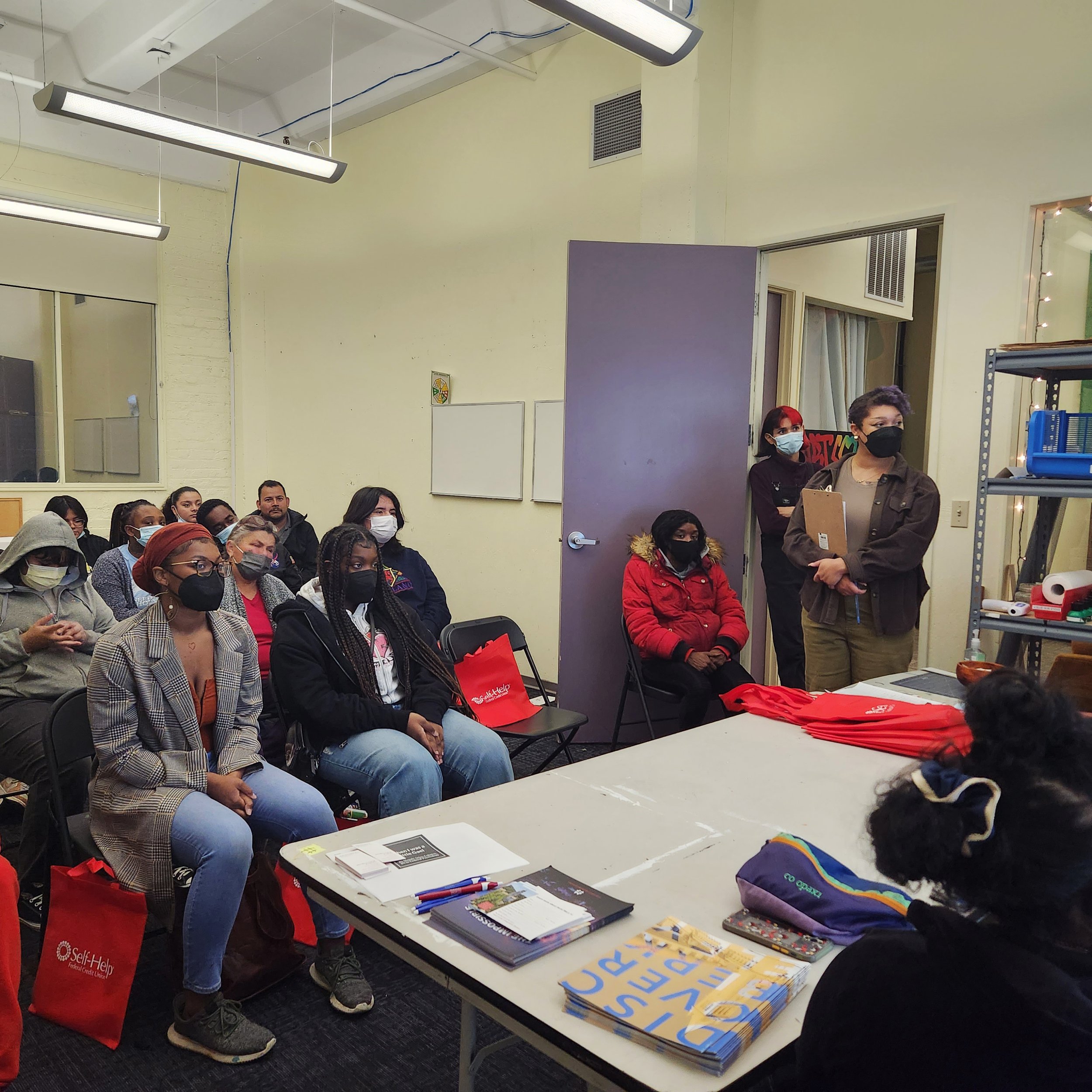
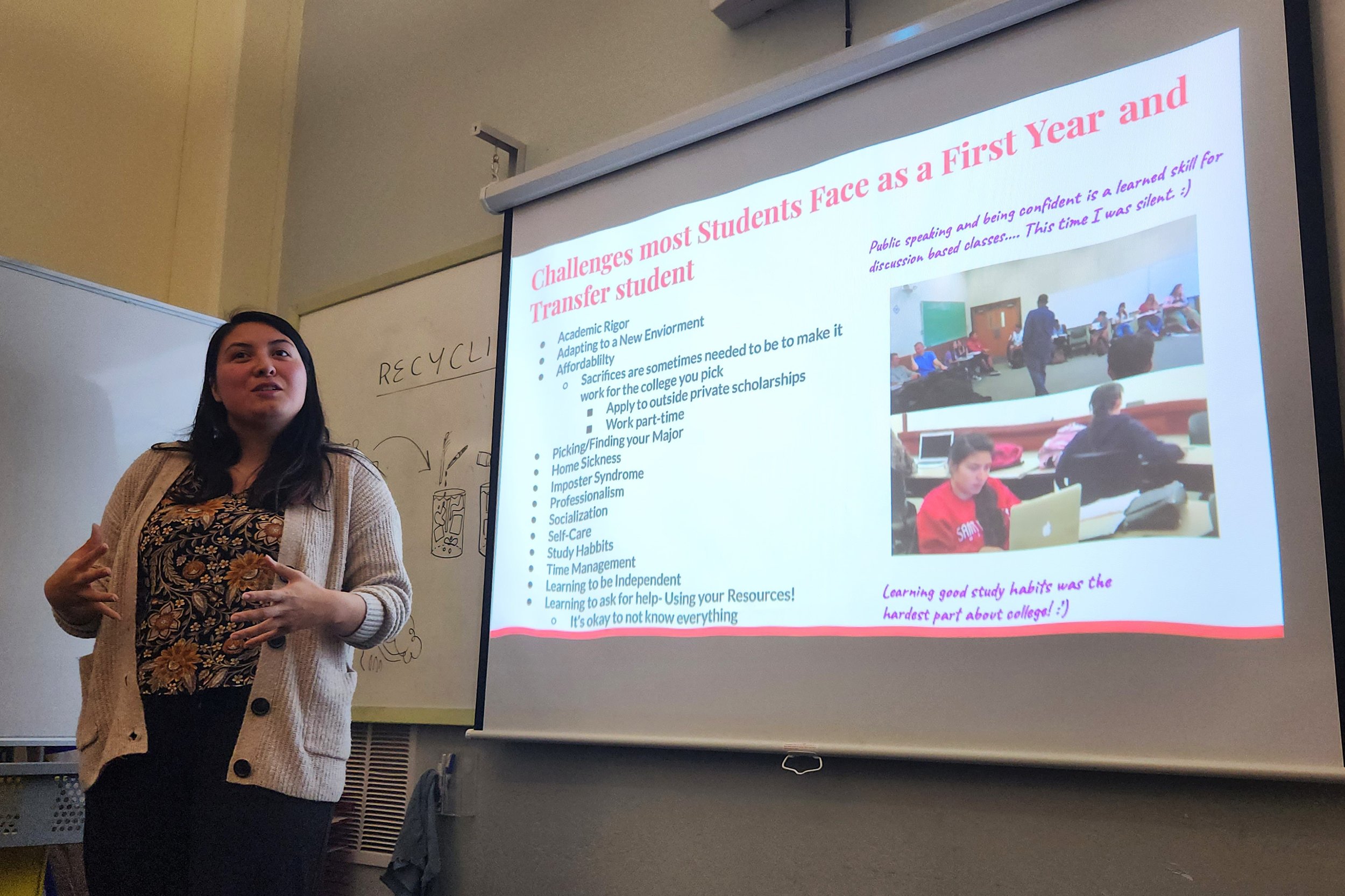
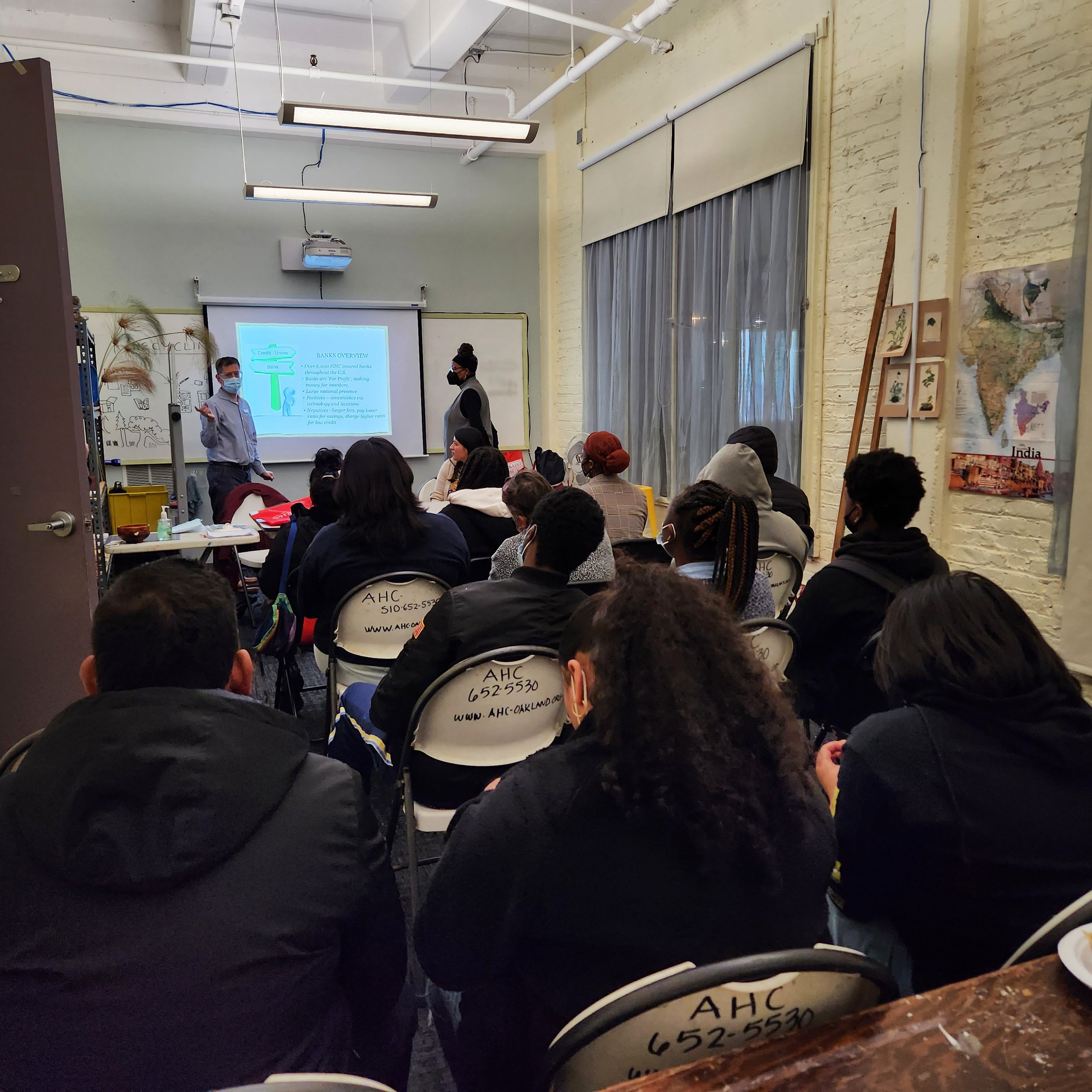
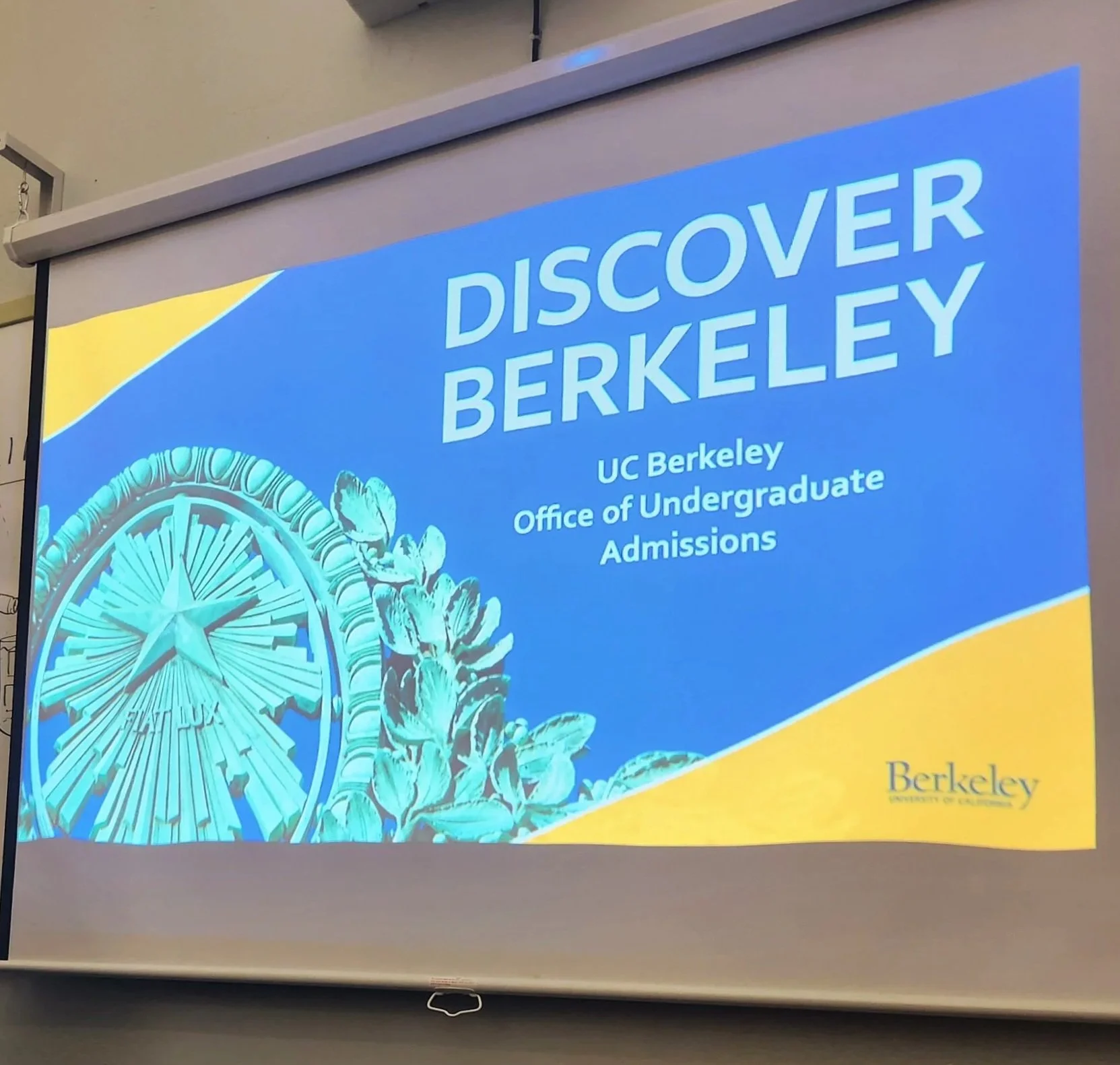
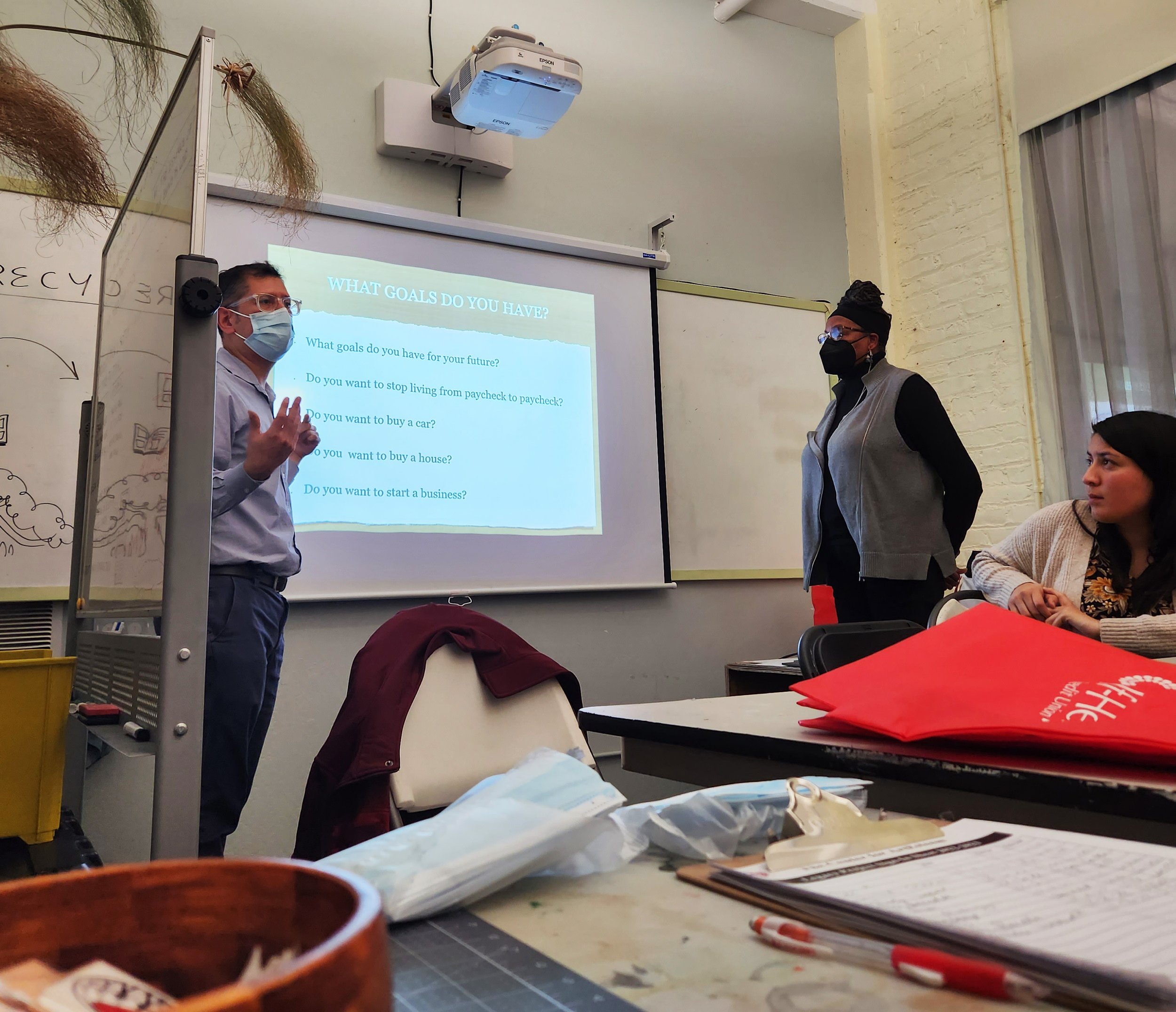
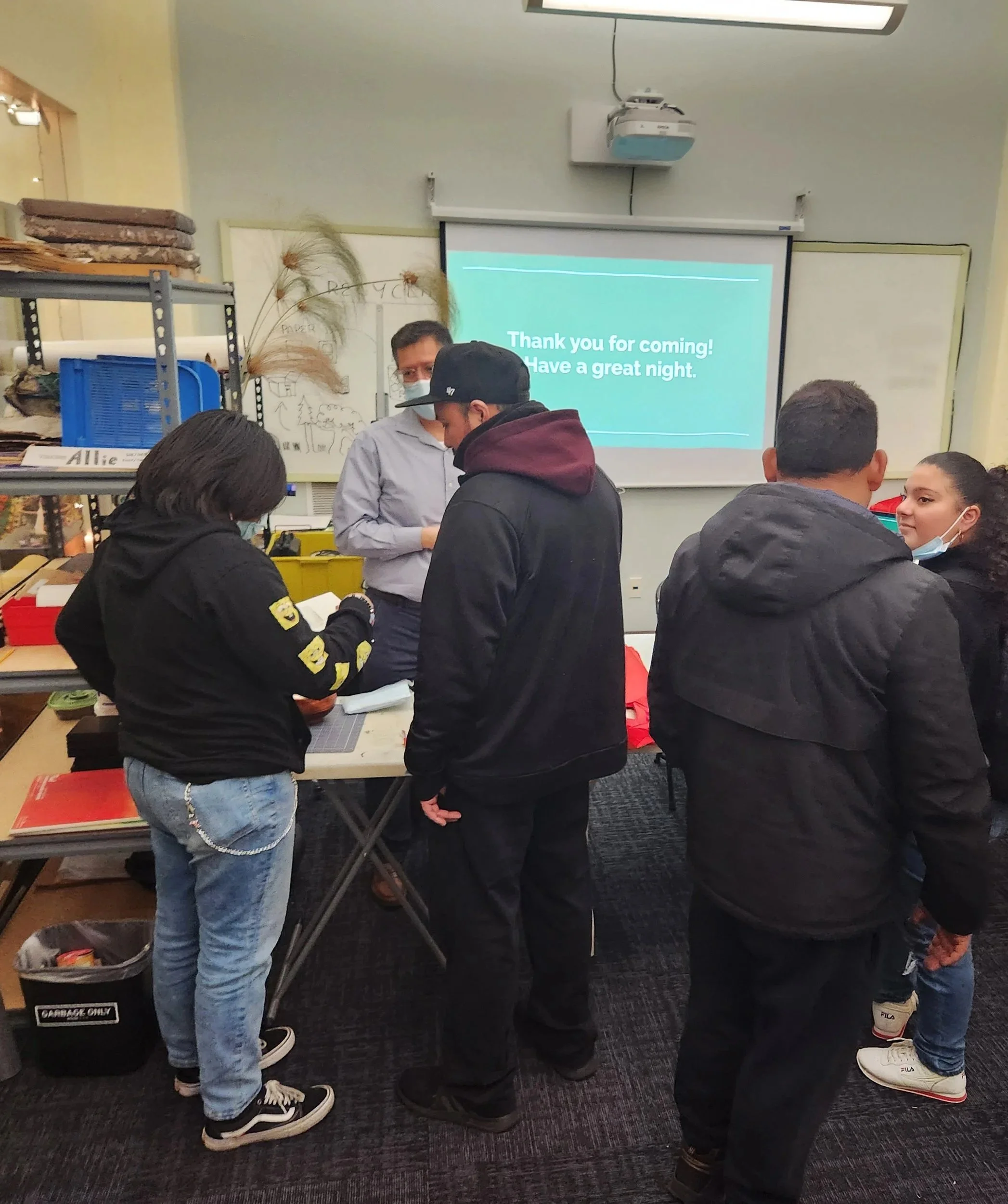
The Center for ArtEsteem is dedicated to building creative and sustainable communities through artistic empowerment and youth development. One way the agency fosters autonomy and leadership in youth is by further developing the skills necessary for navigating young adulthood. On December 8th, the Legacy Project after school program hosted a Higher Education and Financial Literacy panel for students and their families. Participants met with professionals in their fields to receive tools for managing personal finances and prepare for college readiness.
Dante Rojas, the Assistant Branch Manager at Self-Help Federal Credit Union, started the evening event with a crash course on money management. The audience learned about building credit, budgeting, and the differences between CUs and banks. Fifteen percent of Oakland families do not have a bank account, which is twice the national average. Legacy Project students received their first stipend check for the program. Encouraging our high school students early on to create a bank account not only teaches them to save their money but also the important responsibility of managing their finances.
Afterwards, the audience received presentations from an Admissions Counselor from St. Mary’s College and a Community Liaison from University of California Berkeley. They covered the topics of private-versus-public school differences, college application processes, and the relevancy of Legacy Project to the campus’ mission. As representatives of their alma mater, our college guest speakers were also able to share their personal insight for first year students, including financial aid opportunities and struggles, finding community through affinity groups, and campus resources to take advantage of. Along the intersections of race, class, disability, citizenship, and gender, both colleges provided financial and academic support for students with marginalized identities.
Our guest speakers held bilingual presentations to accommodate our Spanish-speaking families, and were able to answer their questions during the post-tabling session. Students were excited to learn that they could receive letters of recommendation from the Legacy Project leadership team when applying to colleges in the future. Having representatives who reflect the identities of our students is important for encouraging them to take up space in these institutions that have historically shut them out.

Hoover Elementary students are planting seeds of change at City Slicker Farms!
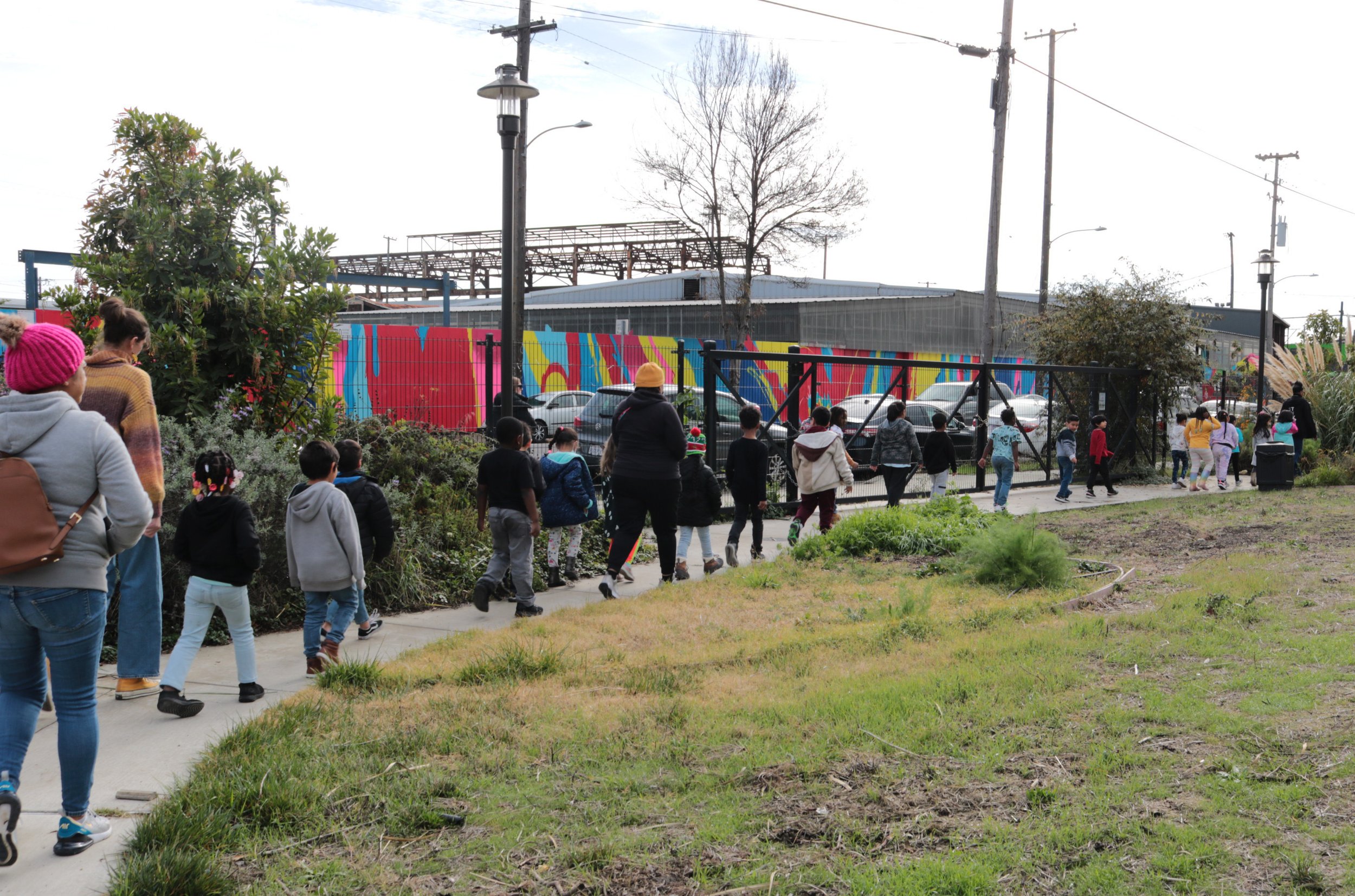
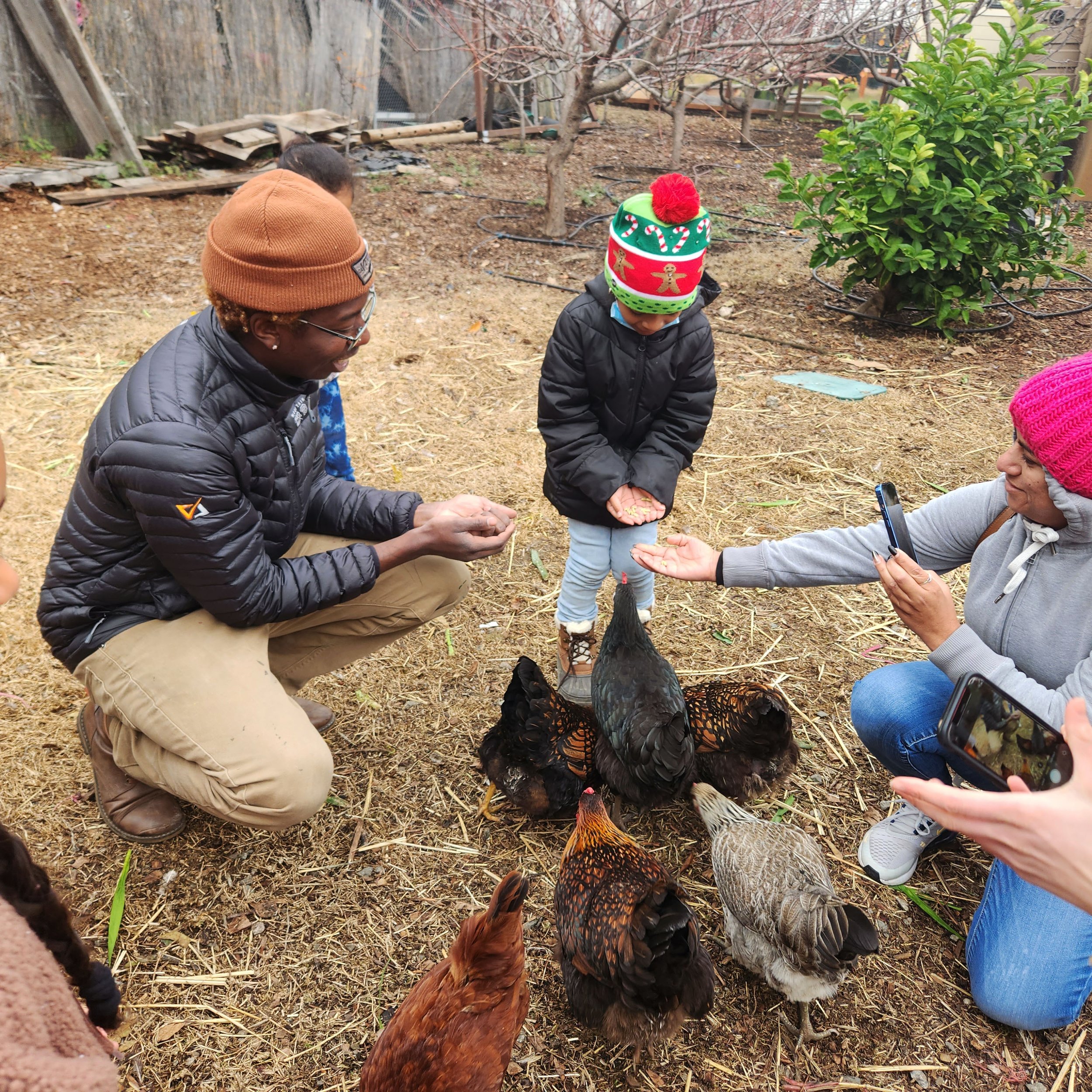
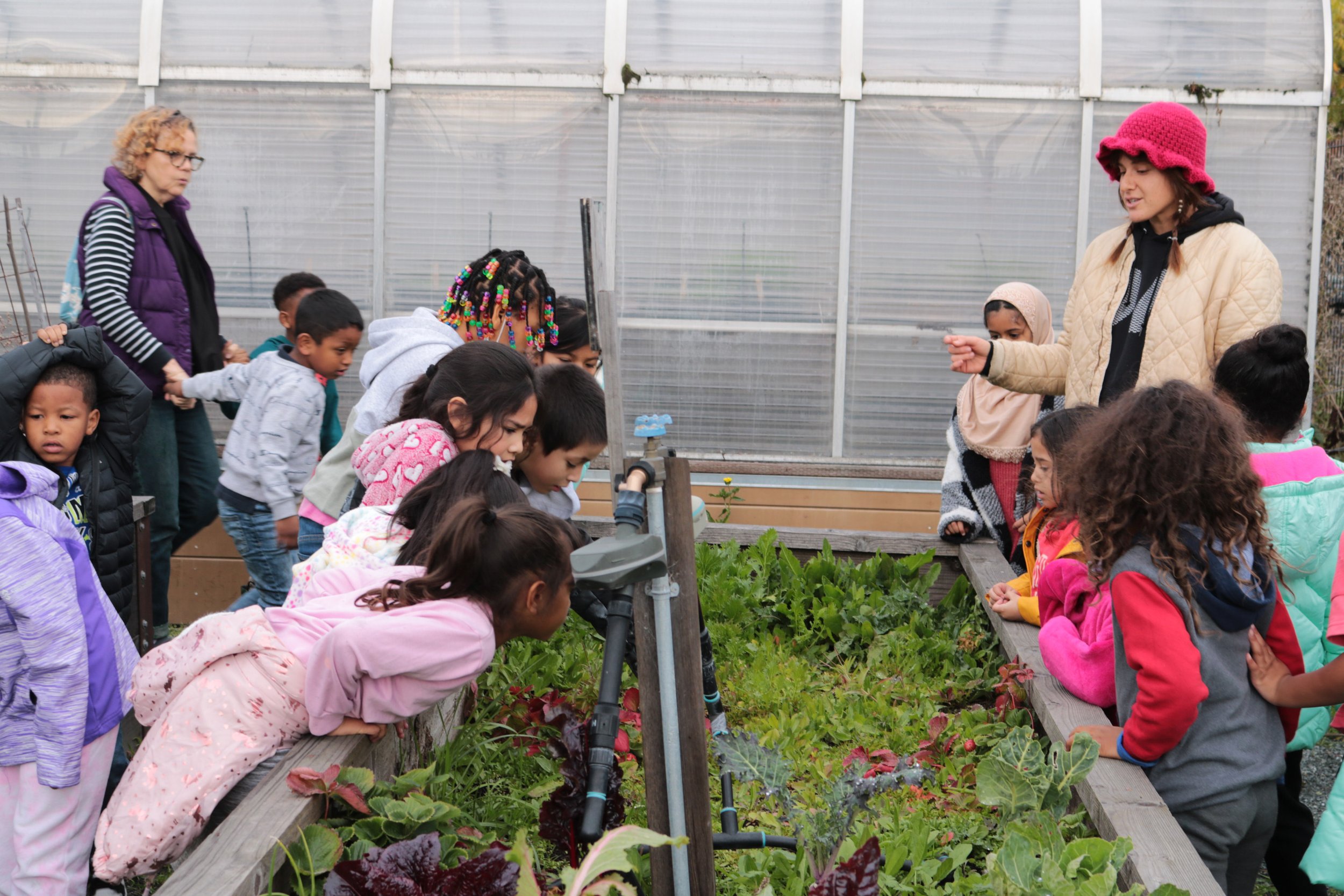
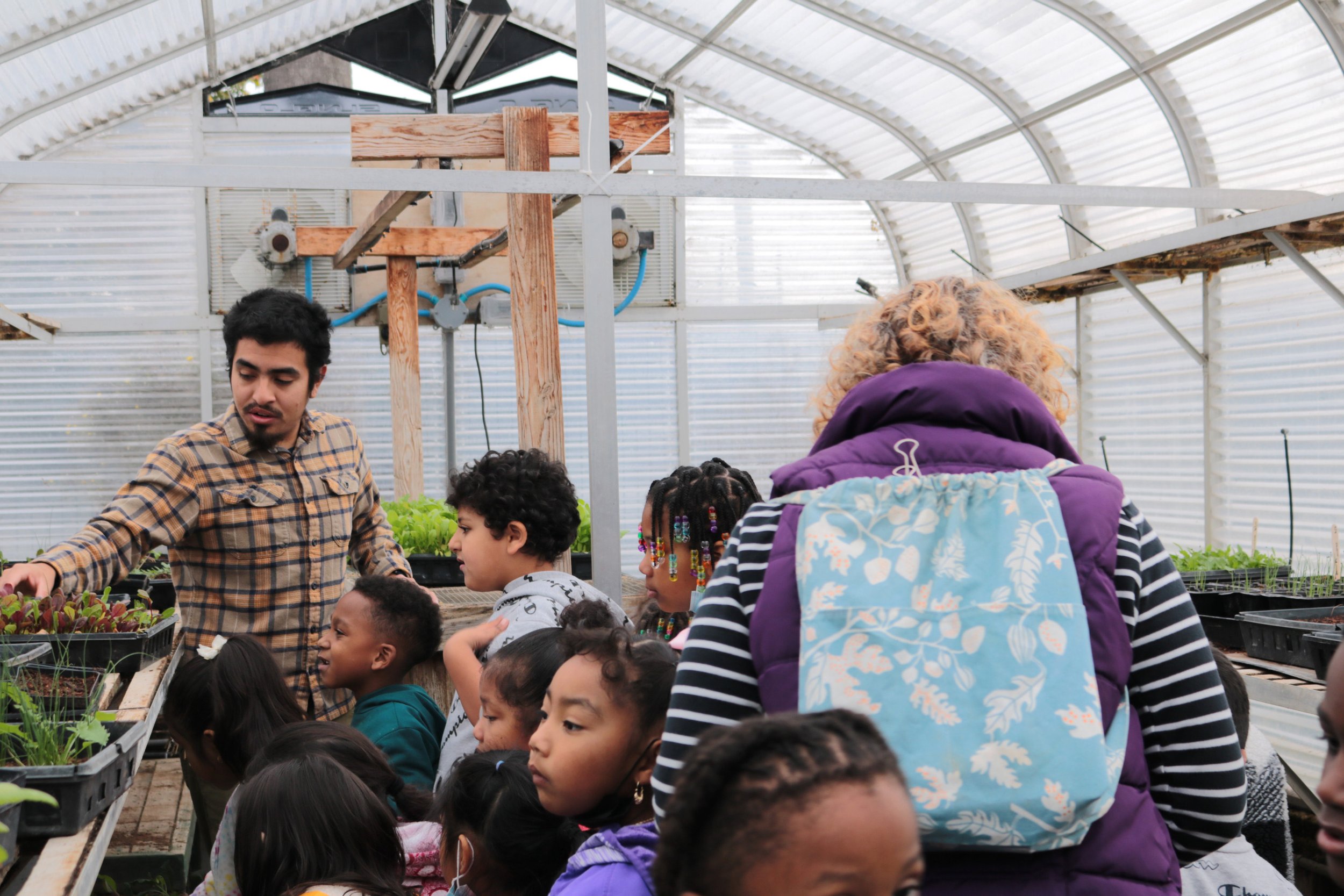
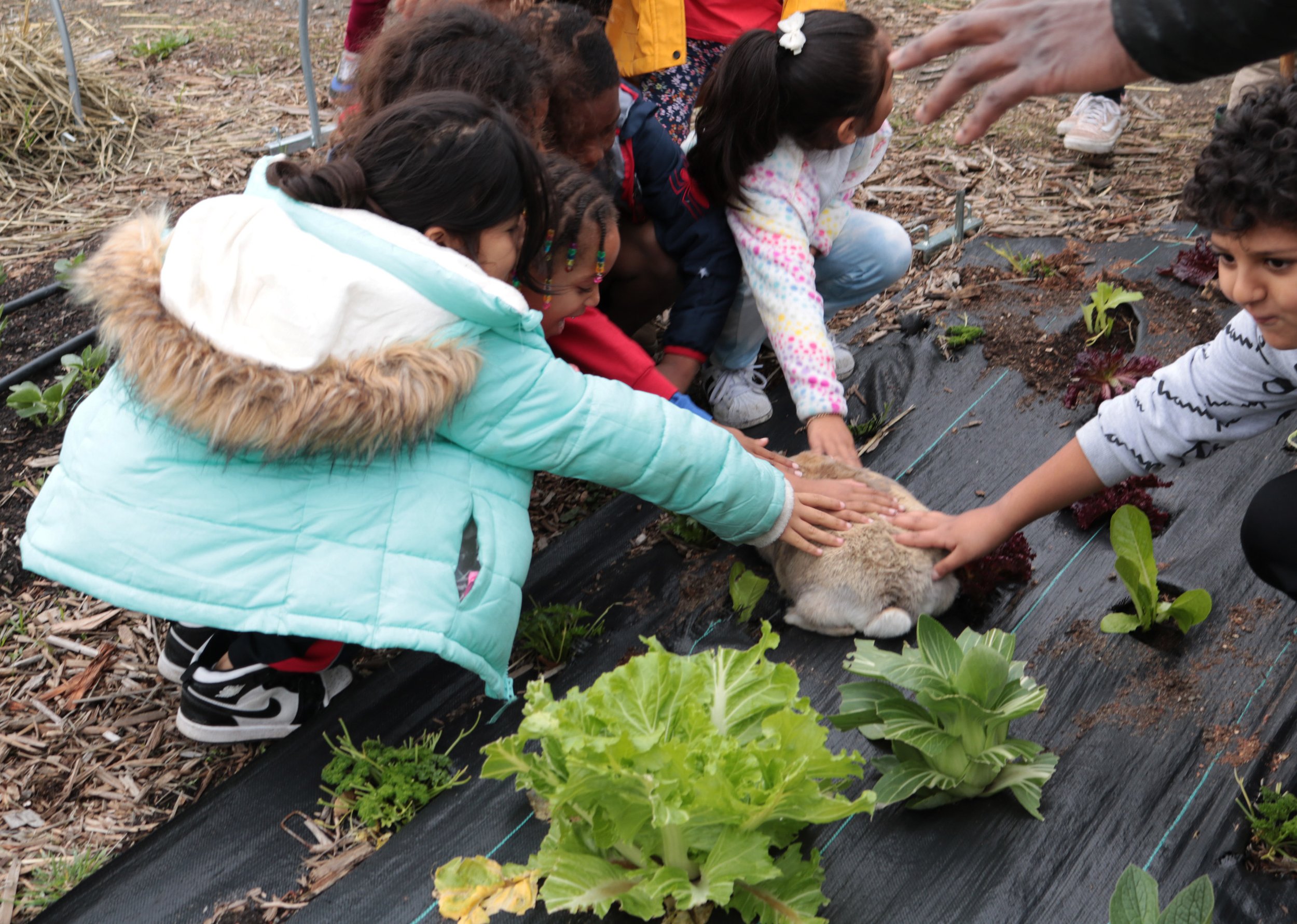
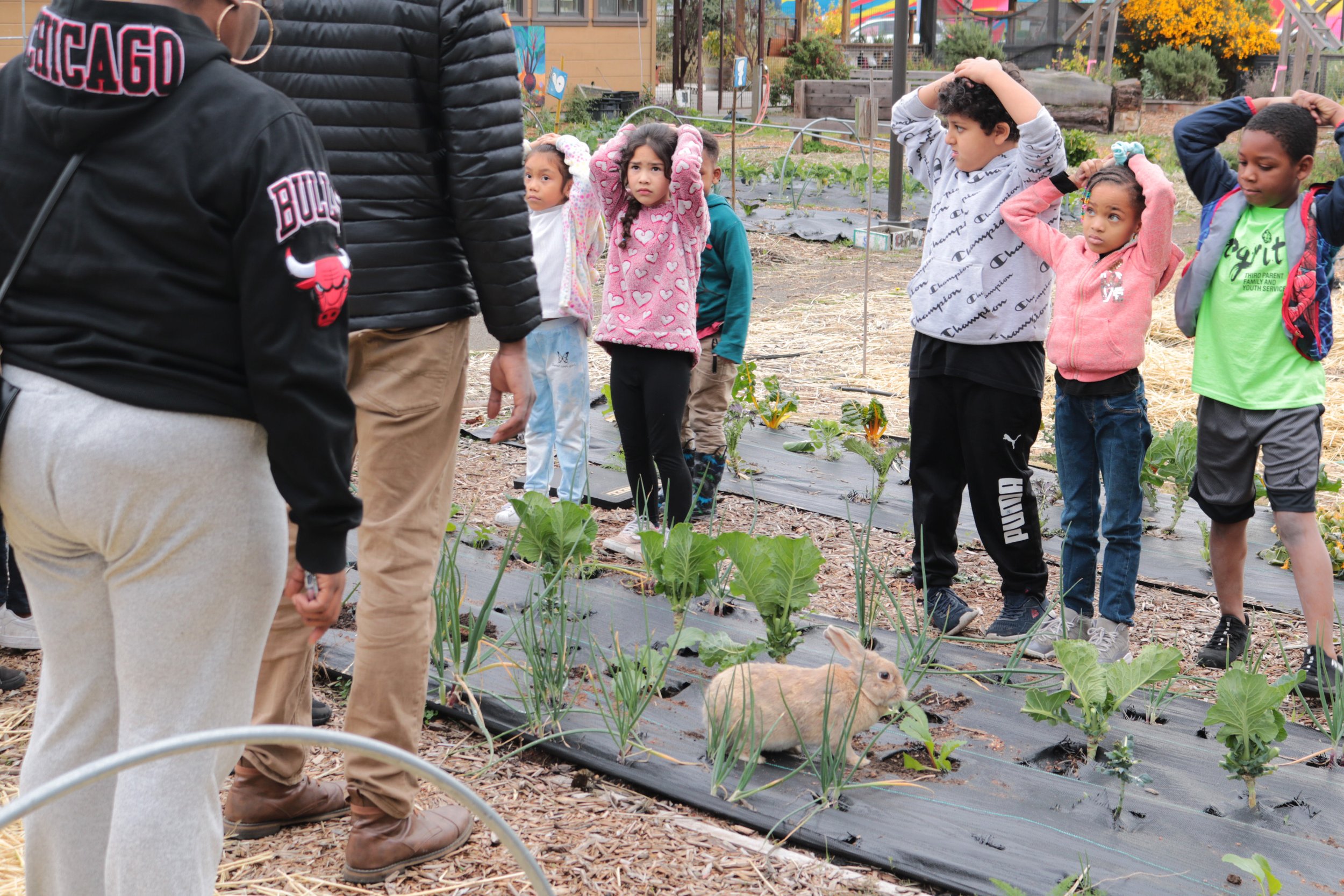
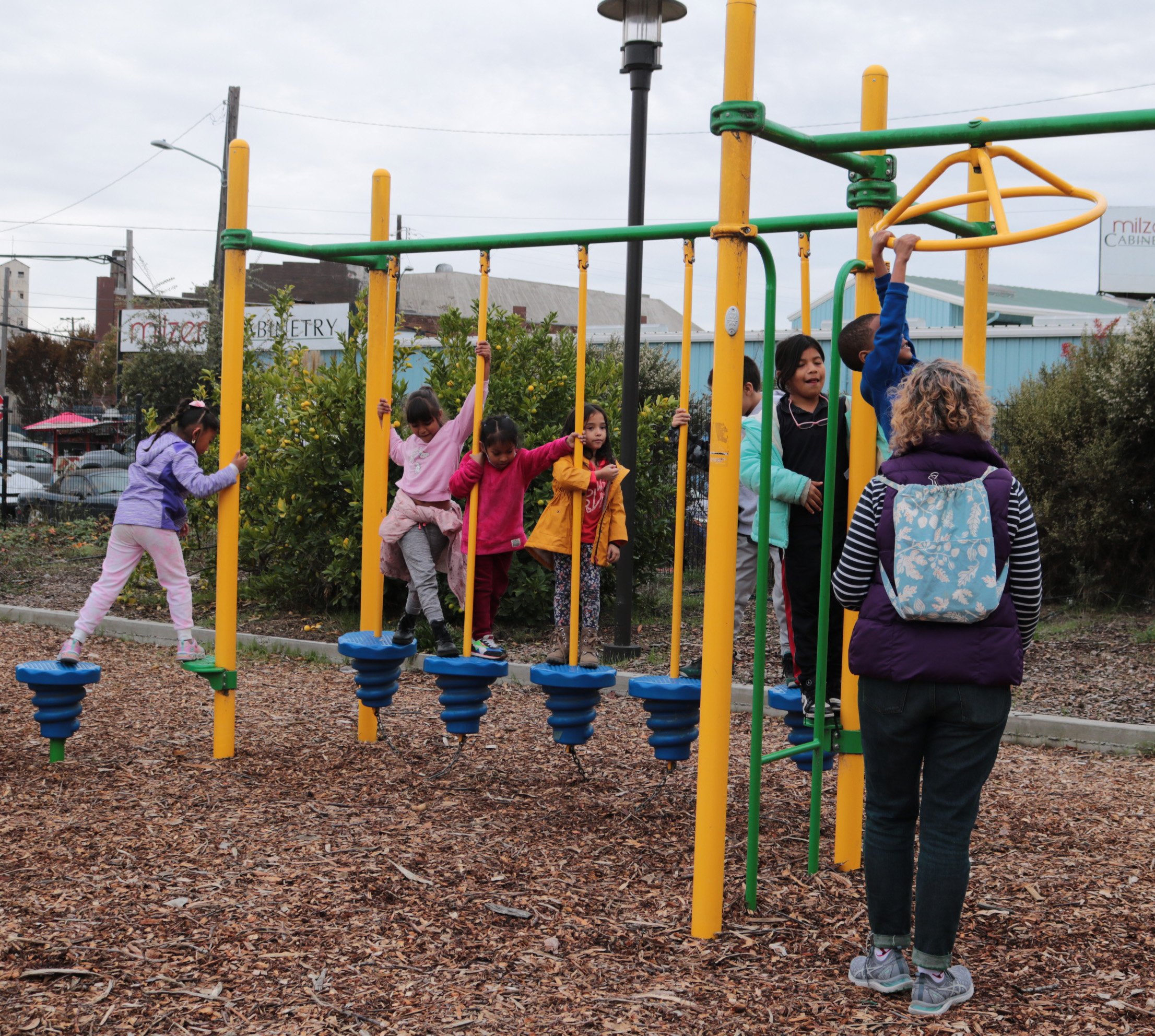

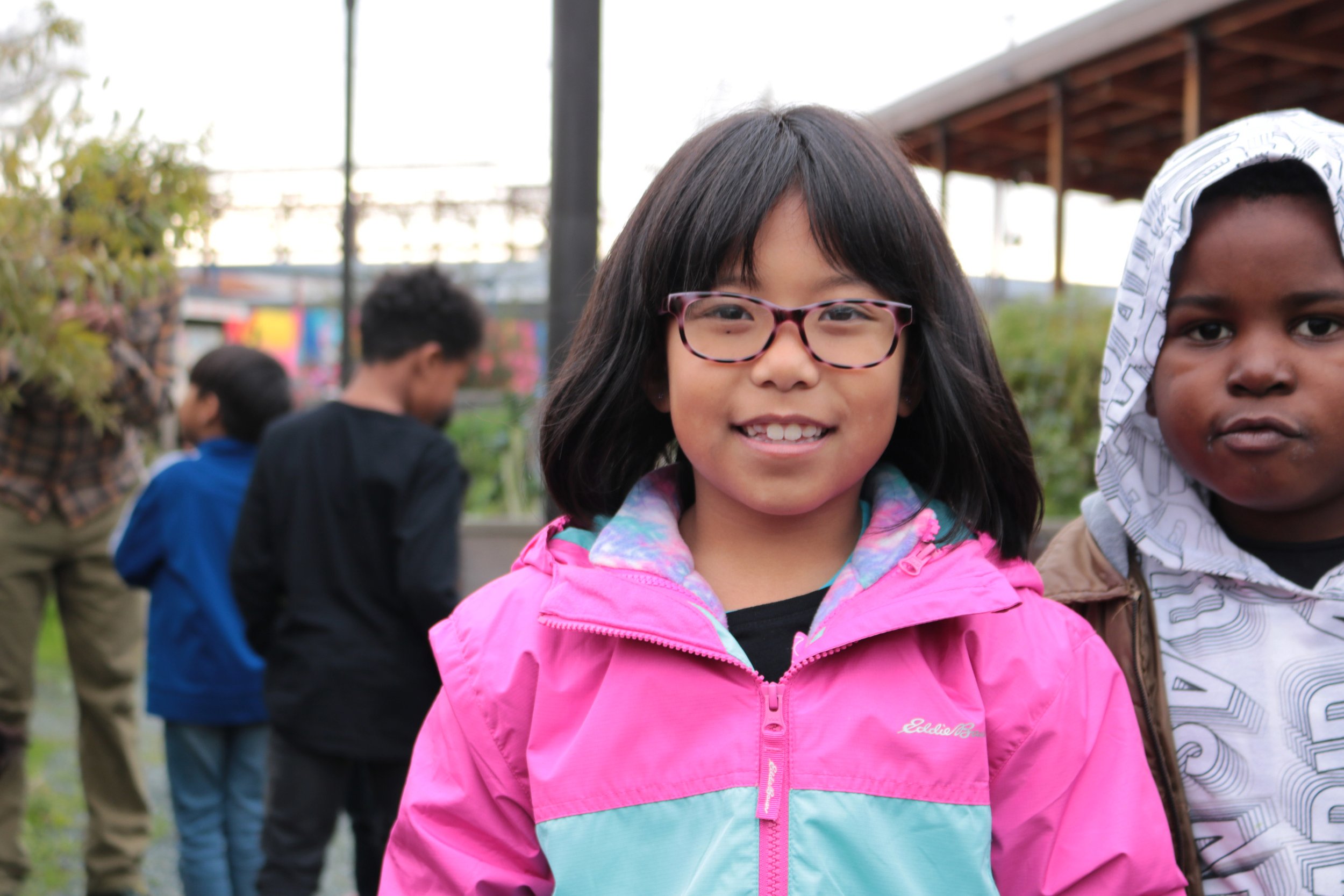
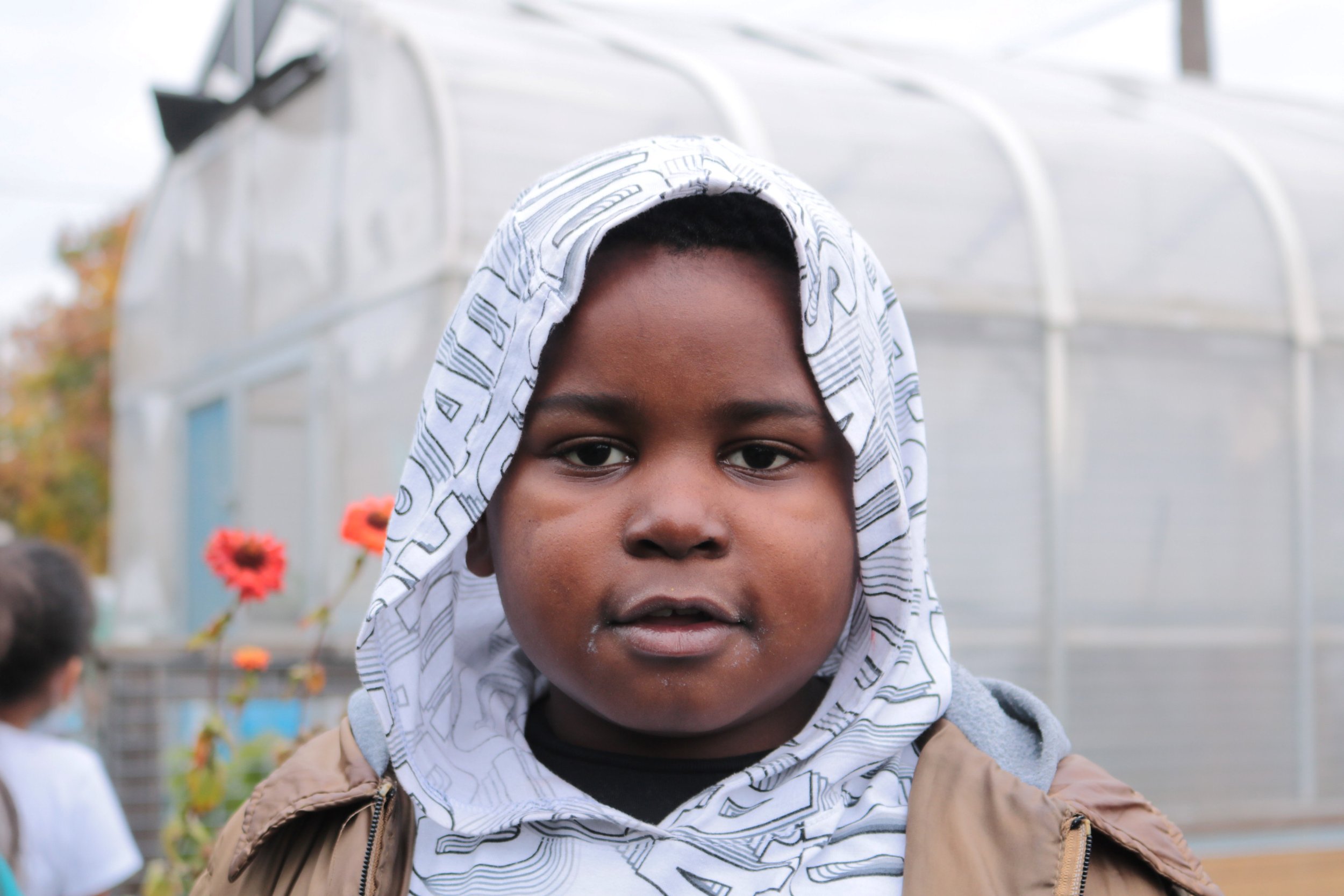
This month, Hoover Elementary 1st graders had the opportunity to visit City Slicker Farms (CSF), and for many of them it was their first time. Just as they tend to vegetables in their garden, CSF provided enrichment for the students’ creativity during this field trip and helped their seeds of curiosity grow.
In addition to providing interdisciplinary STEM and arts integration in the classroom, AHC exposes Hoover students to the intersections of the arts, environmental awareness, local history and community advocacy through the Oakland Legacy Project program. The Center for ArtEsteem has partnered with CSF since 2016 to bring environmental education to underserved Oakland schools such as Hoover through outdoor enrichment, introductions to gardening, and access to green spaces.
Since 2001, CSF has been in the vanguard of the food justice movement. CSF empowers community members to meet basic needs for fresh, healthy food through skills training, community building, direct service, and a commitment to social, economic and racial justice. CSF organizes low-income communities to achieve equal access to fresh, healthy, organic food through sustainable urban gardening, ecology, environmental stewardship and more. In 2016, City Slicker Farms opened a previously vacant industrial lot at 28th and Peralta Street as an Urban Park and Farm that includes lawn space for running and playing, a vegetable growing area, a community garden, fruit orchard, chicken coop, beehive and dog run.
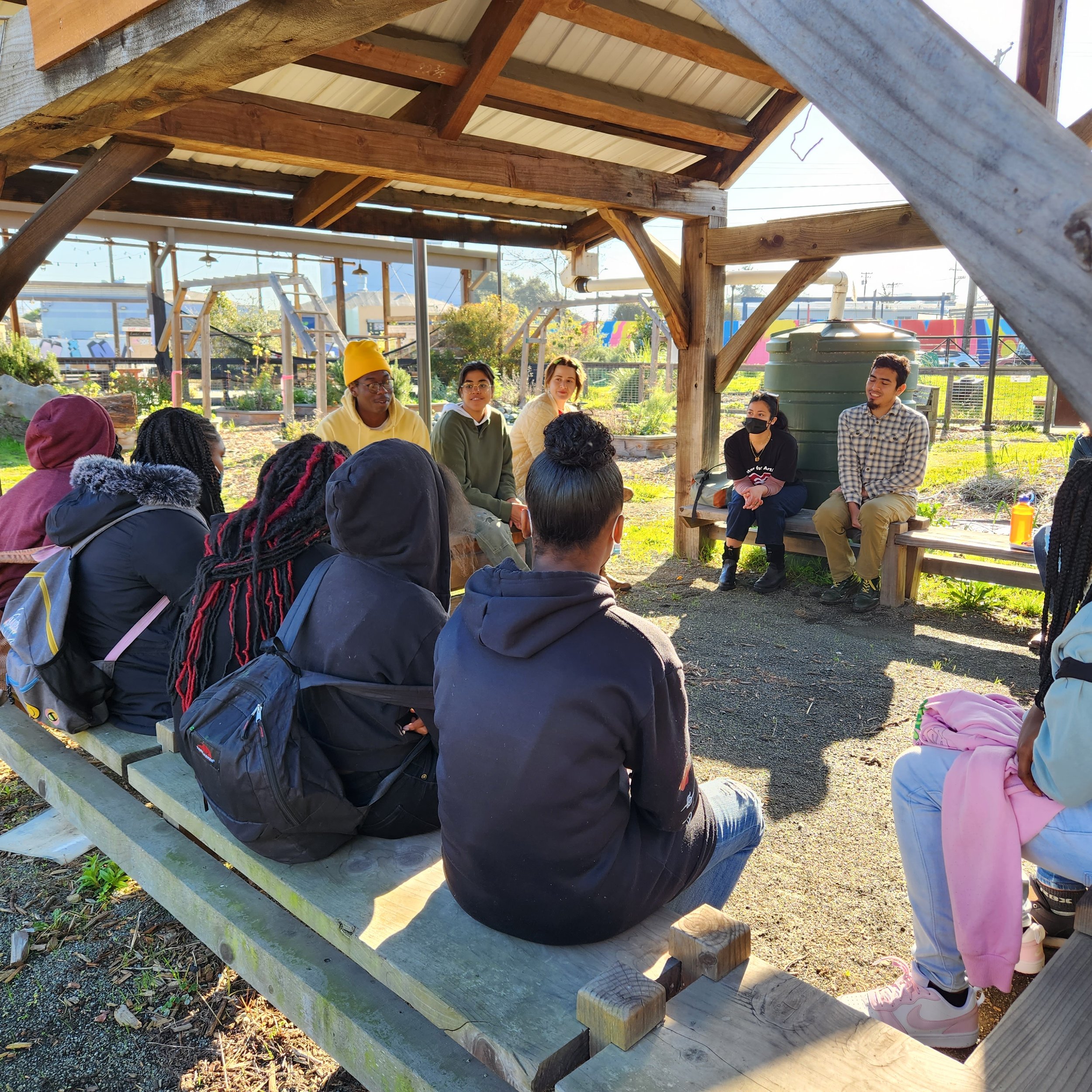
CSF educators Gianna Zamora and Jay Hill led Hoover students through a tour of the farm. First sitting at the gazebo, students were asked about their knowledge of plants and gardening, which was limited for many of them. They discussed how food is grown and ends up on their dinner table. The educators then brought the students to the community garden, where they practiced appreciating the plants with their eyes and noses. One student, Elizabeth, was excited when she was able to correctly identify brussel sprouts and tomatoes growing in the garden beds. The tour continued into the greenhouse, where they learned about how some plants need to stay warm to survive the winter. While walking through the main gardening plot, students said hello to the resident rabbit and a visiting stray tabby cat.
The final destination of the tour was the chicken coop. Although several students were afraid of the chickens hurting them, they faced their fears and were able to pet or feed the chickens. “They’re so soft!” one student exclaimed.
Students were able to play on the playground during their remaining time. At the end of the field trip, AHC Program Director Ms. Phyllis Hall refocused the students with somatic exercises, calling their attention to thank nature for all that it offered them today. She ended the exercise by asking the students, “The essence of our being is?” All the students instinctively responded with “love”, completing the first attitudinal healing principle.
When it was time to depart, parent chaperone Katba Korin expressed, “I had no idea this place existed in our neighborhood!” When told that CSF was open to the public, she set intentions to bring her family to the farm in the future.
The 1st grade students not only left the farm with fragrant flowers for their classroom, but also the knowledge of respectful boundaries with those around them, responsible land stewardship, and newfound accessibility to green spaces.
Cycle of Gratitude Fundraiser (11/12)
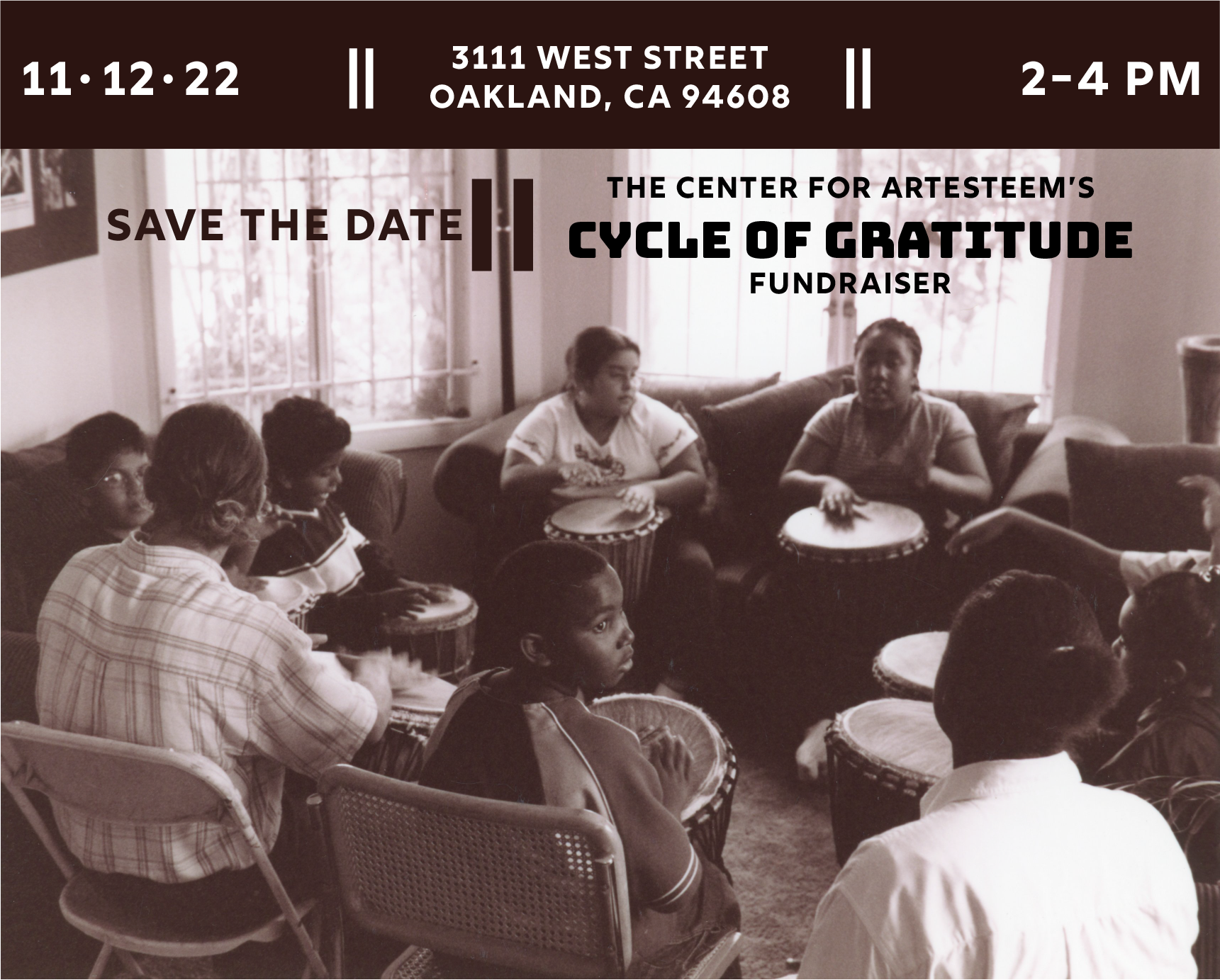
AHC is kicking off this season of giving with an interactive fundraiser!
Have tons of fun with us at our Cycle of Gratitude fundraiser, where our stellar team of teaching artists will be there to guide you through a selection of ArtEsteem activities: radial mandala painting, Japanese ink marbling, and screen printing!
SATURDAY, NOVEMBER 12TH - 3111 WEST STREET - 2:00 PM
/ / /
GUIDELINES:
All of our staff are vaccinated. We strongly recommend wearing a mask and receiving vaccination before entering the fundraiser.
According to Alameda County Public Health: “Wearing masks is strongly urged in indoor settings and required in certain high-risk settings. You may choose to wear a mask in outdoor crowded settings, and in non-public indoor settings, like a private residence, when you are around people who may be unvaccinated, elderly, or immunocompromised. While fully vaccinated people are well-protected from severe illness due to variants of the virus that causes COVID-19, they may get asymptomatic or mild infections. To protect everyone, wear a mask to help slow the spread of the virus.“
Be mindful of social distancing; respect everyone’s space.